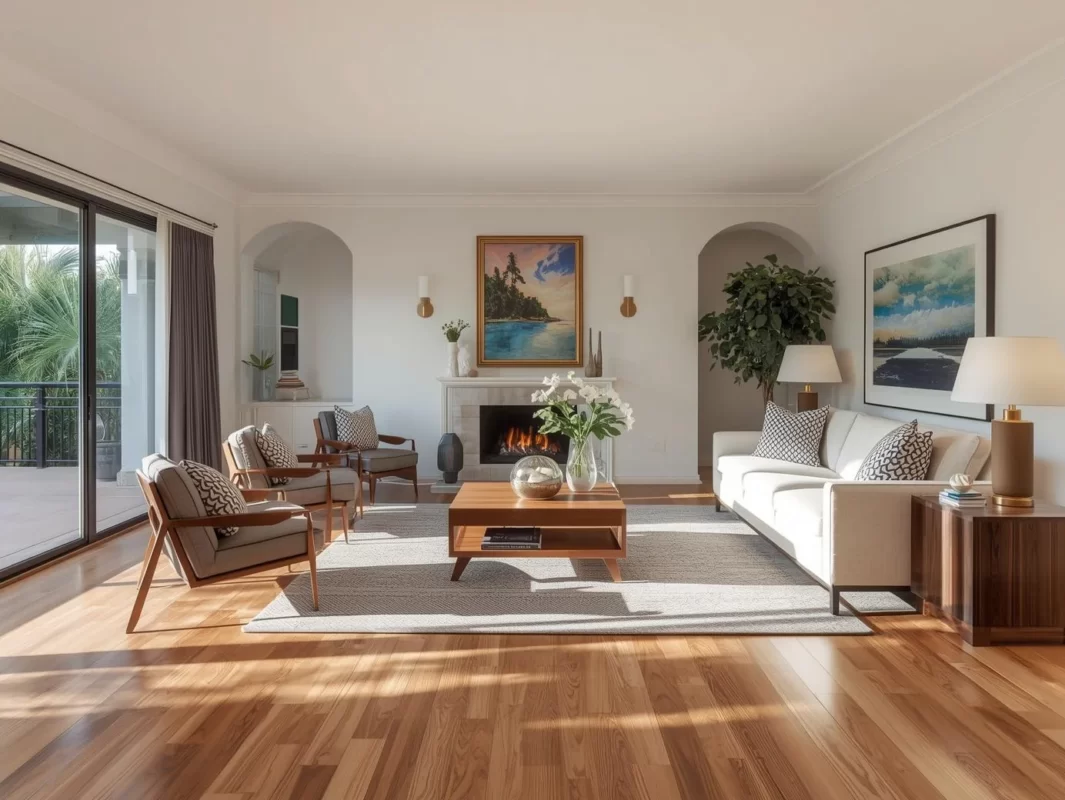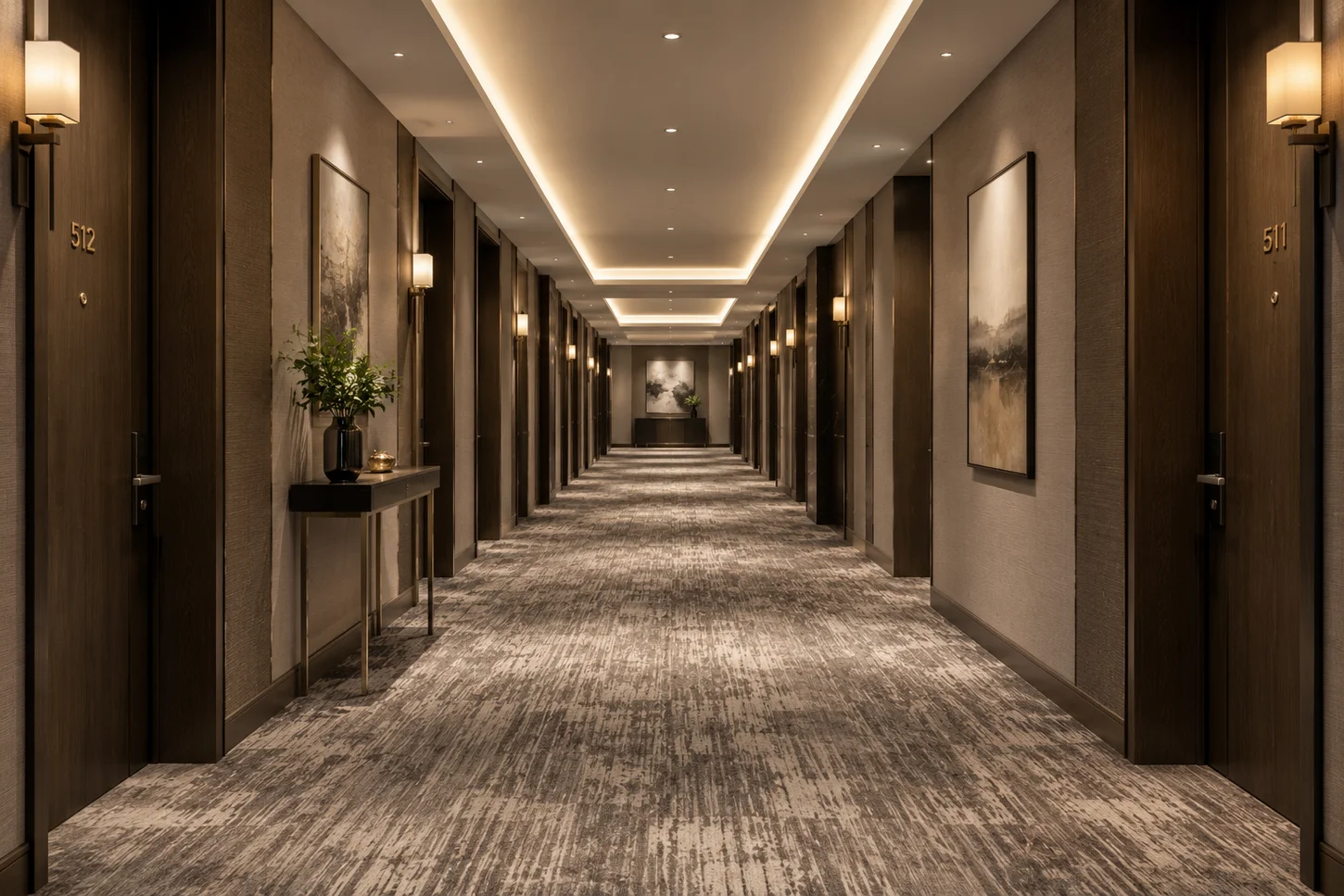

Walk into any well-designed hotel and you’ll notice the flooring almost immediately — even if you don’t consciously realise it. The material beneath your feet shapes how a space feels: whether it reads as luxurious or purely functional, quiet or echoey, warm or cold.
Hotel flooring is one of the most visible and hardest-working elements of any hospitality interior, and getting it right across an entire property is no small task.
From the grand sweep of a lobby floor to the hush of a carpeted corridor, every surface serves a purpose. This guide covers the best flooring options for hotels — across materials, areas, and design approaches — with practical information to help hotel owners, developers, and project managers make informed decisions.
If you’re based on the Gold Coast or Queensland more broadly and need flooring for a commercial project, Award Carpets Gold Coast stocks a range of options worth exploring alongside this guide.
Why Choosing the Right Hotel Flooring Matters
Hotel flooring has to do far more than look attractive. A material that photographs beautifully may be impractical to maintain at scale. A budget-friendly choice for guest rooms might struggle under lobby-level foot traffic. And a flooring type that works perfectly in the bathroom could be entirely wrong for the restaurant next door.
When evaluating hotel flooring, most specifiers are balancing a long list of competing priorities:
- Aesthetic appeal — flooring contributes significantly to the visual character of a hotel
- Durability — the material needs to hold up under sustained commercial use
- Heavy foot traffic — lobbies, corridors, and restaurants see constant movement
- Comfort underfoot — especially important in guest rooms and common areas
- Noise management — sound transmission between floors and along corridors affects guest experience
- Cleaning and maintenance — large floor areas need to be cleaned efficiently and consistently
- Moisture resistance — bathrooms, pool areas, and coastal hotel entrances all present moisture challenges
- Safety — slip resistance in wet areas is a non-negotiable requirement
- Long-term value — the lifecycle cost of flooring matters, not just the upfront price
- Brand identity — flooring communicates something about the hotel’s positioning and character
There is rarely one flooring material that is ideal for every part of a hotel. A property that tries to use the same floor throughout often ends up with compromises everywhere — acceptable performance in every zone but excellent performance in none. The most successful hotel flooring specifications treat the building as a collection of distinct environments, each with its own requirements.
What to Consider When Choosing Flooring for a Hotel
Foot Traffic and Wear Resistance
Not all hotel floor space carries the same load. A guest bedroom might see a few hundred footsteps per day. A busy lobby, main corridor, or restaurant might see thousands — along with luggage wheels, trolleys, service carts, and cleaning equipment running daily.
The difference matters because wear resistance is not just about durability in general — it’s about the specific type of stress a floor will experience. Entrance areas deal with abrasive particles tracked in from outside. Corridors take the constant back-and-forth of housekeeping carts and roller luggage. Restaurants face furniture being dragged across the surface multiple times a day.
When specifying hotel flooring, assess foot traffic levels for each zone individually. A product that’s well-suited to a boutique guest room may not be rated for the demands of a main hotel corridor.
Durability and Expected Lifespan
Commercial flooring is an investment, and the smartest way to evaluate it is through lifecycle cost rather than purchase price alone. A cheaper material that needs replacing in five years may cost more in the long run than a more robust option that lasts fifteen.
Durability should always be matched to the expected usage level of a space. Specifying a heavy-duty commercial material for a low-traffic storage room is unnecessary. Specifying a residential-grade product for a hotel lobby is a false economy.
Look at the manufacturer’s commercial rating, the wear layer or surface specification, and the product’s warranty terms. These give a clearer picture of expected performance than the price tag alone.
Maintenance and Cleaning Requirements
At hotel scale, cleaning is an operational reality that flooring has to accommodate. Large floor areas are cleaned daily — sometimes multiple times per day in high-use zones — using everything from microfibre mops to commercial rotary machines.
When evaluating hotel flooring options, consider:
- Daily cleaning — how easy is it to sweep, vacuum, or mop this surface efficiently?
- Spill resistance — how quickly does liquid need to be addressed before it causes damage?
- Stain resistance — does the surface repel staining agents common in hospitality environments (food, wine, cleaning chemicals)?
- Ease of mopping — can the floor be damp-mopped without risk of damage?
- Repair and replacement — if a section is damaged, can it be repaired or replaced without redoing the entire floor?
Some materials, like polished porcelain or hybrid flooring, are straightforward to clean at scale. Others, like natural marble or solid timber, require more careful maintenance regimes to preserve their appearance.
Water and Moisture Resistance
Moisture is a significant consideration across multiple hotel environments. Bathrooms are the obvious example, but moisture exposure extends further than most people initially account for:
- Pool surrounds and amenity areas — continuous wet conditions and pooled water
- Hotel entrances — wet shoes and umbrellas tracked in during rain
- Coastal hotel locations — salt air, humidity, and sand tracked in from the beach
- Restaurants and bars — spills, ice, glassware, and frequent floor washing
- Laundry and service areas — ongoing moisture exposure from operations
For any wet or moisture-exposed area, selecting a flooring product with verified waterproof or water-resistant properties is essential. The consequences of getting this wrong — swelling, delamination, mould, structural damage — are costly to fix and disruptive to operations.
Comfort Underfoot
Guests experience flooring physically, not just visually. The feel of a floor affects the overall impression of a room or space in ways that are hard to articulate but easy to notice.
Temperature, hardness, texture, and acoustic performance all contribute to underfoot comfort. A cold, hard tile floor in a guest room at 6am feels very different to warm, cushioned carpet or the moderate give of an engineered timber floor. In spaces where guests spend extended time — rooms, lounges, and dining areas — underfoot comfort is a genuine part of the guest experience.
Acoustic Performance
Sound transmission is one of the more frequently underestimated aspects of hotel flooring. Footfall noise, the rumble of luggage wheels, and impact sound from above are common complaints in hotels with hard flooring throughout.
Acoustic performance is particularly relevant in:
- Guest room corridors — where housekeeping trolleys and late-night foot traffic can disturb sleeping guests
- Rooms situated above other guest rooms or common areas — where impact sound travels through the floor structure
- Apartments and serviced accommodation — where noise separation between units matters for liveability
- Areas adjacent to lifts and stairwells — where mechanical noise compounds foot traffic sound
Some flooring products include built-in acoustic underlays that reduce impact sound transmission. Others require a separate acoustic underlay to meet performance requirements. Checking acoustic specifications before installation — rather than trying to solve the problem afterwards — is always the better approach.
Safety and Slip Resistance
Slip resistance is a safety requirement, not just a design consideration. Hotels are responsible for the safety of guests and staff, and flooring that becomes dangerous when wet — whether from spills, cleaning, rain, or pool use — creates genuine liability.
For wet areas, pool surrounds, and hotel entrances, specify flooring that carries an appropriate slip resistance rating. In Australia, the relevant standards govern the minimum P-rating (pendulum test) or R-rating (ramp test) required for different wet and dry applications. Commercial cleaning can also affect slip resistance over time if cleaning products are not compatible with the flooring surface.
Design and Brand Aesthetic
Flooring plays a central role in communicating what a hotel is. The materials, colours, patterns, and finishes chosen across the property contribute to the overall character of the brand — whether that’s understated luxury, coastal relaxed, contemporary urban, or boutique heritage.
A hotel that invests in premium engineered timber in its guest rooms sends a different message than one with standard vinyl throughout. A lobby with large-format marble-look porcelain reads differently to one with sealed concrete. These choices are cumulative, and they shape the impression guests carry with them.
Flooring decisions shouldn’t be made in isolation from the broader interior design strategy. The floor connects every other element in a room — furniture, walls, lighting, soft furnishings — and needs to support the overall vision rather than work against it.
Best Flooring Options for Different Hotel Areas
The best hotel flooring depends heavily on where it will be installed. Below is a general overview of priorities and suitable options by zone. Note that actual suitability always depends on the specific product’s commercial rating, installation requirements, and project specifications.
| Hotel Area | Flooring Priorities | Suitable Options |
| Lobby | Luxury, durability, visual impact | Stone, porcelain, large-format tile, luxury hybrid |
| Guest Rooms | Comfort, warmth, aesthetics | Engineered timber, hybrid, carpet |
| Hallways | Heavy traffic, durability, maintenance | Hybrid (SPC), commercial carpet |
| Restaurants | Durability, cleaning, spills | Porcelain, tile, hybrid, vinyl |
| Bathrooms | Waterproofing, slip resistance | Porcelain, ceramic, stone |
| Pool Areas | Moisture & slip resistance | Textured tile, stone |
| Conference Rooms | Durability & acoustics | Carpet, hybrid, engineered timber |
| Reception | Design impact & traffic | Stone, tile, engineered timber, hybrid |
Use this table as a starting point only. Every hotel project has its own specifications, and the right flooring choice for your property will depend on the specific product’s rating, the level of traffic expected, the installation environment, and the overall design direction.
Engineered Timber Flooring for Hotels
Among the flooring materials regularly specified for hospitality interiors, engineered timber holds a distinct position. It brings the warmth, character, and visual depth of real timber into commercial environments in a format designed to perform more consistently than solid timber across varying conditions.
For hotels looking to create interiors with genuine material quality — rather than the simulation of it — engineered timber flooring is worth understanding in detail.
Why Engineered Timber Works Well in Luxury Interiors
Timber has been used in high-end interiors for centuries, and its appeal in luxury hotel environments is straightforward. The natural grain, warm tones, and subtle variation of real timber are difficult to replicate convincingly with synthetic materials. Even today’s best timber-look hybrid and vinyl products, which have improved dramatically, don’t quite capture the tactile and visual depth of actual wood.
Engineered timber delivers:
- Authentic natural timber appearance — real hardwood veneer on the surface means the look and texture are genuine
- Warmth — both visually and underfoot, timber reads as inviting in a way that hard tile often doesn’t
- Premium visual appeal — the material itself communicates quality without requiring stylistic overstatement
- Natural variation — no two boards are identical, giving floors a character that synthetic products struggle to achieve
- Design versatility — suits both contemporary and classic hotel interiors, depending on species, tone, and finish
Engineered Timber vs Solid Timber for Hotel Projects
The fundamental difference between engineered timber and solid timber is the construction. Solid timber is milled from a single piece of wood throughout. Engineered timber is built in layers — a real hardwood veneer bonded to a multi-layer core, typically of hardwood plywood or similar stable substrate.
This layered construction is designed to provide greater dimensional stability than solid timber. Solid wood expands and contracts more significantly with changes in temperature and humidity. For hotel environments where air conditioning, floor heating, or coastal conditions are a factor, this stability difference can be meaningful. Award Carpets describes its engineered timber range as a layered construction designed to improve stability compared with solid hardwood.
That said, engineered timber is not immune to moisture. It performs better than solid timber in moderate humidity environments, but it is not a waterproof product and should not be installed in areas with direct water exposure.
Engineered Timber for Hotel Guest Rooms
Guest rooms are one of the strongest applications for engineered timber in hotel settings. The combination of visual warmth, material authenticity, and underfoot comfort makes it a natural fit for spaces where guests spend extended time.
It works particularly well in:
- Boutique hotels — where the character and individuality of natural timber aligns with the brand positioning
- Luxury accommodation — where the material quality of finishes is part of the guest value proposition
- Premium guest rooms — where the floor contributes to an overall sense of considered quality
- Suites and executive rooms — where timber can be paired with area rugs and premium furnishings to create a cohesive interior
Engineered Timber for Hotel Hallways
Hotel corridors are significantly more demanding than guest rooms, and engineered timber is not the primary recommendation for this environment. Hard-wheeled luggage cases and rubber-wheeled housekeeping trolleys apply repetitive concentrated loads that can dent and scar natural timber surfaces faster than the wear layer specs suggest — particularly under the around-the-clock traffic profile of a working hotel corridor.
For hotel hallways, hybrid flooring with a rigid SPC core or commercial carpet flooring are the stronger primary choices. Both handle the specific stresses of corridor use more reliably than engineered timber across most hotel traffic levels.
If the design direction strongly calls for a timber look in corridors — for visual continuity with adjacent guest rooms, for example — a commercially rated timber-look hybrid is usually the more appropriate specification than genuine engineered timber. It delivers the aesthetic without the denting risk. For flooring installation advice on the Gold Coast, discuss corridor applications with a supplier who can review the specific traffic expectations and subfloor conditions before recommending a product.
Award Carpets’ Engineered Timber Flooring Options
Award Carpets Gold Coast stocks two engineered timber flooring options worth considering for hotel projects.
Engineered Timber Flooring Vogue is positioned around European Oak, with a contemporary design aesthetic suited to modern hotel interiors. The Vogue range carries the Sunstar branding and offers the warmth and visual character of oak in a current finish direction.
Engineered Timber Oak Classic features European Oak construction with a multi-layer hardwood core. It’s available in both floating and direct-stick installation systems, giving specifiers flexibility depending on the subfloor and application requirements.
Both products reflect the character of real European Oak — a species that has become a mainstay of contemporary luxury interior design for good reason.
Explore the full range of engineered timber flooring at Award Carpets Gold Coast. For maintenance guidance, the team has also published practical information on how to clean and maintain engineered timber floors.
Hybrid Flooring for Hotels
Hybrid flooring has become one of the most widely used commercial flooring categories over the past several years, and its rise in hospitality applications reflects some genuine practical advantages. For hotels that need timber aesthetics with a more forgiving performance profile — particularly in high-traffic or moisture-exposed areas — hybrid flooring is worth serious consideration.
Why Hybrid Flooring Is Popular in High-Traffic Areas
Hybrid flooring combines a rigid core (typically stone polymer composite or SPC) with a realistic timber or stone-look printed layer and a protective wear layer on top. Award Carpets describes its hybrid range as combining timber and stone aesthetics with practical characteristics including durability and waterproof performance.
The key advantages in commercial hotel applications are:
- Hard-wearing construction — the rigid SPC core resists dents, indentations, and heavy loads
- Waterproof — the core does not absorb moisture, making it suitable for areas where spills and cleaning are regular
- Easy maintenance — can be damp-mopped without risk of damage to the core
- Timber-look and stone-look designs — modern printing technology produces convincing visuals
- Practical installation — click-lock systems allow efficient installation across large floor areas
For hotel operators who want the appearance of timber without the maintenance considerations of genuine wood, hybrid flooring offers a practical alternative. To understand the differences in more detail, Award Carpets has published a comparison of hybrid flooring vs engineered timber flooring that’s worth reading before making a decision.
Is Hybrid Flooring Suitable for Hotel Hallways?
Hotel hallways are one of the areas where hybrid flooring tends to perform well. The combination of durability, easy maintenance, and timber appearance makes it a practical choice for corridors that see consistent daily traffic.
However, as with any flooring decision, the specific product’s commercial rating matters. Not all hybrid flooring is rated for heavy commercial use. Verify the product’s intended application, wear layer specification, and warranty terms before specifying it for a hotel corridor.
For further context on what SPC hybrid flooring is and how it’s constructed, Award Carpets has published a useful overview of what is SPC hybrid flooring.
Herringbone Hybrid Flooring for Boutique Hotels
Among the hybrid flooring options available for hotel interiors, herringbone pattern flooring deserves particular attention for boutique and design-led hotel projects.
The herringbone pattern — where rectangular planks are laid at 45-degree angles to create a chevron-like zigzag — carries significant design heritage. It has roots in European parquet and has been used in high-end interiors for generations. In a contemporary hotel setting, it delivers:
- Visual complexity — the pattern itself adds interest to a floor without requiring decorative rugs or accessories
- Boutique character — herringbone reads as considered and intentional, which suits smaller hotels with a strong design identity
- Architectural presence — in a lobby or corridor, herringbone can frame the space in a way that a straight-lay floor cannot
- Traditional pattern, modern performance — when delivered in a hybrid SPC format, the classic look comes with commercial-grade durability
For boutique hotels on the Gold Coast looking for a flooring solution that distinguishes the property visually while performing under commercial demands, herringbone hybrid flooring is a strong option.
Award Carpets’ Herringbone Hybrid Flooring
Award Carpets stocks the Herringbone Hybrid Flooring — the Preference Floors Herringbone Hybrid / Easi-Plank SPC Hybrid range — which brings together a genuinely distinctive look with a specification suited to commercial use.
Key features of the product include:
- SPC rigid core — the stone polymer composite construction resists denting, indentation, and the repetitive loading of trolleys and luggage wheels
- Waterproof construction — the core does not absorb moisture, making it suitable for areas with spill risk or humidity exposure
- Wear layer — a scratch-resistant surface designed to handle the demands of daily commercial cleaning and foot traffic
- Built-in acoustic underlay — reduces impact sound transmission, which matters in hotel corridors and upper-floor applications
- Click-lock installation — efficient to install across larger areas with consistent results
- Timber-look finishes — seven listed colour options offering design flexibility
The product carries a 5-year limited commercial warranty. For boutique hotel applications — lobbies, reception areas, and feature corridors — this is a practical specification rather than a heavy-duty commercial build. Specifiers working on larger hotel developments with higher traffic volumes or longer warranty requirements should discuss the full specification with Award Carpets and verify suitability for the intended application.
The combination of herringbone pattern, waterproof SPC core, scratch-resistant wear layer, and acoustic underlay makes this a genuinely interesting product for boutique hotel lobbies, corridors, and feature areas.
Porcelain Tiles for Hotel Flooring
Porcelain tile is one of the most versatile and widely used materials in commercial hotel flooring. It spans an enormous range of aesthetics — from raw concrete looks to marble-effect luxury finishes — and its technical performance in wet, high-traffic environments makes it a natural choice for several hotel zones.
Why Porcelain Works in Hotel Lobbies
A hotel lobby is one of the most demanding flooring environments in the building: high foot traffic, visual prominence, and the need to make an immediate impression. Porcelain handles this combination well.
Large-format porcelain tiles — 600x1200mm and larger formats are now widely available — can create expansive, seamless-looking floor planes that read as genuinely premium. Stone-look finishes in marble, travertine, limestone, or concrete aesthetics allow hotel designers to achieve luxury material appearances without the maintenance considerations of natural stone.
Porcelain is also straightforward to clean at scale. A polished or semi-polished surface can be damp-mopped efficiently, which matters in a zone that requires daily attention.
Porcelain Flooring for Hotel Bathrooms
In hotel bathrooms, porcelain is close to the default specification for good reason. It is effectively waterproof, highly resistant to the cleaning chemicals used in commercial housekeeping, and available in a wide range of sizes and finishes that suit contemporary bathroom design.
Slip-resistant surface options — textured finishes, matte glazes, and purposely anti-slip tiles — allow designers to meet safety requirements without sacrificing aesthetics. Smaller format tiles and mosaic applications also increase the number of grout lines, which improves grip in wet underfoot conditions.
Grout selection and maintenance is worth considering at specification stage. Light grout in a high-use hotel bathroom will require more attention than a mid-tone or contrasting grout that doesn’t show soiling as readily.
Marble-Look Porcelain vs Natural Marble
One of the most useful applications of large-format porcelain in hotel design is as a marble alternative. Contemporary inkjet printing technology allows porcelain manufacturers to produce tiles that convincingly recreate the veining, tone variation, and visual depth of natural marble — at a fraction of the cost and with significantly lower maintenance requirements.
Natural marble is porous and requires sealing, periodic resealing, and careful management of acidic substances that can etch the surface. Marble-look porcelain is non-porous, does not require sealing, and is resistant to the cleaning products used in commercial environments.
For hotel lobbies or bathrooms where a marble aesthetic is desired but full natural stone is outside the budget or maintenance capacity, marble-look porcelain is a practical and visually convincing alternative.
Marble Flooring for Luxury Hotels
Natural marble occupies a specific position in hotel design: it signals genuine luxury in a way that is difficult to replicate with alternative materials. For five-star properties and premium accommodation brands where no-compromise specification is expected, marble remains a relevant choice.
Why Marble Creates a Luxury Look
Marble’s appeal in luxury interiors is partly material and partly cultural. The stone itself — formed under intense geological pressure over millions of years — has natural veining, colour variation, and translucency that no manufactured product fully captures. And its history in monumental and prestigious architecture gives it an association with quality and permanence that buyers and guests recognise.
In a hotel lobby or luxury suite bathroom, marble communicates that the property has made an investment in materials that are genuinely special. That’s a different message to the one sent by a convincing marble-look alternative, even if the two are hard to distinguish in photographs.
Best Areas for Marble Flooring
Natural marble is best deployed in areas where its visual impact is maximised and its maintenance requirements are manageable:
- Hotel entrances and lobbies — high visual impact, regular professional cleaning, controlled traffic
- Reception areas — prominent and impressive without the extreme wear of a thoroughfare
- Feature areas — statement walls, lift lobbies, or focal points within a larger space
- Luxury suites and bathrooms — where the premium specification is aligned with the room rate
Advantages and Disadvantages of Marble
Marble rewards careful specification. Before committing to natural marble for a hotel project, consider:
Advantages:
- Premium, authentic appearance
- Natural variation — every slab is unique
- Extremely durable when properly maintained and sealed
- Adds genuine material value to the space
Disadvantages:
- Requires sealing and periodic resealing
- Susceptible to etching from acidic substances (citrus, wine, coffee, cleaning chemicals)
- Can scratch and chip under heavy impact
- High cost relative to most alternatives
- Requires specialist cleaning protocols
Marble is not a low-maintenance flooring choice. For hotel areas with intensive daily cleaning using commercial products, the maintenance requirements need to be factored into the specification decision.
Granite Flooring for Hotels
Granite is another natural stone option that appears in hotel flooring, particularly in commercial and public areas where the combination of premium aesthetics and physical robustness is required.
Where Granite Flooring Works Best
Granite’s primary strength over marble is its hardness and density. It is less porous than marble, more resistant to scratching, and generally requires less intensive maintenance to keep looking good. It works well in:
- Hotel lobbies and entrance areas
- Lift lobbies and stairwells
- Reception desk surrounds and countertops
- High-end restaurant floors
- Outdoor areas and covered hotel entrances
Granite vs Marble for Hotel Interiors
| Marble | Granite | |
| Appearance | Soft veining, warmer tones, translucent | Bold crystalline patterns, wide colour range |
| Durability | High when maintained, but more susceptible to etching | Generally harder and more scratch-resistant |
| Maintenance | Requires sealing, careful product selection | Requires sealing but generally more forgiving |
| Cost | Variable, premium grades are very expensive | Generally slightly more accessible than premium marble |
| Design suitability | Traditional luxury, formal elegance | Contemporary and traditional; suits bold, modern spaces |
Both materials are genuine luxury options. The choice between them is largely driven by the design direction of the hotel and the specific stone varieties available within budget.
Ceramic Tiles for Hotel Flooring
Ceramic tile occupies a slightly different position to porcelain in the hotel flooring landscape. It is generally less dense than porcelain, which means it is more porous and less suited to high-moisture or very high-traffic commercial environments. However, in the right applications, it remains a practical and cost-effective choice.
Ceramic Tile for Guest Bathrooms
In hotel guest bathrooms, ceramic tile is a workable option for walls and in lower-traffic floor applications. Its water resistance is adequate for standard bathroom conditions, though it is generally less durable than porcelain under the kind of sustained commercial cleaning hotel bathrooms receive.
For budget-conscious hotel projects where porcelain is outside the specification, ceramic tile offers a similar aesthetic at a lower price point, with the understanding that the performance characteristics are not identical.
Ceramic Tile for Restaurants and Service Areas
In back-of-house service areas, kitchens, and utility spaces, ceramic tile is commonly used due to its cleanability and reasonable resistance to moisture and commercial cleaning chemicals. It is less commonly specified for front-of-house restaurant floors, where porcelain’s greater density and finish options make it the preferred choice.
Ceramic vs Porcelain Tile
| Ceramic | Porcelain | |
| Density | Less dense, more porous | Denser, lower water absorption |
| Durability | Suitable for light to moderate use | Suited to heavy commercial use |
| Finish options | Wide range | Wider range, including large-format |
| Cost | Generally lower | Generally higher |
| Best for | Bathrooms, walls, service areas | Lobbies, restaurants, high-traffic floors |
For most front-of-house hotel applications, porcelain is the stronger choice. Ceramic is better suited to secondary or lower-traffic areas where its performance characteristics are adequate.
Luxury Vinyl Flooring for Hotels
Luxury vinyl — including luxury vinyl plank (LVP) and luxury vinyl tile (LVT) — is a commercial flooring category that has expanded significantly in recent years. Modern luxury vinyl products offer realistic timber and stone visuals alongside a performance specification that suits a range of hotel applications.
Benefits of Vinyl Flooring in Hospitality
Vinyl flooring’s appeal in commercial hospitality settings comes down to a practical combination of characteristics:
- Durability — commercial-grade vinyl is designed for sustained daily use
- Water resistance — vinyl does not absorb moisture, making it suitable for areas with spill risk
- Easy maintenance — can be swept and damp-mopped efficiently, which suits hotel operations
- Timber and stone visuals — printing and embossing technology has improved considerably
- Design flexibility — available in a wide range of colours, patterns, and plank widths
- Cost-effectiveness — generally more accessible than engineered timber or natural stone
Where Vinyl Flooring Can Work in a Hotel
Luxury vinyl can be specified across a range of hotel environments, including:
- Guest rooms — particularly in budget to mid-range properties where cost efficiency is a priority
- Corridors — where durability and easy cleaning matter more than premium aesthetics
- Restaurants and dining areas — vinyl’s resistance to spills makes it practical in food service environments
- Commercial and service spaces — back-of-house areas, staff facilities, and utility rooms
- Renovation projects — vinyl is often straightforward to install over existing subfloors, reducing renovation disruption
Luxury vinyl is generally not the first choice for premium or luxury hotel guest rooms, where guests expect a higher material quality. But for mid-range and budget properties, or for secondary areas within luxury hotels, it offers a practical and cost-effective solution.
Carpet for Hotel Rooms and Corridors
In an era where hard flooring has dominated interior design trends, it’s easy to overlook carpet as a hotel flooring option. But carpet continues to be specified in hotel environments for good reasons — and dismissing it entirely often means sacrificing genuine performance advantages in areas where it genuinely excels.
Why Hotels Still Use Carpet
Carpet’s continued presence in hotel design is not simply a legacy of old habits. It delivers specific performance characteristics that hard flooring materials cannot fully replicate:
- Comfort underfoot — carpet’s cushioned surface is noticeably more comfortable for bare feet and extended standing
- Warmth — both physically and visually, carpet makes a room feel warmer and more inviting
- Acoustic performance — carpet absorbs impact sound and reduces airborne noise, which matters significantly in corridors and upper-floor guest rooms
- Design — patterned carpet is a distinctive design tool that can add visual character to corridors and common areas
- Guest experience — in guest rooms, carpet contributes to the feeling of comfort and privacy that guests associate with a quality stay
Carpet in Hotel Guest Rooms
In guest rooms, carpet remains a strong specification choice, particularly for mid-range and luxury hotels where comfort and warmth are core to the guest experience. It is forgiving underfoot in the morning before guests are fully awake, provides acoustic separation from the floor below, and contributes to the feeling of privacy.
Modern commercial carpet products are more stain-resistant than earlier generations, and many come with built-in soil resistance treatments. Carpet flooring options have also diversified considerably in terms of pile type, pattern, and colour palette.
Carpet in Hotel Hallways
Corridor carpet is a traditional specification that continues to appear in hotel projects for acoustic reasons as much as aesthetic ones. A carpeted corridor significantly reduces the noise of footfall, luggage wheels, and housekeeping trolleys — all of which can disturb sleeping guests in adjacent rooms.
Patterned corridor carpet also hides soiling between cleaning cycles better than plain carpet or hard flooring, which matters operationally in a hotel environment. Commercial carpet products designed specifically for corridor applications are engineered to perform under the sustained traffic of daily hotel operations.
Commercial Carpet vs Residential Carpet
This distinction matters more than it might initially appear. Residential carpet products are designed for the traffic levels of a home. They are not rated for the sustained daily footfall, cleaning frequencies, and mechanical stress of a hotel environment.
Commercial carpet is constructed differently — with denser pile, more robust backing, and fibre specifications designed to retain appearance and structural integrity under commercial use. When specifying carpet flooring for a hotel, always verify that the product carries a commercial rating appropriate to the intended application.
Concrete Flooring for Modern Hotels
Polished and decorative concrete has grown from an industrial aesthetic into a legitimate design choice for contemporary hotel interiors. In the right setting and style, it offers a striking visual character that few other materials can replicate.
Why Concrete Works in Industrial-Style Hotels
Polished concrete suits hotel concepts built around a raw, minimalist, or industrial design aesthetic. Warehouse conversions, urban boutique hotels, design-led accommodation for younger travellers, and properties that position themselves through bold materiality rather than traditional luxury are all natural candidates for concrete flooring.
The material’s visual character — its subtle variation, aggregate texture, and industrial authenticity — is genuinely distinctive. No two poured concrete floors are identical.
Benefits and Drawbacks of Concrete Flooring
Benefits:
- Extremely durable when properly sealed and maintained
- Distinctive and authentic visual character
- Highly customisable through aggregates, pigments, and polishing levels
- Seamless — no grout lines to clean or maintain
- Suitable for underfloor heating systems
- Long lifespan when well maintained
Drawbacks:
- Hard underfoot — no give or cushioning
- Cold surface temperature without heating
- Requires sealing and periodic resealing
- Can crack if the substrate moves or settles
- Slip resistance in wet conditions requires careful specification
- Not suitable for all design directions
Best Areas for Concrete
Polished concrete works best in hotel areas where the design direction supports it and where its hardness and thermal mass are not guest experience negatives. Strong applications include:
- Lobby and entrance areas — in contemporary or industrial-style hotels
- Restaurant and bar floors — where the material suits the concept
- Outdoor terraces and covered areas — using appropriate exterior concrete finishes
- Feature zones — used selectively alongside other materials
Concrete is rarely the right choice for hotel guest rooms, where comfort and warmth are priorities.
Best Flooring for Hotel Lobbies
The hotel lobby is the defining first impression of a property. Guests form an immediate judgement about the hotel within seconds of entering, and the floor is one of the most prominent elements of that first visual experience. Getting lobby flooring right means finding a material that delivers visual impact, communicates the hotel’s brand positioning, and holds up under some of the highest foot traffic in the building.
Best Luxury Flooring Options for Hotel Lobbies
Several flooring materials suit hotel lobby environments, each with a different aesthetic character:
- Marble — the most direct statement of luxury and heritage; suits grand, formal hotel concepts
- Granite — robust and premium; works well in contemporary high-end lobbies
- Porcelain tile — highly versatile; available in marble-look, stone-look, and contemporary finishes; lower maintenance than natural stone
- Large-format tile — creates expansive, seamless-looking floor planes; reduces grout lines for a cleaner aesthetic
- Engineered timber — adds warmth and natural character; suits boutique and design-led hotel lobbies
- Luxury hybrid flooring — timber or stone look with waterproof construction; practical in coastal or high-humidity lobby environments
Creating a Strong First Impression With Hotel Lobby Flooring
A hotel lobby floor does more than cover the ground. When specified thoughtfully, it frames the space, guides movement, and communicates the hotel’s character. Consider:
- Pattern — herringbone, chevron, large-format with minimal joints, or geometric tile layouts all create different visual effects
- Colour — warm tones create an inviting, comfortable feeling; cool tones read as contemporary and crisp
- Scale — larger format tiles and wider planks tend to read as more premium in large lobby spaces; smaller formats suit boutique environments
- Texture — polished surfaces reflect light and create a sense of depth; matte surfaces have a quieter, more grounded presence
- Lighting — lobby flooring interacts significantly with artificial and natural light; samples should always be viewed in situ before finalising
- Relationship to reception and furniture — the floor needs to work with the desk, seating, and any lobby features rather than compete with them
Herringbone Flooring as a Boutique Hotel Lobby Feature
For boutique hotels that want a lobby floor with genuine visual distinction, herringbone pattern flooring is one of the most effective choices available. The pattern’s geometric complexity adds architectural interest without requiring additional decoration.
The Award Carpets Herringbone Hybrid Flooring is worth considering here. Its rigid SPC core, scratch-resistant wear layer, waterproof construction, and built-in acoustic underlay make it a practical option for boutique hotel lobby and reception environments on the Gold Coast.
Best Flooring for Hotel Guest Rooms
Guest rooms require flooring that prioritises comfort and warmth alongside practical maintenance considerations. Unlike lobbies and corridors, guest rooms are personal spaces — guests are bare-footed, relaxed, and spending extended time on the floor surface.
Engineered Timber for Premium Guest Rooms
In premium, boutique, and luxury hotel guest rooms, engineered timber flooring creates an environment that feels genuinely considered. The warmth and authenticity of real timber, combined with a well-specified maintenance approach, positions engineered timber as one of the stronger material choices for rooms where the guest experience is a priority.
Pairing engineered timber with an area rug at the bedside adds underfoot comfort in the moments that matter most — the first step out of bed — while keeping the premium floor visible and appreciated across the rest of the room.
Hybrid Flooring for Practicality
For hotel properties where maintenance simplicity and moisture resistance are stronger priorities than premium aesthetics, hybrid flooring offers a practical alternative. The timber-look finishes available in quality hybrid products are convincing in most guest room contexts, and the waterproof core removes concerns about spills and humidity.
Hybrid is particularly suited to guest rooms in coastal hotels or properties with ensuites that open onto the bedroom floor — situations where moisture management is a genuine consideration.
Carpet for Comfort and Acoustic Performance
Carpet remains a legitimate choice for hotel guest rooms, especially where acoustic separation from lower floors is a design priority. In upper-floor guest rooms, carpet absorbs impact sound and reduces the transmission of noise to guests below. In rooms where guest comfort and warmth are the dominant priorities, a quality commercial carpet flooring product delivers a sensory experience that hard flooring cannot match.
How to Balance Luxury With Easy Maintenance
The tension in guest room flooring specification is almost always between how the floor looks and feels and how easily it can be maintained at commercial scale. A few principles help navigate this:
- Choose stain-resistant surface treatments for any material specified
- Specify products with commercial ratings — not residential equivalents
- Consider the specific cleaning methods your housekeeping team will use
- Factor in the cost of periodic refinishing or replacement in the lifecycle calculation
- Test samples on the actual subfloor and under the room’s lighting conditions before finalising
Best Flooring for Hotel Hallways
Hotel corridors are among the most demanding floor environments in any property. They carry concentrated daily traffic from guests, housekeeping, maintenance, and delivery operations — often for the full 24-hour cycle. The flooring that performs well here combines durability with low maintenance and, ideally, acoustic attenuation.
Why Hotel Hallways Need Durable Flooring
The traffic profile in a hotel corridor is different from almost any other environment. Rubber-wheeled housekeeping trolleys apply repetitive point loads. Hard-wheeled luggage cases stress the surface at high frequency. Cleaning equipment runs multiple times daily. And the floor is often in use around the clock.
Flooring that works well in a hotel lobby or guest room may not be adequate for corridor conditions. Always verify a product’s commercial traffic rating before specifying it for hallway use.
A Note on Engineered Timber in Hotel Corridors
Engineered timber is not the primary recommendation for hotel corridors. The denting risk from hard-wheeled luggage and housekeeping trolleys is real, and natural timber surfaces show this wear more visibly than hybrid or carpet alternatives. Where the design direction calls for a timber look in corridors, a commercially rated timber-look hybrid flooring is the more practical specification — it delivers the same visual outcome with a rigid SPC core that handles corridor traffic more reliably. Keep engineered timber flooring focused on guest rooms, suites, and lower-traffic common areas where its character is best appreciated and the risk profile is appropriate.
Hybrid Flooring for High-Traffic Hallways
Hybrid flooring is one of the stronger practical choices for hotel corridors. The rigid SPC core handles the repetitive loading from trolleys and luggage, the surface is easy to clean at commercial frequencies, and the timber-look aesthetic maintains a sense of quality that pure vinyl products don’t always achieve.
The built-in acoustic underlay included in products like the Award Carpets Herringbone Hybrid also addresses the impact sound challenge common to hard-floored corridors.
Carpet for Hotel Corridors
Commercial carpet remains one of the most acoustically effective corridor flooring choices available. Its ability to absorb footfall noise, dampen trolley and luggage sounds, and reduce impact transmission to rooms below makes it genuinely valuable in hotels where guest noise disturbance is a known concern.
Patterned carpet flooring designed for commercial corridor use also tends to hide soiling between cleaning cycles — a practical advantage in a zone that may not be deep-cleaned as frequently as guest rooms.
What to Look for in Commercial Corridor Flooring
When selecting flooring for hotel hallways, look for:
- A verified commercial traffic rating (heavy commercial for main corridors)
- Acoustic performance data, particularly for impact sound reduction
- Surface finishes or treatments that resist soiling and staining
- Easy cleaning compatibility with commercial housekeeping methods
- A product warranty that covers commercial corridor applications
- Professional installation by experienced commercial flooring contractors
Best Flooring for Hotel Bathrooms
Hotel bathrooms have a narrow and specific set of flooring requirements: the material needs to handle constant moisture exposure, resist commercial cleaning chemicals, provide adequate slip resistance, and look good through sustained daily use.
For most hotel bathroom applications, the strongest options are:
- Porcelain tile — the default commercial choice for wet areas; non-porous, durable, easy to clean, and available in a wide range of aesthetics including stone-look and large-format designs
- Ceramic tile — suitable for lower-traffic applications and as a wall tile; generally less dense than porcelain
- Natural stone — marble, limestone, and travertine create genuinely premium bathroom environments but require sealing and careful maintenance
- Luxury vinyl — where appropriate in secondary bathrooms or lower-budget specifications; verify waterproofing and slip resistance ratings
Key considerations for hotel bathroom flooring:
- Water resistance — the subfloor and floor finish both need to be waterproofed correctly
- Slip resistance — specify a product with appropriate P-rating for wet area use; textured or matte finishes generally perform better than highly polished surfaces in wet conditions
- Cleaning — the product should be compatible with commercial cleaning products; grout lines should be sealed and maintained
- Guest safety — bathrooms are one of the highest-risk areas for slip and fall incidents; safety must drive specification decisions
Best Flooring for Hotel Restaurants and Dining Areas
Hotel restaurants present a specific combination of challenges: heavy furniture movement, frequent spills, commercial cleaning, and the need for a floor that looks good throughout a long service period.
The strongest flooring options for hotel restaurant environments include:
- Porcelain tile — excellent in restaurants; non-porous, easy to clean, available in a wide range of aesthetics, and durable under chairs and trolleys
- Commercial vinyl — practical, easy to maintain, and cost-effective; available in timber and stone looks; well-suited to casual dining environments
- Hybrid flooring — the waterproof construction makes it a practical option for dining rooms; verify the specific product’s commercial rating and scratch resistance
- Concrete — works well in industrial-style or contemporary restaurant concepts; requires appropriate sealing for a food service environment
- Tile — broader category including terracotta, encaustic, and textured formats; used in more design-led restaurant concepts
Key considerations for restaurant flooring:
- Spill management — the floor needs to handle liquid spills without damage or staining
- Furniture movement — chairs moved multiple times per service cause wear; specify a surface with appropriate scratch resistance
- Commercial cleaning — the floor will be mopped and cleaned daily with commercial products; verify compatibility
- Slip resistance — particularly relevant in front-of-house areas during service, when spills are more likely
Best Flooring for Hotels in Coastal or Humid Areas
Hotels in coastal environments — including the Gold Coast — face a set of environmental conditions that need to be factored into flooring specifications from the outset.
The Gold Coast’s climate means hotel flooring regularly encounters:
- Humidity — elevated ambient moisture affects some flooring materials, particularly natural timber, over time
- Salt air — in beachfront or coastal locations, salt-laden air can affect certain materials and finishes
- Sand and grit — tracked in from beaches, these abrasive particles accelerate surface wear on floors near entrances
- Wet shoes and swimwear — hotel entrances, lobby areas, and corridors near pools deal with wet footwear regularly
- Air conditioning — the temperature and humidity differential between outdoor conditions and air-conditioned interiors creates an environment that some flooring materials — particularly solid timber — manage less comfortably
For coastal hotels, the practical implication is that waterproof or moisture-resistant flooring types warrant particular consideration. Hybrid flooring with a waterproof SPC core, porcelain tile, and luxury vinyl all handle coastal moisture conditions more comfortably than natural timber or carpet in exposed areas.
Engineered timber can perform well in air-conditioned coastal hotel environments — its layered construction gives it better dimensional stability than solid timber — but it should not be used in areas with direct moisture exposure.
When specifying flooring for Gold Coast hotel projects, discuss the specific installation environment with your flooring supplier. The combination of indoor climate, proximity to the coast, and the specific areas being floored all inform the right material choice.
Timber vs Hybrid vs Tile for Hotels
The following comparison provides a general overview of how key flooring categories compare across the attributes most relevant to hotel specification. Note that all ratings below are indicative — actual performance depends on the specific product, its commercial rating, installation quality, and intended application.
| Flooring | Appearance | Durability | Moisture Resistance | Maintenance | Best For |
| Engineered Timber | Premium / natural | Good* | Moderate* | Moderate | Guest rooms, luxury areas |
| Hybrid | Timber-look | High* | High* | Low | High-traffic areas, coastal hotels |
| Porcelain | Highly versatile | High* | High* | Low | Lobbies, bathrooms, restaurants |
| Marble | Luxury / natural | High* | Requires care | Higher | Premium feature spaces |
| Granite | Premium / natural | High* | Good* | Moderate | High-end public areas |
| Carpet | Warm / comfortable | Varies* | Low | Moderate | Guest rooms, corridors |
| Luxury Vinyl | Timber/stone-look | High* | High* | Low | Corridors, mid-range guest rooms |
| Concrete | Contemporary / raw | High* | Good when sealed | Moderate | Industrial-style hotels, restaurants |
*Actual performance depends on the specific product, its commercial rating, installation method, and intended application.
How to Create a Contemporary Luxury Hotel With Flooring
Flooring is one of the most effective tools available for establishing the visual character of a contemporary luxury hotel. Done well, it sets the tone for the entire property and communicates quality before guests engage with any other detail.
Choose Medium-Tone Timber for Warmth
In contemporary luxury hotel interiors, medium-tone timber finishes — natural oak, warm browns, and balanced neutrals — are consistently among the most commercially successful choices. They are warm without being heavy, sophisticated without being cold, and flexible enough to work with a wide range of furniture and palette directions.
European Oak, as featured in Award Carpets’ Vogue and Oak Classic engineered timber ranges, sits in this zone naturally. Its subtle grain and warm neutral tone provides a foundation that allows the rest of the interior to develop around it.
Use Herringbone to Add Architectural Interest
Where a straight-lay timber or hybrid floor would be handsome but relatively quiet, a herringbone layout adds a layer of geometric complexity that elevates the space. In boutique hotel lobbies and corridors, a herringbone floor makes the pattern part of the design rather than just the background.
The Herringbone Hybrid Flooring at Award Carpets delivers this visual character in a format that’s practical for commercial hotel use.
Combine Timber-Look Flooring With Stone
One of the most effective floor design strategies in contemporary luxury hotels is the combination of timber-look flooring in warm, private spaces with stone or stone-look tile in public and wet areas. The contrast between the two materials creates a clear sense of transition between zones and communicates different moods effectively.
Warm timber in the guest rooms, cool-toned large-format porcelain in the lobby, and natural stone in the bathrooms is a combination that reads as sophisticated and considered without being ostentatious.
Use Different Flooring Materials to Define Hotel Zones
One material throughout an entire hotel is rarely the strongest design decision. Different zones have genuinely different requirements, and allowing the flooring to respond to those differences creates a more interesting and functional property:
- Lobby → stone or large-format porcelain for impact and durability
- Guest rooms → engineered timber or carpet for warmth and comfort
- Corridors → hybrid or carpet for traffic performance and acoustics
- Bathrooms → porcelain or stone for waterproofing and safety
- Restaurant → porcelain, hybrid, or concrete depending on the concept
This approach reinforces the central idea that no single flooring type needs to serve every zone of a hotel. The best specifications are the ones that match the material to the environment.
Flooring Trends for Hotels in 2026
Hotel flooring design in 2026 continues to move toward materials and aesthetics that balance genuine visual quality with practical performance. A few directions are particularly evident.
Natural-Looking Timber
The appetite for authentic natural timber character in hotel interiors continues to grow. Guests and designers alike are drawn to surfaces that feel genuinely material — where the grain, variation, and texture of real wood are visible rather than simulated.
Medium and Warm Timber Tones
The cool, almost white blonde timber tones that defined the mid-2010s have given way to warmer, more balanced oak finishes. Medium tones with visible grain and subtle warmth are the dominant direction in contemporary luxury hotel interiors, and they look likely to remain so through the current period.
Herringbone and Parquet Patterns
Pattern is back in hotel flooring, and herringbone is the most prominent example. The format works at multiple scales — from intimate boutique hotel rooms to grand lobby floors — and its heritage character gives it longevity that purely trend-driven patterns lack.
Large-Format Stone and Porcelain
In hotel lobbies and bathrooms, large-format tiles — 600x1200mm and larger — continue to be the dominant specification direction. Fewer grout lines, more expansive visual planes, and a seamless quality that reads as premium are all driving this preference.
Timber-Look Hybrid Flooring
The improvement in timber-look hybrid flooring quality has been significant. Products that combine realistic oak visuals with waterproof SPC construction and acoustic underlays are meeting a wide range of hotel flooring requirements in ways that weren’t possible five years ago.
Practical Luxury
Underlying all of these specific material and pattern trends is a broader shift in how hotel design defines luxury. Premium aesthetics are increasingly expected to come with practical performance — materials that look exceptional and are straightforward to maintain. Marble-look porcelain instead of natural marble. Engineered timber instead of solid. Herringbone hybrid instead of real parquet. The visual statement is preserved; the operational reality is more manageable.
Common Hotel Flooring Mistakes to Avoid
Even well-intentioned hotel flooring projects go wrong. Here are the most common errors to watch for.
Choosing Flooring Based Only on Appearance
Visual appeal matters — but a beautiful floor that can’t handle the cleaning regime, traffic volume, or moisture conditions of its environment will look worse over time than a less visually striking material that performs correctly.
Using the Same Flooring Throughout the Entire Hotel
As covered throughout this guide, different hotel zones have different requirements. Trying to solve all of them with one material almost always means compromising somewhere.
Ignoring Commercial Ratings
The distinction between residential and commercial flooring is real and consequential. A residential product installed in a hotel corridor will typically fail well before its expected lifespan, and may not be covered by manufacturer warranty for that application.
Underestimating Maintenance Requirements
Natural stone, solid timber, and some specialist surfaces require ongoing maintenance that needs to be factored into operational budgets. Choosing these materials without a realistic maintenance plan leads to deterioration that diminishes the investment.
Forgetting Acoustic Performance
Impact sound transmission is one of the most common guest experience complaints in hotels. Flooring specification — particularly in corridors and between floors — is the first line of defence.
Choosing Unsuitable Flooring for Wet Areas
Porosity, slip resistance, and waterproofing are safety and structural requirements in wet areas. Flooring that isn’t rated for wet applications in bathrooms, pool surrounds, or entrances creates genuine guest safety risks.
Not Considering Guest Traffic and Luggage
Luggage wheels cause concentrated wear on hotel floor surfaces. Specifying flooring without considering how it will respond to hard-wheeled cases and trolleys is a common oversight that becomes visible quickly in entrance and corridor areas.
Failing to Check Installation Requirements
Some flooring products have specific subfloor requirements, moisture barrier needs, or acclimatisation periods that aren’t always apparent until installation day. Reviewing these requirements in advance avoids delays and additional costs on site.
How to Choose the Best Flooring for Your Hotel Project
A practical checklist for hotel flooring decisions:
- Identify each zone. Map the hotel into functional areas — lobby, corridors, guest rooms, bathrooms, restaurant, pool, service areas — and treat each as a separate specification.
- Estimate traffic levels. Assess foot traffic volumes, the types of loads the floor will carry, and the frequency of cleaning operations for each zone.
- Establish the desired aesthetic. Determine the design direction for each area and identify which flooring materials are compatible with it.
- Determine moisture exposure. Identify every area where water, humidity, or wet conditions are a regular factor.
- Consider cleaning requirements. Specify materials that are compatible with the cleaning methods and products your housekeeping team will use.
- Review acoustic requirements. Identify areas where impact sound transmission is a concern and check acoustic performance specifications.
- Check commercial ratings and warranties. Verify that every product selected carries an appropriate commercial rating for its intended application and review the warranty terms.
- Compare installation requirements. Understand the subfloor conditions, moisture barriers, and installation systems required for each product. Factor professional installation costs into the project budget.
- Consider lifecycle costs. Look at the total cost over the expected life of the floor — including maintenance, refinishing, and eventual replacement — not just the upfront price.
- Order samples before deciding. View large samples in the actual space, under the lighting conditions it will be used in, before committing to any material.
Explore Flooring Options at Award Carpets Gold Coast
Award Carpets Gold Coast is an independent family-run flooring retailer with more than 30 years of experience supplying and installing flooring across the Gold Coast. The range covers several categories relevant to hotel and commercial flooring projects, including engineered timber, hybrid, carpet, vinyl, laminate, and commercial flooring.
For hotel projects — whether you’re specifying for a single room type or across an entire property — the team at Award Carpets can discuss product suitability, commercial ratings, and installation requirements.
Engineered Timber Flooring
Award Carpets stocks two engineered timber flooring options in the Vogue and Oak Classic ranges, both featuring European Oak construction. These are worth considering for hotel guest rooms, boutique hotel interiors, and luxury accommodation applications where the warmth and character of real timber are priorities. As with any flooring decision, verify the product’s suitability for the specific application with the team before specifying.
Herringbone Hybrid Flooring
The Herringbone Hybrid Flooring at Award Carpets — the Preference Floors Herringbone Hybrid / Easi-Plank SPC Hybrid — features a rigid SPC core, waterproof construction, scratch-resistant wear layer, and built-in acoustic underlay. Seven colour options are available in a timber-look herringbone finish. It carries a 5-year limited commercial warranty and is suited to boutique hotel lobbies, corridors, and feature areas rather than heavy-duty commercial builds. For larger hotel developments, confirm the full specification with the team before committing.
Other Flooring Options
Award Carpets also stocks ranges across:
- Hybrid flooring — for high-traffic and moisture-exposed hotel areas
- Carpet flooring — for guest rooms and corridors where comfort and acoustics are priorities
- Vinyl flooring — for practical commercial and service area applications
- Commercial flooring — the broader commercial range for hotel and hospitality projects
Visit the Award Carpets Gold Coast showroom or get in touch to discuss your hotel flooring project. The team can provide samples, product information, and referrals for commercial installation through the Gold Coast flooring installation service.
Frequently Asked Questions About Hotel Flooring
What is the best flooring for hotel rooms?
There is no single best answer — it depends on the hotel’s positioning, budget, and guest experience priorities. Engineered timber is a strong choice for premium and boutique guest rooms. Hybrid flooring suits properties where practicality and moisture resistance are priorities. Carpet remains a genuine option where comfort and acoustic performance matter. Many hotel operators use a combination.
What is the best flooring for hotel hallways?
Hotel corridors need durable, low-maintenance flooring that can handle sustained daily traffic including housekeeping trolleys and luggage. Hybrid flooring with a verified commercial rating is one of the stronger practical choices. Commercial carpet is effective where acoustic performance is a priority. Engineered timber can work in corridors where the specific product is rated for commercial use.
What is the best flooring for a hotel lobby?
Hotel lobbies benefit from flooring that creates visual impact while handling high foot traffic. Porcelain tile, natural stone (marble or granite), large-format tile, and luxury hybrid flooring are all strong options depending on the hotel’s aesthetic direction and budget.
Is timber flooring suitable for hotels?
Engineered timber flooring can be suitable for hotel guest rooms and, where commercially rated, hotel corridors. It is not generally appropriate for bathrooms, pool areas, or other wet zones. Always verify the product’s commercial rating and check the manufacturer’s warranty terms for the intended application.
Is engineered timber good for high-traffic areas?
Some engineered timber products carry commercial ratings that make them appropriate for higher-traffic environments. However, the category varies widely — not all engineered timber is rated for commercial use. Check the specific product’s rating, wear layer specification, and intended application before specifying for high-traffic hotel areas.
Is hybrid flooring suitable for commercial hotels?
Quality commercial-grade hybrid flooring can be suitable for a range of hotel applications, including guest rooms, corridors, and areas with moisture exposure. Always verify the specific product’s commercial traffic rating, wear layer specification, and warranty terms before specifying — these vary considerably across the hybrid flooring category.
What is the most durable flooring for hotels?
Porcelain tile, natural stone, and quality commercial hybrid flooring generally offer the strongest durability profiles for hotel applications. Actual durability depends heavily on the specific product’s commercial rating, installation quality, and ongoing maintenance.
What flooring is best for hotel bathrooms?
Porcelain tile is the most widely specified hotel bathroom flooring for good reason: it is effectively non-porous, easy to clean, resistant to commercial cleaning chemicals, and available in a wide range of finishes. Natural stone is an option for luxury bathrooms with appropriate sealing and maintenance. Slip resistance in wet conditions should be a primary specification consideration.
Is marble flooring suitable for hotels?
Marble can be suitable for hotel lobbies, reception areas, and luxury bathroom applications where the maintenance requirements are manageable. It requires regular sealing and careful cleaning product selection. It is not well-suited to areas that experience heavy foot traffic without appropriate protective measures or where commercial cleaning chemicals may etch the surface.
Is carpet still a good choice for hotel rooms?
Yes. Commercial carpet continues to be a practical choice for hotel guest rooms and corridors. It provides comfort, warmth, and acoustic performance that hard flooring materials cannot fully replicate. Modern commercial carpet products offer improved stain and soil resistance. Always specify a product with a commercial traffic rating appropriate to the application.
What flooring is easiest to maintain in a hotel?
Porcelain tile and quality hybrid flooring are generally the easiest hotel flooring materials to maintain at commercial scale. Both can be damp-mopped efficiently, resist staining, and are compatible with a wide range of commercial cleaning products. Natural stone and timber require more careful maintenance regimes.
Should a hotel use the same flooring throughout the building?
Generally, no. Different hotel zones have different functional requirements, and using one flooring type throughout usually means compromising performance somewhere. The most effective hotel flooring specifications treat each zone separately — matching the material to the specific demands of each environment.
The Best Hotel Flooring Depends on the Space
The central takeaway from this guide is straightforward: the best hotel flooring isn’t one material. It’s the result of matching the right material to the specific demands of each space within the property.
A successful hotel flooring specification balances design, durability, comfort, maintenance, safety, location, and budget across every zone of the building. The lobby needs a floor that makes an immediate impression and handles relentless traffic. Guest rooms need warmth, comfort, and a sensory quality that contributes to how guests feel about their stay. Corridors need to handle sustained commercial loads without showing wear or amplifying noise. Bathrooms need waterproofing and safety above all else.
Getting this right across an entire hotel property requires thinking about each zone individually, specifying products with verified commercial ratings, and working with suppliers and installers who understand the difference between residential and commercial flooring applications.
Talk to Award Carpets Gold Coast About Your Hotel Flooring Project
If you’re working on a hotel flooring project on the Gold Coast — whether it’s a full property specification or a single area — Award Carpets Gold Coast is worth talking to early in the process.
As a Gold Coast-based flooring business with more than 30 years of local experience, the team can discuss product options across engineered timber, hybrid, carpet, vinyl, and commercial flooring, help identify products with appropriate commercial ratings for your application, and connect you with professional flooring installation on the Gold Coast.
Visit the showroom, browse the range online, or call to discuss your project. Getting the flooring right from the start is considerably easier than addressing problems after installation.