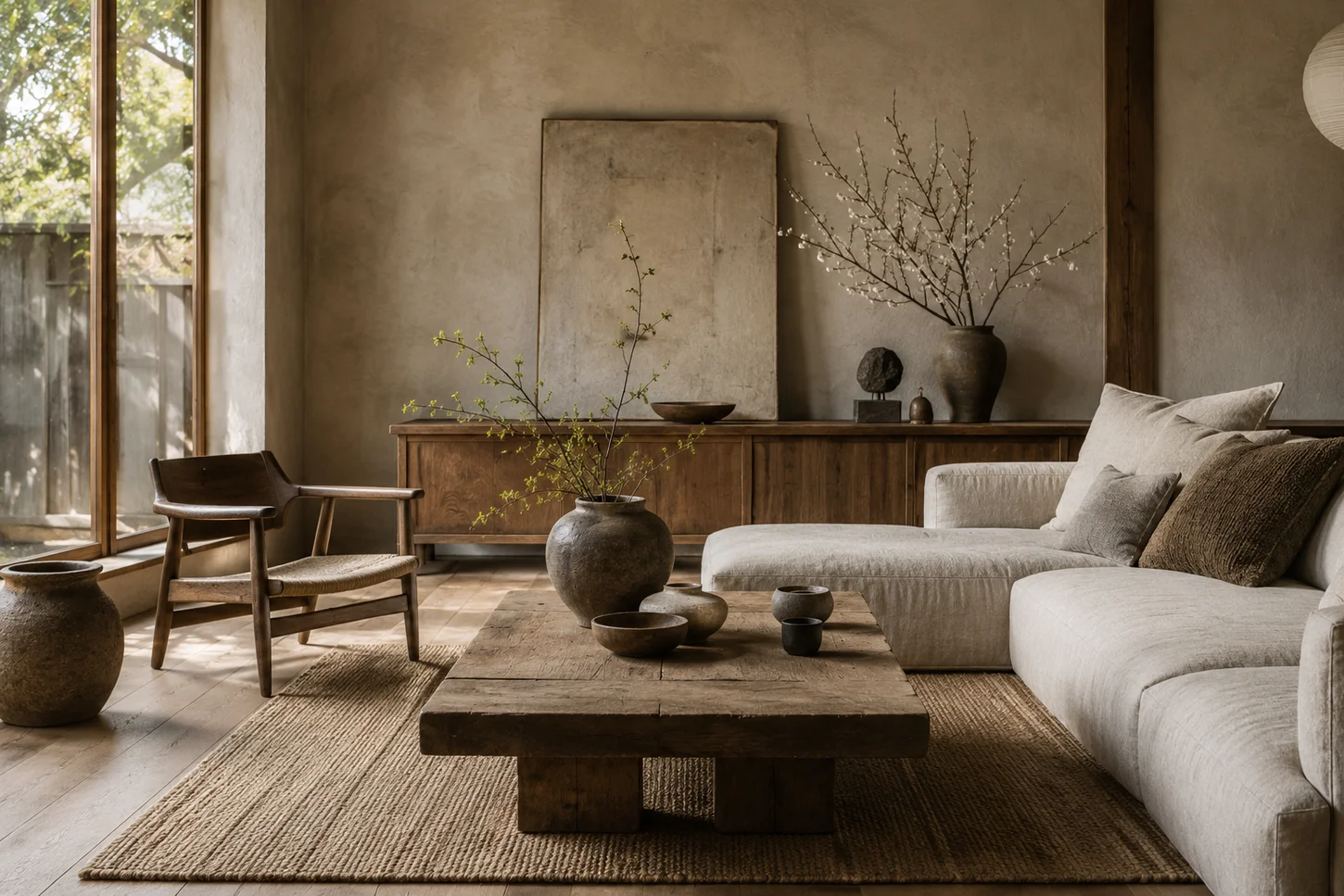

There is something quietly appealing about a home that doesn’t try too hard. No perfect symmetry, no matching sets, no surfaces that look untouched. Just a space that feels calm, natural and genuinely lived in. That is the spirit behind wabi sabi interior design — a Japanese aesthetic philosophy that has been guiding thoughtful home design for centuries, and one that is finding a new audience among homeowners who are tired of overly polished, trend-driven interiors.
This guide explores what wabi sabi interior design actually means, how to apply it room by room, which materials and colours suit the style, and why flooring plays such a central role in getting the look right. Whether you are starting from scratch or simply looking to bring more warmth and authenticity into your home, wabi sabi offers a framework that is as practical as it is beautiful.
What Is Wabi Sabi Interior Design?
Wabi sabi interior design is rooted in a Japanese aesthetic philosophy that finds beauty in imperfection, simplicity, impermanence and authenticity. It is not a trend, and it is not simply another name for minimalism. Wabi sabi is a way of seeing — a mindset that shapes how you choose, arrange and live with the objects and materials in your home.
In practical terms, wabi sabi interiors are:
- Calm — spaces that feel restful rather than stimulating
- Warm — achieved through natural materials, soft textures and earthy tones
- Natural — connected to the organic world through timber, stone, clay and fibre
- Authentic — honest about what things are made of and how they have aged
- Lived-in — not showroom-perfect, but comfortable and personal
- Uncluttered — thoughtfully edited, with room to breathe
- Timeless — built around enduring materials and shapes rather than passing trends
The difference between a wabi sabi room and an empty one is important. Empty rooms simply lack things. Wabi sabi rooms have been deliberately considered — what remains has purpose, character or meaning. The space between objects is as intentional as the objects themselves.
This is a style that works particularly well for Gold Coast homeowners who want a genuine retreat from overly staged or corporate interiors. Wabi sabi design commonly emphasises natural materials, subdued colours, irregularity, simplicity and the honest marks of time.
What Does Wabi Sabi Mean?
The term wabi sabi comes from two separate Japanese concepts that together describe a broader aesthetic and philosophical outlook.
Wabi relates to simplicity, rusticity and a kind of quiet contentment found in modest, unpretentious things. Sabi refers to the beauty that comes with age, wear and the passage of time — the patina on an old ceramic bowl, the grain that deepens in weathered timber, the way a linen cloth softens after years of washing.
Neither word translates neatly into English on its own. Together, they describe something more nuanced: the idea that imperfection and transience are not flaws to be corrected, but qualities to be appreciated. A crack in a handmade mug is not a defect — it is part of that object’s character and history.
This is why wabi sabi interiors tend to feel so different from rooms that prioritise visual perfection. The philosophy actively invites authenticity into the home.
Is Wabi Sabi the Same as Minimalism?
There are obvious similarities. Both wabi sabi and minimalist interiors favour simplicity, restraint and a reduced visual palette. Both resist clutter and unnecessary decoration. If you are drawn to one, you will likely find things to appreciate in the other.
The distinction is in the underlying motivation. Minimalism is primarily concerned with removing excess — it is a design discipline built around reduction. Wabi sabi, by contrast, is about appreciation. It is less interested in having fewer things and more interested in the quality, authenticity and character of what remains.
A wabi sabi home can include meaningful objects, layered textures, handmade pieces and signs of age — none of which a strict minimalist interior would necessarily welcome. Wabi sabi is warmer, more personal and more forgiving than minimalism. It makes room for the imperfect and the well-loved, as long as each element feels intentional.
The Key Principles of Wabi Sabi Interior Design
Wabi sabi should be treated as a guiding philosophy rather than a checklist of products. These principles are intended to shape the way you approach each decision in a room — from the flooring underfoot to the ceramics on the shelf.
Embrace Imperfection
In a wabi sabi interior, surfaces do not need to be flawless. Uneven textures, handmade objects, natural variations in timber grain, stone veining, aged finishes and the visible marks of craftsmanship are all welcomed rather than corrected.
Objects that develop character over time — a timber table that wears where hands rest, a ceramic vase that carries the fingerprints of the maker — are particularly suited to this aesthetic. The goal is not deliberate damage, but an honest relationship with natural materials and the way they change.
Keep the Space Simple
Simplicity in wabi sabi is not the same as emptiness. It means reducing unnecessary decoration, avoiding visual clutter and giving each piece of furniture or architectural feature room to be seen on its own terms.
Negative space — the empty areas between objects — is used intentionally. A shelf with three carefully chosen pieces says more than the same shelf crowded with objects.
Choose Natural Materials
Natural materials are central to wabi sabi interior design. The most commonly used include:
| Material | Common Applications |
| Timber | Flooring, furniture, shelving, architectural features |
| Stone | Benchtops, tiles, feature walls, decorative objects |
| Clay and ceramic | Vessels, tableware, tiles, decorative pieces |
| Linen | Bedding, curtains, upholstery, cushion covers |
| Cotton | Bedding, towels, soft furnishings |
| Wool | Rugs, throws, upholstery |
| Bamboo | Furniture, blinds, baskets, decorative accessories |
| Rattan | Chairs, lighting, storage, decorative accents |
| Natural fibres | Rugs, baskets, woven wall hangings |
Each of these materials brings its own texture, warmth and organic variation — qualities that are central to the wabi sabi aesthetic.
Appreciate Age and Patina
Wabi sabi interiors do not demand everything look brand new. Weathered timber, aged ceramics and materials that have developed a natural patina over time are considered assets rather than liabilities.
The important distinction is between intentional character and neglect. A well-maintained piece of reclaimed timber has aged gracefully and deserves a place in the home. A surface that has deteriorated from poor maintenance is a different thing entirely. Wabi sabi appreciates the former and has no interest in the latter.
Connect the Home With Nature
The wabi sabi home stays connected to the natural world through:
- Natural light — allowed to move through the space rather than being blocked or artificially supplemented
- Indoor plants and botanical elements
- Timber and stone that bring the outside in
- Organic shapes and forms that echo nature
- Nature-inspired colours such as earthy greens, warm neutrals and soft blues
- Views to outdoor spaces and genuine connections between inside and outside
Prioritise Meaning Over Decoration
Wabi sabi encourages choosing fewer items with genuine purpose or personal significance. A handmade ceramic from a local artisan, a woven basket brought back from a market, a piece of furniture that has been in the family for years — these carry a kind of weight and meaning that mass-produced decorative objects rarely do.
Avoid filling shelves simply because they are empty. In wabi sabi, an empty shelf is not a problem to be solved.
Wabi Sabi Colour Palette: Choosing the Right Colours
The wabi sabi colour palette is muted, natural and understated. It is not stark or clinical, but it is also not bold or saturated. Think of the colours of undyed linen, aged stone, driftwood and dry grass — tones that feel as though they belong to the natural world rather than a paint chart.
Earthy Neutrals
The foundation of a wabi sabi colour scheme is built from earthy neutrals. These include:
- Warm white — softer than bright white, with a hint of cream or stone
- Cream — a gentle, flattering base that pairs well with timber and natural textiles
- Beige — warm and versatile, particularly effective in living rooms and bedrooms
- Taupe — a useful mid-tone that reads as both warm and sophisticated
- Sand — a light, natural tone with a quiet warmth
- Greige — the blend of grey and beige that has become a staple of contemporary neutral interiors
- Soft brown — grounding and earthy, works well on walls and in textiles
- Warm grey — more restrained than greige but still warmer than a cool grey
Natural Accent Colours
Accent colours in a wabi sabi interior are used sparingly and always drawn from nature:
- Olive — a muted, earthy green with warm undertones
- Sage — lighter than olive, soft and versatile
- Terracotta — warm and organic, works well in small doses
- Clay — a slightly more muted version of terracotta, excellent for textiles and ceramics
- Charcoal — useful as a grounding accent in a predominantly light-toned room
- Muted green — any green that has been desaturated to the point where it reads as natural rather than vibrant
- Soft blue-grey — a calming accent that works particularly well in bathrooms and bedrooms
How to Avoid a Cold or Sterile Neutral Interior
The risk with a neutral colour palette is that it can feel flat or cold if not handled carefully. To keep the space feeling warm and alive:
- Layer different shades of neutral rather than relying on a single tone throughout
- Combine colours with texture — rough linen, smooth ceramic, grainy timber
- Use timber and textiles to introduce organic warmth
- Avoid relying entirely on bright white, which can feel harsh and clinical alongside natural materials
Natural Materials That Work in Wabi Sabi Interiors
Timber and Wood
Timber is one of the most important natural materials in wabi sabi design. Its natural grain, knots and tonal variation mean no two pieces are identical — a quality that aligns perfectly with the philosophy’s appreciation of imperfection.
Warm timber colours — honey, amber, walnut, aged oak — bring depth and life to neutral rooms. Matte or low-sheen finishes are preferred over high-gloss, which can look too polished and artificial. Reclaimed timber and pieces with a visibly aged appearance are particularly suited to the wabi sabi aesthetic, as they carry a history that newer materials cannot replicate.
Timber works especially well as flooring, furniture and architectural features such as exposed beams, shelving and window frames.
Stone and Ceramic
Natural stone brings texture, variation and a sense of permanence to wabi sabi interiors. Travertine-inspired finishes, slate and rough-hewn stone tiles are particularly effective. Each piece of natural stone is unique, which makes it inherently suited to a philosophy that values irregularity.
Terracotta tiles — whether genuine terracotta or terracotta-finish ceramics — add warmth and an organic quality that works well in kitchens, bathrooms and entry areas. Handmade ceramics, with their slight irregularities and variations in glaze, are ideal for decorative and functional use throughout the home.
The interplay between rough and smooth textures — a rough stone wall alongside a smooth ceramic bowl, for instance — creates the kind of tactile interest that wabi sabi interiors do well.
Natural Textiles
Textiles play an important role in softening wabi sabi interiors and adding warmth. The most suitable materials include:
- Linen — slightly rough, beautifully textured and only improves with age
- Cotton — soft, natural and easy to live with
- Wool — warm, tactile and excellent for rugs, throws and upholstery
- Jute — earthy and textural, most commonly used for rugs and baskets
- Natural-fibre rugs — sisal, seagrass, coir and jute rugs add texture underfoot and complement hard flooring options
Soft, tactile furnishings in natural materials are one of the most accessible ways to introduce the wabi sabi aesthetic into any room.
Bamboo, Rattan and Other Organic Materials
Bamboo, rattan and similar organic materials bring a lightness and warmth to wabi sabi interiors that heavier materials cannot always provide. Common applications include:
- Furniture — rattan chairs, bamboo side tables, woven ottomans
- Baskets — for storage, organisation and decoration
- Lighting — pendant shades in rattan or woven fibre cast warm, dappled light
- Decorative elements — woven wall hangings, bamboo frames, rattan trays
These materials age well and are naturally suited to homes that see genuine everyday use.
Choosing Flooring for a Wabi Sabi Interior
Flooring creates one of the largest continuous visual surfaces in any room. It sets the tone for everything above it — the furniture, the textiles, the lighting, the art. Getting the flooring right is one of the most important decisions in a wabi sabi interior.
What Makes Flooring Suitable for Wabi Sabi Design?
Suitable flooring for a wabi sabi home tends to share the following characteristics:
- Natural-looking finishes that reference timber, stone or organic textures
- Warm timber tones or earthy neutral colours
- Organic visual variation — grain patterns, textural differences, tonal shifts
- Matte or low-sheen appearances rather than high-gloss surfaces
- Subtle textures that engage the eye without dominating the room
- Timeless patterns and finishes that will not date quickly
- Practicality for everyday living — because aesthetics alone are never enough
Timber Flooring for Wabi Sabi Homes
Natural timber flooring is perhaps the most natural fit for a wabi sabi interior. The grain, knots and tonal variation that occur in real timber mean every floor is unique — a quality that aligns directly with the philosophy’s appreciation of natural imperfection.
Timber brings warmth, connection to nature and a visual depth that few other flooring materials can replicate. Over time, a well-maintained timber floor develops a patina that adds to rather than detracts from the room’s character.
For homeowners considering this option, Timber Flooring Gold Coast from Award Carpets offers a range of natural timber options suited to both the look and the practical demands of Gold Coast homes.
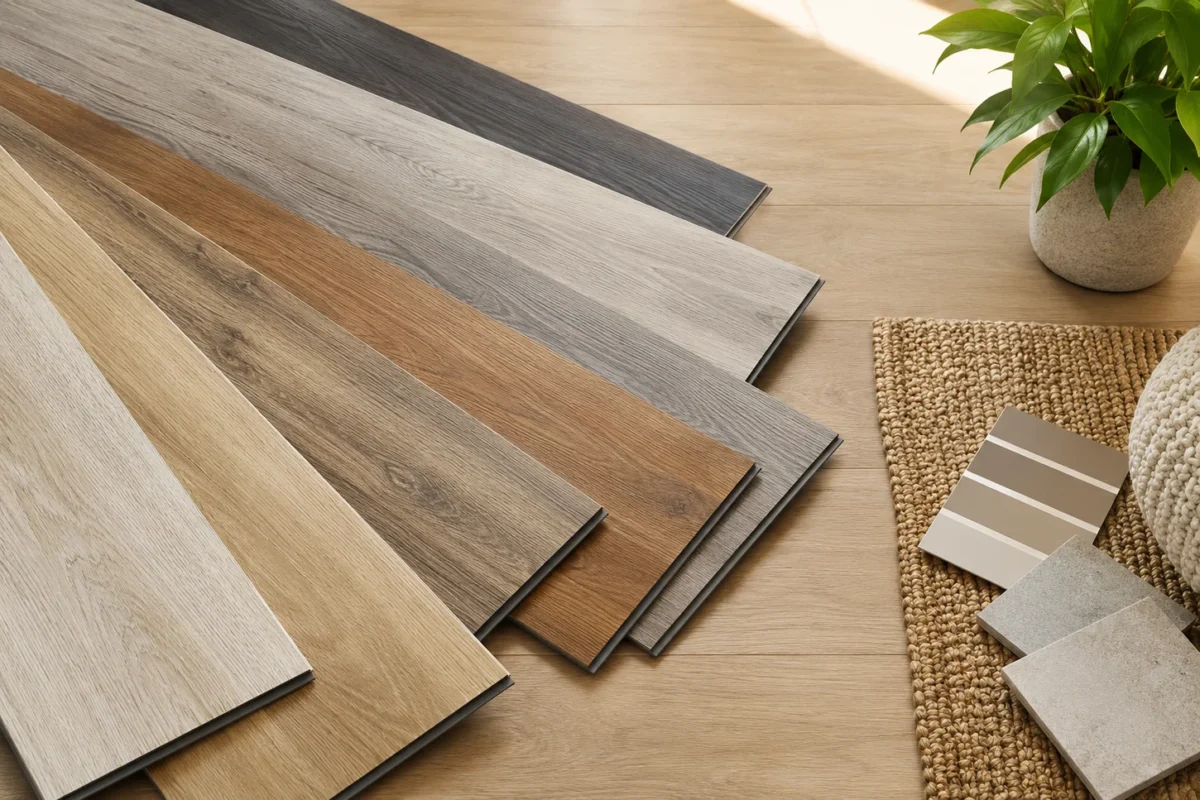
Hybrid Flooring With a Natural Timber Look
For homeowners who want the visual warmth of timber but need something more durable and easier to maintain, hybrid flooring is worth considering.
Award Carpets’ hybrid range offers realistic timber colours and textures — including natural, understated options — while also providing hard-wearing and water-resistant characteristics. In a Gold Coast home, where humidity, sandy feet and busy households are everyday realities, this combination of aesthetics and practicality is genuinely useful.
Explore Hybrid Flooring Gold Coast to see the current range.
Laminate Flooring for a Wabi Sabi Look
Laminate flooring has improved significantly in recent years, and modern timber-inspired laminate finishes can work well in a wabi sabi interior. Natural-looking grain, neutral timber tones and a matte surface can all contribute to a warm, understated aesthetic.
As with any flooring decision, it is worth considering the specific room, expected traffic levels and household requirements before choosing. Laminate Flooring Gold Coast is a practical option that can deliver the look without the maintenance requirements of natural timber.
Vinyl Flooring and Wabi Sabi-Inspired Interiors
Timber-look vinyl and stone-inspired vinyl finishes can both contribute to a wabi sabi aesthetic, particularly in rooms where moisture resistance is a priority. Vinyl offers a softer, quieter underfoot feel than harder flooring options — a quality that suits the calm, comfortable atmosphere wabi sabi interiors aim for.
The key when choosing vinyl for a wabi sabi home is to look for understated, natural-looking patterns and finishes. Overly glossy or artificial-looking designs can work against the organic quality the style depends on. Vinyl Flooring Gold Coast from Award Carpets includes a range of options across timber-look and stone-inspired finishes.
Carpet in Wabi Sabi Bedrooms and Living Spaces
Wabi sabi homes do not need to have hard flooring throughout. Carpet is a genuinely useful option in bedrooms and living spaces where softness, warmth and comfort are priorities.
Neutral carpet in warm tones — cream, oatmeal, warm grey, soft taupe — contributes to the muted, natural colour palette the style depends on. Wool and wool-look carpets are particularly suited to wabi sabi interiors, with their natural texture and tactile quality. A carpeted bedroom with natural bedding and simple timber furniture can feel genuinely calm and inviting.
Rugs layered over hard flooring are another useful option, adding texture and warmth without committing to carpet throughout. Explore Carpet Gold Coast for options suited to wabi sabi bedrooms and living spaces.
How to Choose the Right Flooring Colour
Choosing flooring colour for a wabi sabi home involves looking at the whole room rather than the floor in isolation. Consider:
- Existing furniture and cabinetry colours
- Wall colour and how it interacts with the floor
- The amount and direction of natural light
- Timber tones already present in the room
- Room size — lighter floors can open up a small space; darker tones add depth to larger rooms
- Desired warmth — cooler greys read differently from warm honey tones
- Overall texture in the room and how the floor contributes to it
Flooring does not need to perfectly match every timber element in the room. In fact, a mix of complementary timber tones often reads as more natural and less contrived than a perfectly matched set.
Wabi Sabi Furniture: Simple, Functional and Organic
Choose Furniture With Natural Materials
Furniture in a wabi sabi interior should be honest about what it is made of. Solid-looking timber, stone, linen upholstery, rattan and other natural fabrics are all appropriate. Furniture that mimics natural materials without conviction tends to feel at odds with the philosophy.
Look for Organic Shapes
Rounded edges, irregular forms, soft silhouettes and pieces with a handmade appearance sit comfortably in wabi sabi interiors. Furniture with a slightly imperfect quality — a table with a slightly uneven top, a chair whose grain runs at an unexpected angle — is often more interesting than a machine-perfect equivalent.
Prioritise Function Over Excess
Avoid furniture that serves no genuine purpose in the room. Leave breathing room between pieces. In a wabi sabi interior, each item of furniture should be there for a reason.
Mix New and Aged Pieces
Modern furniture can work well alongside vintage or antique pieces in a wabi sabi interior. The key is to allow each piece to retain its own character rather than making everything look artificially matched or deliberately distressed. Authentic ageing is different from manufactured “vintage.”
Wabi Sabi Living Room Ideas
Start With a Natural-Looking Floor
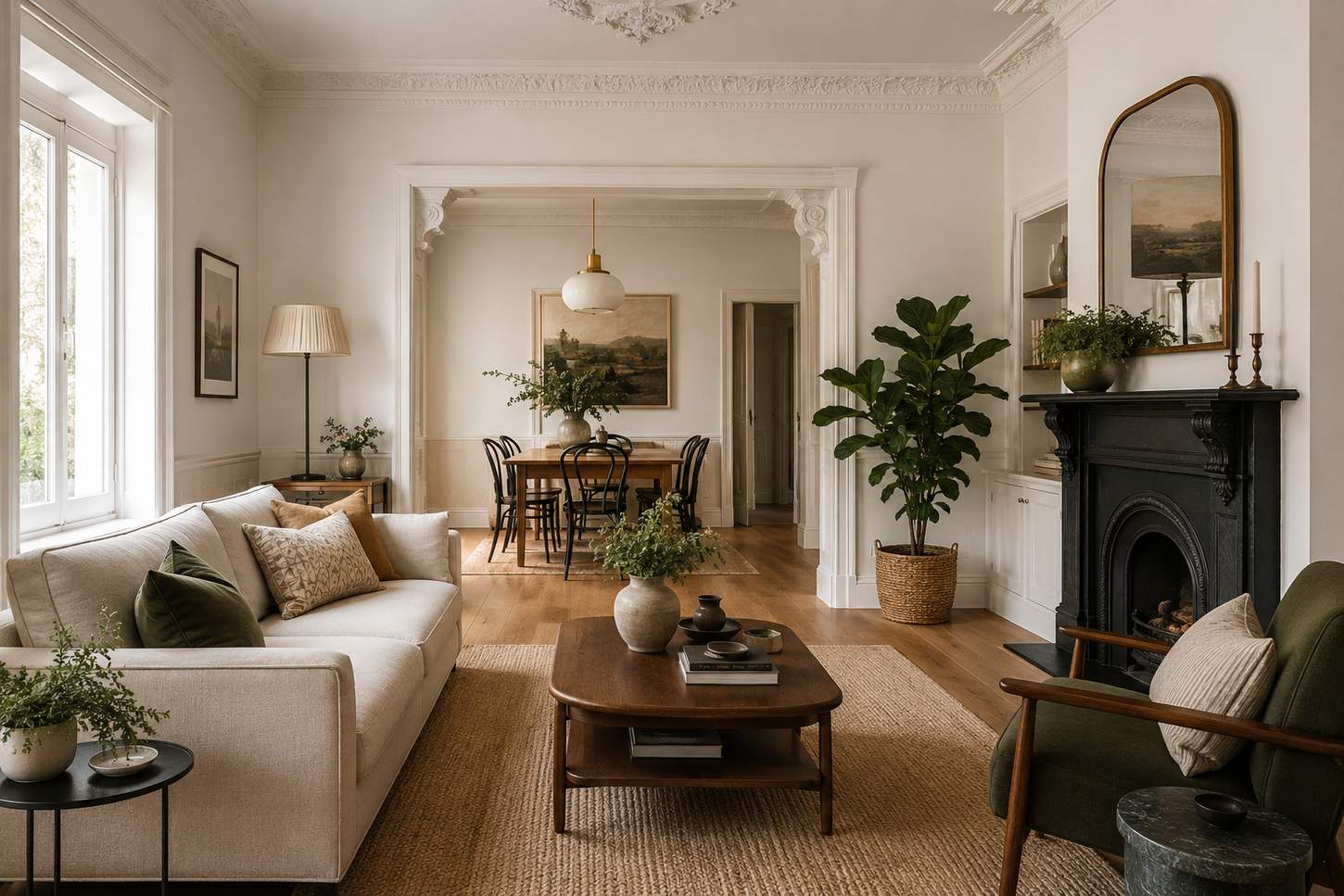
The living room floor sets the tone for the whole space. A natural timber floor, a timber-look hybrid option, a neutral carpet or a natural-looking laminate or vinyl can all work well — the choice depends on the household’s practical needs as much as the desired aesthetic.
Use a Restrained Furniture Palette
A low-profile sofa in linen or cotton, a timber coffee table, simple timber side tables and minimal shelving are all well-suited to a wabi sabi living room. Avoid the temptation to fill every surface or wall.
Layer Different Textures
Texture is one of the most important tools in a wabi sabi living room. Consider:
- Linen cushions on the sofa
- A wool throw draped over one arm
- A timber coffee table with a natural grain
- A ceramic vase or bowl on a side table
- A stone or concrete object as a focal point
- A natural-fibre rug anchoring the seating area
These layers of texture create visual and tactile interest without requiring colour or pattern.
Leave Space Around Key Pieces
Negative space is intentional in wabi sabi design. Resisting the urge to fill the room means each piece of furniture can be seen and appreciated on its own terms. A living room with room to breathe feels calmer and more considered than one where every corner is occupied.
Wabi Sabi Bedroom Ideas
Create a Calm and Uncluttered Foundation
The wabi sabi bedroom should feel like a genuine retreat — a space where the visual and sensory noise of everyday life is reduced. Start by removing anything from the room that does not belong there. A clutter-free bedroom is the foundation everything else builds on.
Choose Soft, Natural Bedding
Linen bedding is a natural fit for the wabi sabi bedroom. It has a slightly textured, lived-in quality that improves with washing and never looks too perfect. Cotton, wool and other natural fibres are equally appropriate. Avoid bedding that is too crisp or formal.
Use Warm and Muted Colours
The bedroom is a good place to use the softest tones from the wabi sabi palette — warm white, cream, oatmeal or soft sand. These colours support rest and relaxation without feeling cold or clinical.
Add Texture Without Creating Clutter
A layered bed — a duvet, a linen throw, a single cushion or two — reads as textural and inviting. Timber furniture with a visible grain, a woven basket on the floor, a ceramic lamp on the bedside table: each of these adds texture without adding visual noise.
Choose Comfortable, Natural-Looking Flooring
Carpet is worth serious consideration for the wabi sabi bedroom. The softness underfoot, the warmth it provides and the comfort it offers when getting out of bed in the morning are practical qualities that align with the style’s emphasis on genuine comfort. Neutral, textured carpet in a wool or wool-look material is particularly suitable.
For those who prefer hard flooring in the bedroom, a natural-fibre rug beside the bed performs a similar function.
Wabi Sabi Kitchen Ideas
Use Natural Timber Elements
Timber cabinetry, open timber shelving and timber benchtop sections all bring warmth and natural character to a wabi sabi kitchen. Avoid very high-gloss finishes in favour of matte or satin options that show the grain and texture of the wood.
Introduce Stone and Ceramic
Natural stone benchtops, terracotta or stone-look floor tiles, and handmade ceramic tiles as splashbacks are all well-suited to a wabi sabi kitchen. Each of these materials brings a unique surface quality that manufactured alternatives cannot replicate.
Choose Matte Rather Than High-Gloss Finishes
Matte surfaces — on cabinetry, benchtops, tiles and tapware — give a wabi sabi kitchen a quieter, more natural quality than high-gloss equivalents. High-gloss finishes reflect light in a way that can feel clinical and at odds with the warmth the style depends on.
Keep Benchtops and Shelving Visually Uncluttered
A wabi sabi kitchen is not a staging exercise, but it is an edited one. Keep benchtops clear of appliances and objects that are not used regularly. On open shelves, leave space between objects. Let a few carefully chosen pieces — a handmade ceramic pot, a timber chopping board, a small collection of spice jars — tell the story.
Allow Handmade Pieces to Add Character
Handmade ceramics, hand-thrown cups and bowls, and kitchen tools with natural handles all bring the kind of personal, imperfect character that wabi sabi celebrates. These pieces do not need to match.
Wabi Sabi Bathroom Ideas
Use Stone-Inspired Materials
Stone tiles, travertine-finish surfaces, rough-textured ceramic tiles and natural stone accessories are all well-suited to a wabi sabi bathroom. The variation in natural stone means no two surfaces look exactly the same — a quality that works in the philosophy’s favour.
Choose Earthy Colours
Earthy neutrals — warm white, cream, taupe and terracotta — work particularly well in bathrooms, where they feel calm and spa-like without being clinical. Soft sage green and muted blue-grey are also useful accent tones in this space.
Introduce Timber Carefully
Timber can work in bathrooms, but it needs to be chosen and maintained carefully given the moisture involved. Timber accessories, mirrors with timber frames, teak shower stools and timber shelving can introduce warmth without creating maintenance problems.
Use Simple, Functional Fixtures
Simple, unfussy tapware in matte black, brushed brass or warm nickel suits a wabi sabi bathroom. Avoid overly decorative or design-heavy fixtures that draw too much attention to themselves.
Add Texture Through Towels and Accessories
Linen or waffle-weave towels, a natural-fibre bath mat, a simple ceramic soap dish and a woven basket for storage all add texture and warmth to the bathroom without creating visual clutter.
Wabi Sabi Lighting and Natural Light
Make the Most of Natural Light
Natural light is one of the most important elements in any wabi sabi interior. Large windows, unobstructed sightlines and a genuine connection to the outdoors all contribute to the sense of calm and natural authenticity the style depends on.
On the Gold Coast, where natural light is abundant, this is one of the easiest aspects of wabi sabi design to achieve. Sheer curtains — linen or cotton — allow light to filter through while maintaining a degree of privacy. Heavy drapes can block the natural light that gives these interiors their character.
Choose Warm, Soft Lighting
Artificial lighting in a wabi sabi home should feel warm, soft and ambient rather than bright and task-focused. Table lamps and floor lamps with paper or fabric shades, pendant lights in rattan or woven fibre, and warm-toned bulbs all contribute to the style’s calm atmosphere.
Avoid Overly Harsh Lighting
Strong, cool overhead lighting works against the wabi sabi aesthetic in living spaces and bedrooms. It can strip the warmth from natural materials and make a carefully considered room feel clinical. Layer different light sources at different heights to create a softer, more considered effect.
Wabi Sabi Decor: Less but Better
Handmade Ceramics
Handmade ceramics — bowls, vases, cups, plates — are among the most appropriate decorative objects for a wabi sabi interior. Their slight irregularities, variations in glaze and evidence of the maker’s hand give them a quality that mass-produced equivalents cannot offer.
Natural Baskets and Storage
Woven baskets in natural fibre — rattan, jute, seagrass — serve both a decorative and practical function. They are well-suited to living rooms, bedrooms and bathrooms, and age gracefully.
Plants and Botanical Elements
Plants bring life, organic form and connection to the natural world into a wabi sabi home. A single well-chosen plant in a simple ceramic pot is more effective than a collection of plants arranged for effect.
Textured Throws and Cushions
A wool throw, a linen cushion or a woven textile draped over a chair adds warmth and tactile interest without requiring pattern or colour. These are the easiest and most reversible changes to make in any room.
Meaningful Objects
Choose a few objects that carry genuine personal significance — a piece of pottery bought on a trip, a piece of driftwood found on a beach walk, a simple timber object made by hand. These pieces anchor the space in real life and real memory.
Artwork With Organic or Abstract Forms
Artwork in a wabi sabi home tends toward organic forms, abstract marks, botanical subjects and earthy tones. Simple framing — timber, natural linen mat — suits the aesthetic. Avoid busy or highly colourful work that competes with the room’s natural palette.
How to Create a Wabi Sabi Home on a Budget
Wabi sabi is, in many ways, a budget-friendly design philosophy. Its emphasis on restraint, authenticity and the things you already own means it does not require a major spending exercise to achieve.
Declutter Before Buying Anything
The single most transformative step toward a wabi sabi interior costs nothing. Go through each room and remove everything that does not serve a genuine purpose or carry real personal meaning. You may find you already have everything you need — it was simply obscured by excess.
Work With What You Already Own
Before purchasing anything new, look at what you already have. An old ceramic bowl, a timber tray, a woven basket, a linen throw — these are exactly the kinds of objects that suit a wabi sabi interior. A fresh coat of paint in a warm neutral can transform a room without replacing a single piece of furniture.
Change the Flooring Before Replacing Everything
Flooring can dramatically change the visual foundation of a room — more so than painting walls or replacing furniture. If existing flooring feels at odds with the natural, warm aesthetic you are aiming for, updating it may be one of the highest-impact changes you can make.
Before committing to new flooring, consider whether what you already have can be worked with. If the existing floor is in good condition, a natural-fibre rug may be all that is needed to shift the aesthetic.
When replacing flooring, prioritise timeless, natural-looking finishes over whatever is fashionable at the moment. A neutral timber-look floor will serve the room well for many years.
Shop for Second-Hand and Vintage Pieces
Markets, op shops and second-hand furniture stores are excellent sources of the kind of aged, characterful pieces that suit wabi sabi interiors. A worn timber stool, a set of mismatched handmade cups, a vintage ceramic lamp — these things are more aligned with the philosophy than anything bought new.
Use Texture Instead of Expensive Decoration
A natural-fibre rug, a linen cushion cover and a woven throw can transform the feel of a room without a significant outlay. Texture is one of the most effective tools in the wabi sabi design kit, and natural textiles are among the most accessible materials available.
Choose Quality Over Quantity
When you do invest in something new, choose quality over quantity. A single well-made ceramic bowl that you genuinely love is more aligned with wabi sabi than five inexpensive decorative objects that fill a shelf.
Common Wabi Sabi Interior Design Mistakes to Avoid
Making the Room Too Minimal
Wabi sabi is not about creating an empty room. Spaces that are stripped of all texture, warmth and personal character in pursuit of minimalism are not wabi sabi — they are simply bare. Warmth, texture and meaning are all part of the philosophy.
Buying Artificially Distressed Furniture
There is a meaningful difference between furniture that has genuinely aged and developed character, and furniture that has been manufactured to look distressed. Authentic imperfection has a quality that the manufactured version cannot replicate. If a piece looks artificially weathered, it probably will not suit a wabi sabi interior.
Using Too Many Neutral Colours Without Texture
Beige walls, beige carpet and beige furniture without any texture will not create a wabi sabi interior — it will create a flat and uninspiring room. Neutral colours need the company of varied textures to come alive. Timber, linen, ceramic, stone and natural fibre are the tools that make a neutral palette interesting.
Filling Every Empty Space
The impulse to fill empty shelves, corners and surfaces is a common one, but it works against the wabi sabi philosophy. Empty space is intentional. It gives the objects that are present room to be noticed. Leave some spaces empty.
Mixing Too Many Materials
Natural materials should complement rather than compete with one another. A room that contains timber, stone, concrete, rattan, terracotta, linen and ceramic all at once can feel busy despite being built from natural elements. Choose a few materials and use them with purpose.
Following the Trend Too Literally
Wabi sabi should feel personal rather than staged. If the result looks like a Pinterest board recreation, it probably lacks the authenticity the philosophy requires. Let the space develop naturally, with objects and materials that have genuine meaning for the people who live there.
Choosing Appearance Over Practicality
A beautiful floor still needs to suit the household it lives in. A natural timber floor might be the ideal choice aesthetically, but if the household includes young children, active pets and heavy foot traffic, a hybrid or vinyl option with similar visual qualities may serve the home better in practice. Wabi sabi is fundamentally about authentic living — and that includes making choices that genuinely work for real life.
Wabi Sabi vs Other Popular Interior Design Styles
Wabi Sabi vs Minimalism
As discussed earlier, wabi sabi and minimalism share a preference for simplicity and restraint, but differ in their underlying motivation. Minimalism is disciplined and focused on reduction. Wabi sabi is philosophical and focused on appreciation. A wabi sabi home is warmer, more textural and more personal than a purely minimalist one.
Wabi Sabi vs Japandi
Japandi is a design style that blends Japanese and Scandinavian design principles, drawing from both to create interiors that are functional, warm and restrained. It shares many qualities with wabi sabi — natural materials, muted palettes, clean lines — but tends to be more polished and design-conscious. Wabi sabi is less concerned with visual precision and more accepting of genuine imperfection. For a deeper look at Japandi, our Guide to Japandi Style Interior Design explores the style in detail.
Wabi Sabi vs Scandinavian Design
Scandinavian design — the basis for much of what is sold as contemporary “Nordic” style — emphasises functionality, clean lines and a restrained palette, often with a strong emphasis on light. It shares wabi sabi’s appreciation for natural materials and simple forms, but tends toward a cooler, more structured aesthetic. Wabi sabi is warmer and more comfortable with organic irregularity. Explore more in our Guide to Scandi Style Interior Design.
Wabi Sabi vs Rustic Interior Design
Rustic interiors celebrate natural materials, rough textures and a connection to the land — all qualities wabi sabi shares. The key difference is in tone. Rustic design tends toward the heavy and decorative, often featuring dark timbers, leather, wrought iron and a robust, layered aesthetic. Wabi sabi is quieter, lighter and more restrained in its approach.
Wabi Sabi vs Zen Interior Design
Zen and wabi sabi share philosophical roots in Japanese culture, and both emphasise calm, simplicity and a mindful approach to the home. Zen design is perhaps more rigorous in its pursuit of order and emptiness. Wabi sabi is more forgiving of the imperfect and the personal. A wabi sabi home might feel lived in in a way that a strictly Zen interior would not.
Wabi Sabi vs Boho Interior Design
Bohemian or boho interiors share wabi sabi’s affection for natural materials, handmade objects and an eclectic mix of textures. The two styles diverge significantly in their visual energy, however. Boho tends toward layered, maximalist abundance — pattern on pattern, colour on colour. Wabi sabi is restrained, muted and quiet by comparison. Our Guide to Boho Interior Design explores that style in its own right.
How to Bring Wabi Sabi Style Into a Gold Coast Home
Wabi sabi translates naturally to Gold Coast homes, particularly given the region’s climate, lifestyle and existing connection to the natural environment. That said, the Gold Coast’s specific conditions are worth keeping in mind.
Choose Materials That Suit the Gold Coast Climate
The Gold Coast is a high-humidity coastal environment. Sand, moisture, strong sunlight and busy indoor-outdoor households are everyday realities. Flooring and material choices for a wabi sabi home here need to account for these conditions alongside their aesthetic qualities.
For flooring specifically, this is one of the reasons hybrid and vinyl options are worth considering alongside natural timber. Award Carpets’ own range acknowledges the demands of Gold Coast living — including sand, humidity and heavy foot traffic — and can advise on options that balance the natural aesthetic of wabi sabi with the practical needs of the region.
Create a Natural Connection Between Indoor and Outdoor Spaces
Gold Coast homes are well-positioned to make the most of one of wabi sabi’s most important principles: the connection between interior and exterior spaces. Large windows and glass doors, consistent flooring transitions between inside and outside living areas, timber tones that echo the surrounding natural landscape and plants that blur the line between garden and home can all strengthen this connection.
Choosing flooring that works visually through an open door to a deck or outdoor area helps maintain the sense of continuity between spaces.
Balance Aesthetics With Practicality
Wabi sabi should still work for real Gold Coast households. Families, pets, beach lifestyles and high foot traffic are all part of the picture. The philosophy does not ask homeowners to sacrifice practicality for appearance — in fact, it actively resists the idea of a home that looks good but cannot be lived in.
Choose flooring based on both its appearance and its performance. A floor that suits the look but deteriorates under normal household conditions is not aligned with wabi sabi values.
How to Start Creating Your Own Wabi Sabi Interior
Step 1 – Declutter the Room
Remove everything that does not serve a genuine purpose or carry real personal meaning. Start with the surfaces — benchtops, shelves, side tables. Work through storage and remove anything that has not been used or appreciated in the past year.
Step 2 – Choose Your Base Colour Palette
Select a warm neutral as your primary wall colour. Warm white, cream or a soft greige are all good starting points. This palette will inform every other decision you make in the room.
Step 3 – Select the Flooring
Consider what the room needs from its floor: warmth, durability, ease of maintenance, comfort underfoot. Identify a natural-looking finish that suits the colour palette and the household’s practical requirements. If flooring replacement is planned, tackle this before furniture and textiles — the floor is the visual foundation that everything else is built on.
Step 4 – Introduce Natural Materials
Identify one or two primary natural materials to build the room around — timber and linen, for instance, or stone and cotton. Limit the range of materials to those that complement one another naturally.
Step 5 – Add Soft Textures
Layer in textiles — cushions, throws, a rug — in natural fibres and neutral tones. These add warmth and tactile interest without requiring colour or pattern.
Step 6 – Bring in Nature
Add one or two plants in simple ceramic or terracotta pots. Ensure windows allow natural light to move through the space. Consider how views to the outside contribute to the room’s atmosphere.
Step 7 – Add Meaningful Objects
Choose a small number of objects that carry genuine personal significance or are beautiful in their simplicity — a handmade ceramic, a found stone, a piece of timber that has developed a character of its own over time.
Step 8 – Step Back and Remove Anything Unnecessary
Once everything is in place, step back and look at the room as a whole. If anything competes for attention, looks out of place or creates visual noise, remove it. Wabi sabi is as much about what is taken away as what is left behind.
Choosing the Right Flooring for Your Wabi Sabi Home
Flooring establishes the visual and sensory foundation of a wabi sabi interior. It is one of the most durable, impactful and considered choices you will make in the design process.
When choosing flooring for a wabi sabi home, consider:
| Factor | What to Look For |
| Appearance | Natural-looking grain, texture or variation |
| Material | Timber, timber-look, stone-look or neutral carpet |
| Colour | Warm neutrals, earthy tones, muted timber shades |
| Texture | Matte or low-sheen surfaces; subtle tactile quality |
| Durability | Suited to the room’s expected traffic and use |
| Maintenance | Honest about what the household can manage |
| Room function | Hard flooring or carpet based on practical need |
Award Carpets Gold Coast has been supplying and installing flooring on the Gold Coast for over 30 years. As a local, independent business, the team can help match the right flooring to both the aesthetic direction and the practical realities of your home.
The range includes Carpet, Hybrid Flooring, Vinyl Flooring, Laminate Flooring and Timber Flooring — all available to view in store or online. Once you have chosen, our team also handles Professional Flooring Installation Gold Coast from start to finish.
Frequently Asked Questions About Wabi Sabi Interior Design
What is Wabi Sabi interior design?
Wabi sabi interior design is an approach rooted in the Japanese aesthetic philosophy of finding beauty in imperfection, simplicity, impermanence and authenticity. In practical terms, it results in homes that feel calm, warm, natural and genuine — built around natural materials, muted colours and objects that have real purpose or personal meaning.
What colours are used in Wabi Sabi interiors?
The wabi sabi colour palette is built around earthy neutrals — warm white, cream, beige, taupe, sand, greige, soft brown and warm grey. Accent colours are drawn from nature and used sparingly: olive, sage, terracotta, clay, charcoal and soft blue-grey. The overall effect is muted and understated rather than bold or saturated.
What materials are used in Wabi Sabi design?
Natural materials are central to wabi sabi design. These include timber, stone, clay, ceramic, linen, cotton, wool, bamboo, rattan and natural fibres. The preference is for materials that are honest about their origins, carry natural variation and develop character over time.
Is Wabi Sabi the same as minimalism?
Not exactly. Both share a preference for simplicity and restraint, but minimalism focuses on reduction for its own sake while wabi sabi focuses on appreciation of imperfection, authenticity and natural character. A wabi sabi home can be warmer, more textured and more personal than a strictly minimalist interior.
Is Wabi Sabi the same as Japandi?
The two styles share common ground — both draw from Japanese design principles and both emphasise natural materials and restraint — but Japandi is more polished and design-focused. Wabi sabi is more accepting of genuine imperfection and less concerned with visual precision. Both are worth exploring if you are drawn to calm, natural interiors.
What type of flooring suits Wabi Sabi interiors?
Flooring with a natural appearance — timber, timber-look hybrid, stone-inspired vinyl, neutral carpet — suits wabi sabi interiors well. The key qualities to look for are natural-looking finishes, warm neutral tones, organic visual variation and matte or low-sheen surfaces. The practical requirements of the household should also guide the choice.
Can you create a Wabi Sabi home on a budget?
Yes. Wabi sabi is inherently budget-friendly in that it prioritises restraint, authenticity and the meaningful use of what you already own. Decluttering, working with existing pieces, shopping second-hand and focusing on natural textiles and simple materials can all contribute to a wabi sabi aesthetic without significant outlay. Flooring is one area where investment can make a considerable difference — choosing a timeless, natural-looking option now avoids the need to replace it when trends change.
Can Wabi Sabi interior design work in a modern Australian home?
Yes. The principles of wabi sabi — natural materials, warm neutrals, simplicity, authenticity — translate readily to contemporary Australian homes. Gold Coast homes in particular, with their connection to the natural environment and their outdoor living culture, are well-suited to many of the style’s core ideas.
Is Wabi Sabi interior design suitable for families and pets?
It can be, with the right material choices. The philosophy does not ask homeowners to sacrifice practicality for appearance. In a busy household with children or pets, choosing flooring and materials that are genuinely durable — hybrid flooring with a natural timber look, stain-resistant carpet, easy-clean vinyl — ensures the aesthetic can be maintained under real-life conditions. Wabi sabi values authentic living, and that includes choosing things that actually work.
Final Thoughts on Creating a Wabi Sabi Interior
Wabi sabi is ultimately more about how a home feels than how it looks. It is a philosophy that asks you to slow down, look honestly at what you surround yourself with and make thoughtful choices based on quality, authenticity and meaning rather than trend or novelty.
The key elements of a wabi sabi home — simplicity, natural materials, texture, imperfection, comfort and timeless choices — are all things that benefit a home regardless of whether the owner is deliberately following any particular design philosophy. They just happen to come together particularly well under the wabi sabi framework.
Flooring is one of the most important foundations of this approach. The material underfoot — its texture, warmth, colour and character — establishes the tone for everything in the room above it. Getting that decision right is worth taking time over.
Award Carpets Gold Coast has the experience to help. With more than 30 years in the industry and a range that covers carpet, hybrid, vinyl, laminate and timber flooring, the team can help you find an option that suits both the aesthetic direction you are aiming for and the practical needs of your household. Contact Award Carpets Gold Coast to discuss your flooring options or to book a consultation.
Flooring as the Foundation: Why Award Carpets Gold Coast Gets It Right
Every element in a wabi sabi interior plays a role, but the floor is where everything begins. It is the largest continuous surface in any room, the first thing the eye travels across when you enter a space and the material that anchors every other decision — furniture placement, textile choices, colour palette, natural light.
Getting the floor right does not mean choosing the most expensive option or the one that looks best in isolation. It means choosing a material that works with the room’s natural light, complements the other materials present, suits the household’s genuine daily needs and will continue to look appropriate in five or ten years rather than dating quickly.
That kind of considered, long-term thinking is exactly what wabi sabi asks of every decision in the home. It is also what a good flooring consultation helps you arrive at.
Award Carpets Gold Coast is a locally owned, independent business with more than 30 years of experience helping Gold Coast homeowners choose flooring that works — practically, aesthetically and long-term. Whether you are starting with a specific floor type in mind or are still working through the options, the team can help you find something that suits your home and your life.
Explore the range online or visit in store. When you are ready to proceed, Professional Flooring Installation Gold Coast is available through the same team, handled from measure-up to final fit.