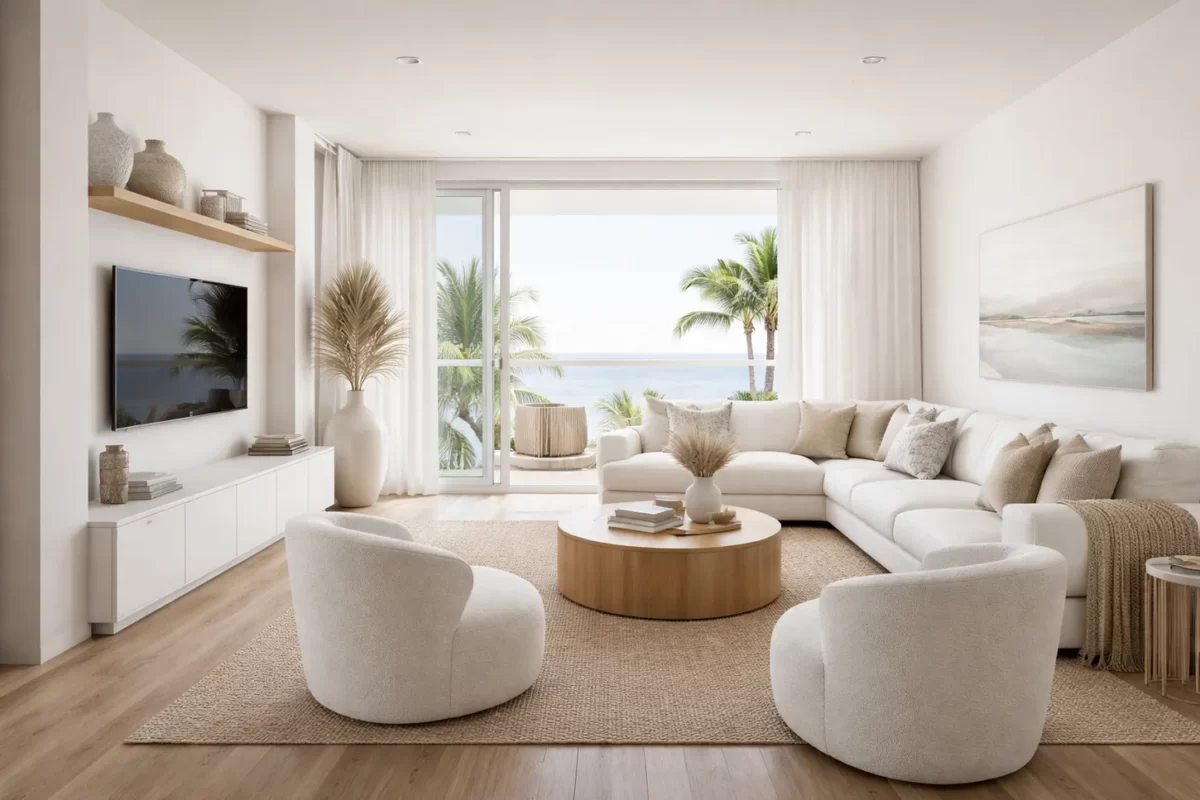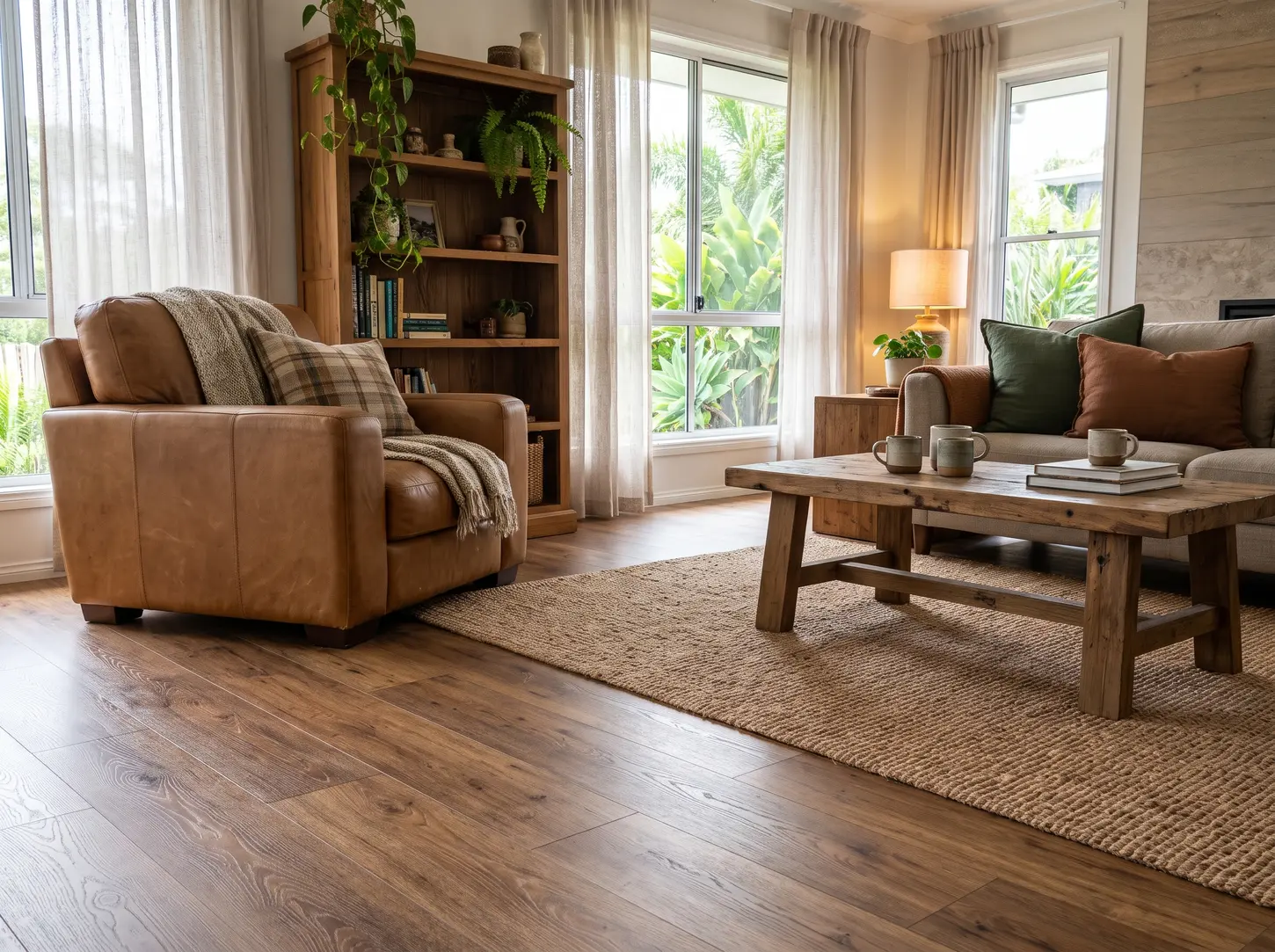

Picture a timber cabin tucked into the forest: worn floorboards, a deep armchair, a wool throw over your knees and a lamp glowing in the corner. Cabincore interior design brings that feeling into everyday homes, using natural materials, earthy colours and layered textures to create rooms that feel warm, grounded and easy to relax in.
The good news is you don’t need a mountain view to pull it off. With the right mix of flooring, furniture and finishes, cabincore style can work beautifully in a Gold Coast home, even in our warm, humid climate. At Award Carpets Gold Coast, we help locals choose flooring that suits both the look they’re after and the way they live. In this guide, we’ll cover the essentials of the style, room-by-room ideas, and how to choose cabin-style flooring that holds up to Gold Coast living.
What Is Cabincore Interior Design?
Understanding the Cabincore Aesthetic and Its Rustic Appeal
Cabincore is an interior style inspired by forest cabins, mountain lodges and woodland retreats. It favours natural timber, stone, leather, wool and linen, paired with colours pulled straight from the outdoors: forest greens, bark browns, rusty terracottas and warm creams.
What sets it apart is its relaxed, lived-in quality. Cabincore values texture over polish and character over perfection. A dining table with visible knots, a well-worn leather armchair and a shelf of hand-thrown ceramics all fit right in. The result is a rustic cabin interior design that feels collected over time rather than bought in one go.
Why Cabincore Is About Comfort, Nature and Slower Living
Part of cabincore’s appeal is what it represents. Many people want homes that feel like a retreat from busy schedules and screens, places that encourage reading, long dinners and unhurried weekends. Cabincore answers that with soft lighting, comfortable seating and materials that feel good to touch.
Because the style relies on natural materials that age well, it also tends to outlast short-lived trends. A solid timber table or a quality wool rug often looks better with a few years of use, not worse.
Can You Create a Cabincore Home Without Living in a Cabin?
Absolutely. Cabincore is about atmosphere, not architecture. You don’t need log walls or a stone chimney. A timber-look floor, a few pieces of solid wood furniture, earthy accent colours and layered textiles are enough to give a suburban house or apartment a cabin-inspired feel.
The trick for Gold Coast homes is adapting the heavier, cool-climate elements of the style so your home still feels comfortable in summer. We cover how to do that later in this guide.
Cabincore vs Cottagecore: What Is the Difference?
The Rustic, Woodland-Inspired Look of Cabincore
Cabincore draws on wild landscapes: forests, mountains and creeks. Its palette is deep and earthy, its materials are solid and textural, and its decor leans towards practical, handmade pieces. Think chunky timber, plaid throws, stoneware and warm lamplight.
The Romantic, Vintage-Inspired Charm of Cottagecore
Cottagecore takes its cues from English country cottages and rambling gardens. It’s lighter and softer, with floral prints, pastel tones, painted furniture, lace details and vintage china.
Comparing Colours, Materials, Furniture and Decorative Details
| Element | Cabincore | Cottagecore |
| Colours | Forest green, walnut brown, terracotta, charcoal, warm cream | Blush pink, lavender, sage, butter yellow, antique white |
| Materials | Raw timber, stone, leather, wool, iron | Linen, florals, wicker, painted timber, lace |
| Furniture | Solid timber tables, benches, leather armchairs | Painted dressers, vintage armchairs, rattan pieces |
| Decor | Stoneware, woven baskets, lanterns, botanical prints | Floral prints, teacups, dried flowers, embroidered linens |
| Mood | Grounded, rugged, outdoorsy | Romantic, whimsical, nostalgic |
Which Interior Design Style Is Right for Your Home?
If you’re drawn to deeper colours, heavier natural materials and an outdoorsy mood, cabincore is likely the better fit. If you prefer soft colours, florals and a romantic feel, cottagecore may suit you more. Plenty of homes borrow from both. The key is picking one as your main direction so colours and materials stay consistent from room to room.
The Essential Elements of Cabincore Interior Design
Natural Timber, Weathered Wood and Rustic Finishes
Timber is the backbone of cabincore home decor. It shows up in flooring, furniture, shelving, beams and accessories. Look for wood that shows its grain, knots and natural colour variation. Matte, oiled and brushed finishes suit the style far better than high-gloss surfaces, and reclaimed timber adds instant character.
Natural Stone, Leather and Layered Textures
Beyond timber, cabincore leans on other organic materials: stone for benchtops and feature walls, leather for seating, iron or aged brass for lighting and hardware, and wool, linen and cotton for textiles.
Layering these materials is what makes a room feel cosy. Think a rough timber bench beside a smooth ceramic lamp, a knitted throw on a leather armchair, or a wool rug over timber-look flooring. The contrast between hard and soft surfaces gives the space depth and invites you to settle in.
Vintage Furniture, Handmade Decor and Meaningful Personal Items
Cabin-inspired interiors rarely look like they came from a single showroom. They’re built gradually from pieces with a story, such as a second-hand sideboard, a market-bought basket or a lamp passed down through the family. Pieces don’t need to be true antiques, but they should feel personal and considered. If this is the part of cabincore you love most, grandma chic interior design takes a similar approach to vintage furniture and character-filled decorative pieces, with a softer, more nostalgic feel.
The Best Colour Palettes for a Cabincore Home
The cabincore palette comes straight from the forest floor. Here’s how each colour family tends to work:
| Colour family | Shades to try | Where it works best |
| Woodland greens | Forest green, moss green, olive | Feature walls, sofas, cabinetry, cushions |
| Warm browns | Walnut, chestnut, honey timber tones | Flooring, furniture, leather upholstery |
| Earthy warm tones | Terracotta, rust, burnt orange | Throws, rugs, pottery, small accents |
| Warm neutrals | Cream, beige, oatmeal, warm white | Walls, ceilings, bedding, carpet |
| Deep accents | Charcoal, deep burgundy, muted mustard | Accent chairs, artwork, a single feature wall |
How to Combine Cabincore Colours Without Making a Room Feel Too Dark
Start with a warm neutral base on the largest surfaces, usually the walls, ceiling and flooring, then bring in deeper shades through furniture, textiles and one or two feature elements. A useful rule of thumb is to let one deep colour lead in each room, supported by timber tones and lighter neutrals.
If a room gets limited natural light, keep the walls cream or warm white and let depth come from cushions, throws and artwork. Deep green walls can look wonderful in a bright, north-facing living room but may feel closed-in in a small, south-facing bedroom.
Choosing the Right Flooring for Cabincore Interior Design
Why Flooring Is Fundamental to the Cabincore Aesthetic
Flooring is usually the largest surface in a room, so it sets the tone for everything layered on top. A warm, textured timber-look floor gives cabincore furniture and colours a natural foundation, while a floor that’s too cool, glossy or stark can make even well-chosen decor feel disconnected. It’s also one of the harder elements to change later, so it pays to choose carefully.
Timber Flooring for an Authentic Cabin-Inspired Look
Real timber delivers the most authentic version of the look. No two boards are identical, and the grain and warmth of natural wood are hard to replicate. Solid timber can be sanded and refinished, and many engineered timber boards can also be refinished a limited number of times, depending on the thickness of the top layer.
The trade-offs are cost and care. Timber is a natural material that moves with changes in humidity, can scratch and dent, and needs ongoing maintenance. In a humid climate like the Gold Coast’s, correct acclimatisation and installation are important, and timber is generally not suited to wet areas.
Hybrid Flooring for Rustic Timber Style and Everyday Practicality
Hybrid flooring is a popular way to get a timber look with less upkeep. It pairs a realistic timber-look surface and protective wear layer with a rigid core, giving it good stability and strong water resistance. Many ranges include brushed oak, walnut and textured finishes that suit cabin-inspired interiors.
Not all hybrid products are the same, though. Differences in hybrid flooring composition and materials, such as the core type and wear layer thickness, affect how a floor handles foot traffic, heat and moisture. Hybrid is usually laid as a floating floor, so careful hybrid flooring installation with the right expansion gaps matters, particularly in rooms with large glass doors and strong afternoon sun. Water-resistance ratings and warranty conditions for wet areas also vary between products.
Laminate Flooring for an Affordable Wood-Look Interior
Timber-look laminate flooring is one of the most budget-friendly rustic flooring ideas. Modern laminates offer convincing grain patterns and embossed textures, and their hard-wearing surface stands up well to everyday scuffs.
The main limitation is moisture. Laminate has a wood-fibre core that can swell if water sits on it or seeps into the joints. Some products carry water-resistant ratings, but these vary, so laminate is best suited to living areas, bedrooms and hallways rather than bathrooms or laundries.
Vinyl Flooring for Versatile, Timber-Inspired Designs
Vinyl flooring offers timber-look planks in a wide range of tones and is highly water-resistant, which makes it a practical choice for kitchens, hallways and busy family areas. It’s softer and quieter underfoot than many hard floors and easy to keep clean. Bathrooms and laundries are a different story, as they’re classed as wet areas with their own waterproofing requirements, which we cover in the bathroom section below.
Because vinyl is softer, it can dent under heavy furniture, so felt pads are a good idea. Thinner vinyl can also show bumps and dips in the subfloor, which makes good preparation before installation important.
Carpet for Softness, Warmth and Comfort Underfoot
Carpet brings a softness and warmth that hard floors can’t, which is why it suits bedrooms, media rooms and reading corners in a cabincore home. It also absorbs sound, helping rooms feel quieter and more restful. We go into carpet choices in more detail in the next section.
Here’s a quick comparison. Keep in mind that performance always depends on the specific product, so check its specifications and warranty for the room you have in mind.
| Flooring type | Cabincore appeal | Moisture | Maintenance | Often suited to |
| Timber | The most authentic grain and warmth | Sensitive to water and humidity changes | Higher; may need refinishing over time | Living and dining areas, bedrooms |
| Hybrid | Realistic timber looks and textured finishes | Highly water-resistant; check wet-area conditions | Low | Living areas, kitchens, open-plan spaces |
| Laminate | Affordable timber look | Limited; varies by product | Low | Living areas, bedrooms, hallways |
| Vinyl | Wide range of timber looks, soft underfoot | Highly water-resistant; wet-area use depends on the system | Low | Kitchens, hallways, family areas |
| Carpet | Softness, warmth and quiet | Not suited to wet areas | Regular vacuuming and spot-cleaning | Bedrooms, lounges, reading nooks |
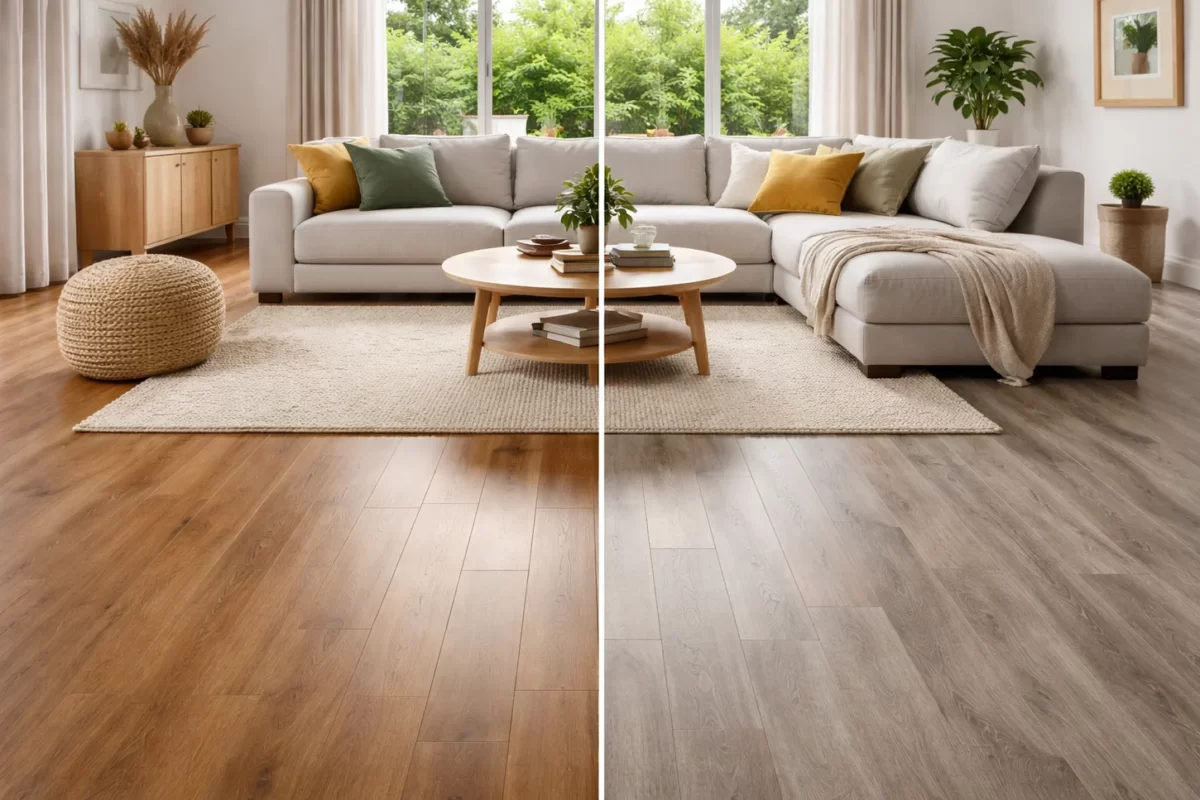
Choosing Between Light, Medium and Dark Timber Tones
- Light tones such as pale oak and blonde timber keep rooms bright and airy. They suit smaller spaces and rooms with limited natural light, with darker furniture and textiles bringing in the cabin mood.
- Medium tones such as honey oak and mid-brown walnut are the most versatile. They sit comfortably with greens, terracottas and creams, and show everyday dust and marks less than very light or very dark floors.
- Dark tones such as deep walnut and chocolate create the most immersive cabin atmosphere but work best in larger, well-lit rooms.
Whatever tone you choose, texture helps. Wire-brushed and embossed finishes catch the light like real timber and suit the rustic feel better than smooth, glossy surfaces.
How to Match Flooring With Walls, Furniture and Decorative Features
Aim for some contrast between your floor and your largest furniture pieces. A dark walnut sideboard on a dark walnut floor can disappear, while a mid-tone oak floor gives both darker timber furniture and lighter linen upholstery room to stand out. Warm mid-brown floors pair easily with forest green, olive and terracotta walls.
In homes where the living, dining and kitchen areas flow together, running one floor throughout creates a calmer, more cohesive look. When weighing up flooring options for open-plan homes, consider the practical needs of every zone, including the kitchen, as well as the overall appearance. Where possible, look at samples in your own home next to your paint colours and furniture, at different times of day.
How to Choose Carpet for a Cosy Cabincore Home
Warm Neutral Carpets for a Soft, Natural Foundation
The most versatile cabincore carpets sit in the warm neutral range: cream, oatmeal, sand, camel and warm greige. These tones connect easily with timber furniture and earthy walls. Carpets with cool undertones, such as blue-grey or stark white, tend to work against the warmth the style relies on. If your walls are deep green or terracotta, a neutral carpet gives that colour room to shine.
Textured Carpet Styles That Complement Rustic Interiors
Loop pile, cut-and-loop and berber-style carpets have a natural, nubbly surface that suits rustic interiors. Flecked or heathered colourways add subtle interest without a busy pattern and help disguise everyday marks. Wool is a natural fit for the style, while synthetic fibres can offer added stain resistance and value.
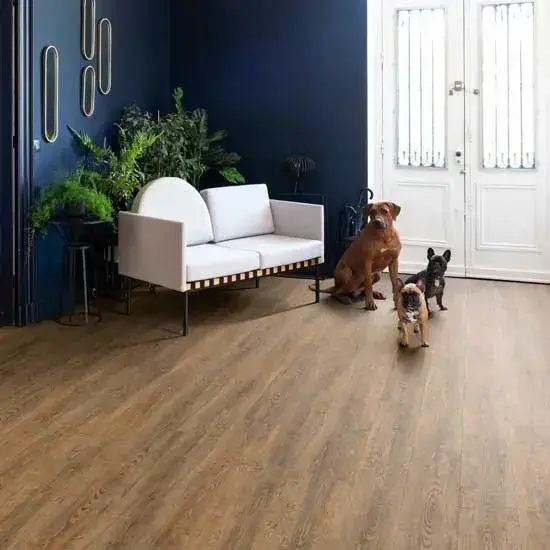
If you have pets, keep in mind that loop pile carpet can snag on claws, so a cut pile may be the safer choice in rooms where cats and dogs spend time.
Plush Carpet for Bedrooms and Cosy Reading Spaces
In bedrooms, a soft cut pile carpet adds comfort you’ll notice every morning. It’s just as inviting in a reading nook or upstairs retreat. Add a timber side table, a floor lamp and a chunky throw, and the space practically asks you to sit down with a book.
Practical Carpet Considerations for Families and Pet Owners
For busy households, look closely at fibre type, stain resistance and how well a colour hides everyday soiling. Solution-dyed nylon and triexta are both known for good stain resistance, and mid-tone, flecked colours are more forgiving than very light, plain carpets. A quality underlay also improves comfort underfoot and supports the carpet as it wears.
Combining Carpet With Hard Flooring for a Layered Interior
Many cabincore homes work best with a mix: timber-look hard flooring in the living areas, kitchen and hallways, and carpet in bedrooms and quieter retreats. Keeping both in the same warm tonal family helps the transitions feel natural, and neat transition trims keep the change between rooms tidy.
Furniture and Furnishings That Complete the Cabincore Look
Solid Timber Tables, Benches and Reclaimed Furniture
Solid timber furniture anchors a cabincore room. A chunky dining table, a bench seat, a knotty coffee table or a reclaimed bookshelf brings the honest material quality the style is built on. Second-hand pieces often suit the look better than new ones, since small marks and patina add character.
Comfortable Sofas, Oversized Armchairs and Leather Upholstery
Seating should invite you to sink in. Look for deep seats, soft cushions and relaxed shapes upholstered in linen, cotton, boucle or leather. Tan, cognac and chocolate leather all suit the style and soften with age. Leather can feel warm to sit on during a Gold Coast summer, so a light linen throw over the top is a handy addition.
Chunky Knits, Plaid and Heritage-Inspired Fabrics
Textiles do much of the heavy lifting in cosy rustic interiors. Chunky knit throws, wool-look blankets and textured cushions add depth, while plaid and tartan in forest green, rust, navy or camel bring a classic cabin feel. Use pattern in a few places rather than everywhere. A single tartan throw on an armchair often says more than a whole room of plaid.
Natural Fibre Rugs and Decorative Layers
Jute, sisal and wool rugs in natural tones define zones and add warmth over hard flooring. For extra depth, layer a smaller patterned or vintage-style rug over a larger natural fibre base. Choose a rug large enough for at least the front legs of your sofa and chairs to sit on it, so the seating area feels connected.
How to Mix Old and New Furniture Without Losing the Rustic Feel
Consistent materials and tones matter more than age. A new leather sofa sits happily beside a vintage timber side table when both share a warm, earthy palette. What tends to break the look is high-gloss lacquer, chrome and lots of glass, which pull the room in a more contemporary direction.
Decorating With Natural Materials and Woodland-Inspired Accents
Indoor Plants, Botanical Prints and Forest-Inspired Artwork
Plants are an easy way to bring the woodland indoors. Ferns, pothos and trailing vines suit the style, especially in stoneware pots or woven baskets, and ferns in particular tend to enjoy the Gold Coast’s humidity. On the walls, botanical prints, landscape paintings and forest photography in timber frames reinforce the nature-inspired theme.
Handmade Ceramics, Woven Baskets, Books and Collectables
Handmade pieces carry a warmth that mass-produced decor rarely does. Stoneware vases, hand-thrown mugs, carved timber bowls and woven baskets all suit woodland-inspired home decor. A bookshelf filled with well-loved books and a few meaningful finds, like an old map or a vintage clock, adds personality and makes the space feel lived-in.
Creating a Rustic Focal Point With a Fireplace or Feature Wall
A fireplace is the classic cabin focal point, but few Gold Coast homes have one, and that’s fine. A timber-panelled or stone-look feature wall, a large landscape artwork, a reclaimed timber console or a built-in bookshelf can anchor the room just as well. Arrange your main seating to face it so the room has a natural centre.
How to Avoid Making Cabincore Decor Feel Overly Themed
There’s a fine line between cabin-inspired and cabin-themed. Mounted antlers, faux fur on every surface and bowls of pinecones can quickly tip a room into costume territory. Keep the rustic feel grounded in materials and craftsmanship rather than obvious props, limit yourself to one or two patterns per room, and choose fewer, better pieces. Leaving some empty space on shelves and walls lets each item be noticed.
Lighting Ideas for a Warm and Inviting Cabincore Interior
Why Warm Lighting Works Best for Cabin-Inspired Spaces
Light colour has a big effect on mood. Warm white globes, around 2700K to 3000K, cast a soft glow that makes timber, leather and earthy colours look richer. Cooler globes can make the same room feel flat and clinical. Switching to warm globes is one of the simplest and cheapest ways to make a room feel more cabin-like.
Layering Table Lamps, Wall Sconces and Rustic Pendants
Rather than relying on a single ceiling light, use several smaller light sources at different heights. Table lamps with linen shades, a floor lamp beside an armchair and wall sconces in aged brass or black iron create pools of warm light. Over a dining table or kitchen bench, pendants in rattan, timber, ceramic or aged metal provide task lighting and double as a decorative feature. Dimmers make it easy to shift the mood from day to evening.
Making the Most of Natural Light in Darker Colour Schemes
If your palette leans towards deep greens and browns, daylight becomes extra valuable. Keep window treatments light and simple, such as sheer linen curtains or plantation shutters that let you control light and airflow. A mirror placed opposite a window bounces light deeper into the room and reflects the view outside.
Balancing Moody Lighting With Practical Everyday Illumination
Ambience matters, but so does being able to see what you’re doing. Make sure kitchens, desks and reading spots have enough task lighting, such as under-cabinet strips or an adjustable reading lamp, so the space works as well as it looks.
How to Create a Cabincore Living Room
Start With Timber-Look Flooring or a Warm Carpet Foundation
A mid-tone oak or walnut-look floor gives a cabincore living room its earthy base. In a separate lounge or media room, a textured carpet in a warm neutral can be just as effective and adds instant softness.
Arrange Seating Around a Fireplace or Central Focal Point
Group your sofa and armchairs around a fireplace, feature wall or large rug so the room feels intimate and conversation flows. Pulling furniture slightly away from the walls often makes a space feel cosier, not smaller.
Layer Rugs, Throws, Timber Furniture and Earthy Accents
Add a large natural fibre rug, then build up with throws, textured cushions, a solid timber coffee table and side tables in wood or stone. Bring in accent colours through smaller pieces, such as a green ceramic vase, rust cushions or a terracotta planter, so they’re easy to change later.
Style Shelves Without Cluttering the Space
Mix books with ceramics, a trailing plant, a woven basket and a few personal items. Vary the heights, stack some books horizontally and leave gaps between groupings. A shelf with breathing room looks curated, while a packed one looks busy, no matter how lovely each item is.
Cabincore Bedroom Ideas for a Relaxing Retreat
Choose Warm Flooring to Establish a Comfortable Foundation
Bedrooms are where comfort underfoot matters most. Carpet in a warm neutral is soft, quiet and pleasant on bare feet, while timber-look hard flooring with a generous rug beside the bed suits those who prefer hard floors throughout. Comparing bedroom flooring options against how you use the room, whether it’s purely for sleep or doubles as a reading retreat, helps narrow down the choice.
Layer Bedding With Knits, Plaid Patterns and Natural Textures
Start with linen or cotton sheets in cream, oatmeal or warm white, then add a knitted blanket, a plaid throw at the foot of the bed and a few textured cushions. Breathable linen and cotton keep Gold Coast summer nights comfortable, and heavier knits and wool layers can come out when the evenings cool down.
Use Timber Furniture and Earthy Accent Colours
A solid timber bed frame sets the tone straight away. Bedside tables don’t need to match; two different timber pieces in similar tones often look more relaxed than a matching set. Add forest green, terracotta or rust through cushions, a throw or a single feature wall behind the bed, keeping the overall effect calm.
Add Soft Bedside Lighting and Cosy Reading Corners
Bedside lamps with warm globes and fabric shades are a must. If space allows, an armchair with a floor lamp and small side table turns a corner into a reading spot. To stop a darker bedroom feeling heavy, balance deep walls with light bedding, or a dark floor with lighter furniture.
Bringing Cabincore Style Into Your Kitchen and Dining Area
Timber-Look Flooring for a Practical Rustic Kitchen
Kitchens need flooring that handles spills, dropped utensils and constant foot traffic. Hybrid and vinyl are popular here because they combine timber looks with strong water resistance and easy cleaning. Wiping up spills promptly and placing a mat at the sink adds extra protection. Running the same floor from the kitchen into the dining and living areas also helps an open-plan home feel cohesive.
Combining Wooden Cabinets With Earthy Colours and Stone Finishes
Timber-grain cabinetry, or cabinets painted in olive or deep green, suits a cabincore kitchen. Pair it with stone or stone-look benchtops and hardware in aged brass, bronze or matte black. Open shelves stacked with stoneware, glass jars and timber chopping boards add warmth, especially when the items on display are ones you use every day.
Creating a Welcoming Dining Area With a Solid Timber Table
A solid timber dining table is the heart of a cabin-style dining space. Mismatched timber chairs or a long bench seat add a relaxed, collected feel, and a pendant light overhead completes the look.
Balancing Rustic Character With Modern Kitchen Functionality
A kitchen still needs to work hard. Cabincore doesn’t mean giving up modern appliances, storage or bench space. Stainless steel or matte black appliances sit comfortably alongside timber and stone, and good storage keeps benches clear so the rustic details stand out.
Cabincore Bathroom Ideas: Natural Textures and Relaxed Styling
Timber-Look and Stone-Look Finishes for a Cabin-Like Bathroom
A timber-look vanity, stone-look tiles in warm grey or sandstone tones, and tapware in brushed brass or matte black give a bathroom a quiet, cabin-inspired feel. A grout colour close to your tile tone keeps the look calm and natural. Make sure any timber or timber-look surfaces are designed for bathroom use.
Choosing Moisture-Suitable Flooring for Bathroom Spaces
Bathroom flooring needs to cope with water and should be slip-resistant. Under the National Construction Code and AS 3740, bathrooms and laundries are wet areas that need a compliant waterproofing system, so the floor finish typically sits over a waterproof membrane. Tiles are the most common choice, and some sheet vinyl systems with welded seams are also used in wet areas when installed to the relevant requirements. Click-together vinyl, hybrid and laminate planks are generally not designed or warranted for full bathrooms. Always check the manufacturer’s specifications and warranty, and have wet-area waterproofing handled by a qualified professional.
Adding Natural Textures, Warm Lighting and Simple Decor
Waffle or linen towels in earthy tones, a woven basket for storage, a timber bath caddy and a small potted fern bring natural texture into the room. Warm lighting and a pared-back vanity, with just a candle or a stoneware soap dish, help the space feel calm and spa-like.
How to Bring Cabincore Into Small Homes and Apartments
Using Light Timber Flooring to Make Compact Rooms Feel Spacious
In smaller spaces, a light or mid-tone timber-look floor keeps rooms feeling open while still adding natural warmth. Running the same flooring through connected rooms reduces visual breaks and can help a compact home feel larger.
Introducing Cabincore Through Textiles, Accent Furniture and Feature Elements
You don’t need a full renovation to bring cabincore into an apartment or rental. A jute rug, linen cushions, a plaid throw, a timber side table and a few plants go a long way. If you love forest green or dark timber, use them selectively, such as on one wall, an accent chair or a single statement piece, so the space stays light.
Maximising Storage and Creating a Reading Nook
Timber wall shelves, a bench seat with storage underneath and baskets for blankets keep a small space tidy while adding rustic texture. Even a corner with an armchair, a floor lamp and a small stack of books can become a cabin-inspired reading nook.
How to Adapt Cabincore Interior Design for the Gold Coast Climate
Choosing Flooring for Humidity, Moisture and Everyday Living
The Gold Coast’s subtropical climate brings humidity, summer heat, afternoon storms and plenty of sand tracked in from the beach. When choosing cabin-style flooring for a local home, keep these factors in mind:
- Moisture resistance: Hybrid and vinyl generally handle spills and humidity better than solid timber or standard laminate.
- Heat and expansion: All floors move with temperature and humidity, so correct acclimatisation and expansion gaps matter, especially in sunny rooms with large glass doors.
- Sun exposure: Strong sunlight can fade flooring over time. Window coverings help protect it.
- Sand and grit: Fine sand acts like sandpaper on hard floors, so doormats at entries make a real difference.
Timber-look products let you achieve the rustic look with a material suited to these conditions. The best option depends on the room and the specific product, so it’s worth talking through your home’s conditions before you buy.
Balancing Cosy Textures With Airflow and Natural Light
Classic cabin style was born in cold climates, so it helps to lighten it up for Queensland living. Use a slightly lighter version of the palette in main living areas, keep windows clear for cross-breezes, and favour linen, cotton and jute over heavy wool and faux fur in summer. Save the knitted throws and heavier layers for cooler winter evenings, and concentrate the cosiest elements in bedrooms and reading corners.
Easy-Care Flooring and Maintenance for Busy Households
For hard floors, regular sweeping or vacuuming, a damp (not wet) mop with a cleaner recommended by the manufacturer, and felt pads under chairs and tables go a long way. For carpet, vacuum high-traffic areas often, treat spills promptly and book a professional clean from time to time. Our team can explain the care requirements of specific products before you buy, so you know what to expect.
Common Cabincore Decorating Mistakes to Avoid
Using Too Much Dark Timber and Making Rooms Feel Smaller
Dark floors, dark walls and dark furniture together can make a room feel cramped rather than cosy. Let one or two dark elements lead, and balance them with lighter walls, bedding or upholstery.
Mixing Too Many Colours, Patterns and Themed Accessories
Layering is central to cabincore, but too much of it becomes visual noise. Stick to a tight palette and one or two patterns per room, and resist filling every surface with rustic props.
Choosing Flooring Without Considering Colour and Conditions
A floor that clashes with your palette, such as a cool grey or high-gloss finish, can undermine the whole look. Equally, a floor that looks perfect but doesn’t suit the room’s moisture, foot traffic or pets can cause problems down the track. Weigh up both the look and the practical demands before you decide.
Ignoring Lighting, Comfort and Room Functionality
A room that photographs well but feels uncomfortable or poorly lit misses the point of cabincore. Comfortable seating, warm lighting and a layout that suits how you actually use the space matter just as much as the decor.
How to Create a Cabincore Interior on a Budget
Start With Flooring and Prioritise Long-Term Value
Flooring has the biggest visual impact, so it’s often the best place to invest. Timber-look laminate is an affordable way to get the look in dry areas, while hybrid or vinyl may be worth the extra outlay where moisture is a factor. Rather than choosing on price alone, think about where the floor is going and how long you want it to last. A product that suits the room is usually better value than one that needs replacing early.
Refresh Existing Furniture and Shop Second-Hand
Re-staining a timber table, reupholstering a tired armchair in linen or swapping handles for aged brass can transform pieces you already own. Op shops, markets and online marketplaces are great sources of solid timber furniture, stoneware and baskets, often for a fraction of the price of new.
Use Textiles, Artwork and Simple DIY Decor
Throws, cushions and rugs shift the mood quickly and affordably. Framed botanical prints, pressed leaves, a simple timber shelf or thrifted frames painted in earthy tones add a handmade touch without a big spend.
Is Cabincore Interior Design Right for Your Home?
Who Will Love the Cabincore Aesthetic?
Cabincore suits people who love the outdoors, value craftsmanship and want a home that feels relaxed rather than showroom-perfect. It’s also a good fit if you enjoy building a home gradually and adding pieces as you find them.
How to Adapt Cabincore to Minimalist, Contemporary and Rustic Homes
In a minimalist home, keep it to a warm timber-look floor, one or two solid timber pieces and a few textured textiles. In a contemporary home, earthy colours and natural materials soften clean lines. If your home already has rustic features, such as exposed beams or brick, you can layer cabincore on more fully.
Combining Cabincore With Scandinavian, Modern Rustic and Wabi-Sabi Styles
Cabincore blends naturally with related styles. Scandi style interior design shares its love of timber and comfort but with a lighter, more pared-back palette. Modern rustic shares the reclaimed timber and textured surfaces, with cleaner lines. Wabi-sabi interior design celebrates natural textures and imperfect finishes, which sits comfortably alongside cabincore’s handmade character. For a breezier take on natural materials that feels right at home near the beach, coastal interior design is another good reference point.
Choosing Cabincore Flooring With Award Carpets Gold Coast
Explore Timber, Hybrid, Laminate and Vinyl Flooring Options
Our range includes engineered timber flooring alongside timber-look hybrid, laminate and vinyl, in tones from pale oak to rich walnut. As an independent, family-run business that has supplied and installed flooring on the Gold Coast for over 30 years, we stock leading Australian brands alongside boutique lines, so there’s plenty to compare.
Find Carpet Styles That Complement Your Cabin-Inspired Interior
Our carpet range covers a variety of textures, fibres and warm neutral tones for bedrooms, living areas and family spaces. Our team can help you weigh up softness, durability and stain resistance for each room.
Compare Options and Get Advice on Suitability, Installation and Maintenance
Flooring can look quite different under showroom lights than it does in your home, so take your time comparing colours, textures and finishes. Our team can talk you through which products suit each room, how to care for them, and what’s involved in professional flooring installation, so your new floor looks right and performs well.
Request a Free Measure and Quote for Your Flooring Project
When you’re ready, book a free measure and quote. It’s an easy way to understand your options and costs before making any decisions.
Frequently Asked Questions About Cabincore Interior Design
What Is Cabincore Interior Design?
Cabincore is a nature-inspired interior style based on forest cabins and mountain retreats. It’s defined by natural timber, earthy colours, layered textures and a focus on comfort and slower living.
What Colours Are Best for Cabincore Interiors?
Forest green, moss and olive; warm browns and walnut; terracotta and rust; and warm neutrals like cream and oatmeal. Charcoal, deep burgundy and muted mustard work well as occasional accents.
What Flooring Is Best for a Cabincore Home?
Timber or timber-look flooring in warm, textured finishes suits most living spaces, with carpet in warm neutrals for bedrooms. In Gold Coast homes, hybrid and vinyl are popular for their timber looks and water resistance, but the right choice depends on the room and the product.
Can You Create a Cabincore Look Without Timber Floors?
Yes. Hybrid, laminate and vinyl offer convincing timber looks, and a warm, textured carpet can create a cosy cabin feel in bedrooms and lounges.
Is Cabincore the Same as Cottagecore?
No. Cabincore is deeper, earthier and woodland-inspired, while cottagecore is lighter and more romantic, with florals, pastels and vintage china.
How Do You Make a Modern Home Feel Like a Rustic Cabin?
Start with a warm timber-look floor, then add solid timber furniture, natural fibre rugs, textured textiles and warm, layered lighting. You don’t need rustic architecture for the look to work.
Can Cabincore Work in a Small Apartment?
Yes. Choose a light or mid-tone timber-look floor, introduce the style through rugs, throws and a few timber pieces, and use dark colours selectively so the space stays bright.
How Can You Make Cabincore Work in a Warm Climate?
Use a slightly lighter palette, favour breathable linen and cotton in summer, keep windows clear for airflow and choose flooring suited to humidity. Save heavier knits and wool layers for winter.
Is Cabincore Interior Design Expensive to Achieve?
It doesn’t have to be. Second-hand timber furniture, handmade decor and textiles keep costs down, and timber-look laminate is an affordable flooring option for dry areas.
How Do You Make a Cabincore Room Feel Cosy Without Looking Cluttered?
Choose fewer, better pieces, use textiles for layering instead of more decorative objects, and leave some empty space on shelves and surfaces so the room can breathe.
A Room-by-Room Cabincore Flooring Guide From Award Carpets Gold Coast
Use this quick reference as a starting point when planning cabin-style flooring for your home. Suitability always depends on the specific product, so check the specifications and warranty conditions for each room.
| Room | Flooring to consider | What to keep in mind |
| Living room | Hybrid, laminate, timber or textured carpet | Mid-tone timber looks are the most versatile; protect floors from strong sun |
| Bedroom | Plush or textured carpet, or timber-look flooring with a rug | Comfort and quiet underfoot |
| Kitchen and dining | Hybrid or vinyl | Water resistance and easy cleaning |
| Bathroom | Tiles, or a sheet vinyl system with welded seams, over a compliant waterproofing system | Wet-area requirements under the NCC and AS 3740 apply; click-plank floors are generally not warranted for full wet areas; choose a slip-resistant finish |
| Laundry | Tiles, or sheet vinyl suited to wet areas | Wet-area waterproofing requirements apply; check warranty conditions before using any plank product |
| Hallways and entries | Hybrid, vinyl or hard-wearing carpet | Sand and grit; use doormats |
| Apartments | Light timber-look hybrid, laminate or vinyl | Continuous flooring helps spaces feel larger; check strata rules on acoustic underlay |