


There’s something effortlessly inviting about a coastal interior. The soft, sun-bleached tones, the natural textures, the sense of space and calm — it all works together to create a home that feels like a permanent holiday. And if you live on the Gold Coast, that lifestyle is quite literally on your doorstep. Whether you’re a few blocks from the beach or nestled in the hinterland, coastal interior design is one of the most popular and enduring styles in Queensland — and for good reason.
At Award Carpets Gold Coast, we’ve spent over 30 years helping locals transform their homes with flooring that supports every kind of interior vision. Coastal style is one we know and love, so we’ve put together this comprehensive guide to help you bring that breezy, beach-inspired look to life — from the furniture you choose to the flooring beneath your feet.
What Is Coastal Interior Design?
Coastal interior design is a decorating style inspired by the natural beauty of the seaside. It draws on the colours, textures, and materials found along the coast — think whitewashed timber, sandy neutrals, ocean blues, and woven natural fibres. The goal is to create a space that feels light, relaxed, and connected to the outdoors.
It’s a style that has deep roots in Australian beach culture and has evolved significantly over the years. Today’s coastal interiors are sophisticated, layered, and incredibly liveable — a far cry from the kitschy seashell-on-every-surface trend of decades past.
Key Characteristics of Coastal Style
Coastal interiors share a distinct set of design principles that make them immediately recognisable:
- Light, airy colour palettes — whites, creams, soft blues, and sandy neutrals dominate
- Natural materials — timber, rattan, jute, sisal, linen, and cotton all play key roles
- Organic textures — woven, weathered, and raw finishes add visual warmth without heaviness
- Open, uncluttered spaces — furniture arrangements prioritise flow and breathing room
- Indoor-outdoor connection — large windows, sliding doors, and seamless transitions to outdoor living
- Soft, diffused lighting — sheer curtains, skylights, and natural light sources are preferred
- Layered soft furnishings — cushions, throws, and rugs add comfort and texture
Coastal vs Nautical Design – Understanding the Difference
It’s easy to confuse coastal and nautical design — both are inspired by the sea, but they have a very different look and feel.
| Feature | Coastal Style | Nautical Style |
| Colour palette | Soft whites, creams, sandy tones, muted blues and greens | Bold navy, white, and red; high contrast |
| Motifs | Organic shapes, natural textures | Anchors, ropes, stripes, ship wheels |
| Mood | Relaxed, casual, sun-washed | Structured, preppy, classic |
| Materials | Driftwood, rattan, linen, jute | Lacquered timber, brass, canvas |
| Overall feel | Lived-in and breezy | Crisp and themed |
Coastal design is more subtle and versatile than nautical. It’s less about literal sea-themed accessories and more about evoking the feeling of being near the ocean. For most Gold Coast homes, a coastal approach is the more practical and timeless choice.
Why Coastal Design Is Perfect for Gold Coast Homes
The Gold Coast has a lifestyle that practically demands coastal interiors. With a subtropical climate, year-round sunshine, and some of Australia’s most iconic beaches, it only makes sense that your home reflects the world just outside your door.
Coastal design thrives in Gold Coast homes for several reasons. The climate encourages indoor-outdoor living, which coastal interiors are specifically built around. The abundant natural light that floods Queensland homes all year works beautifully with light palettes and sheer window treatments. The relaxed pace of coastal living suits interiors that prioritise comfort and ease. And the sandy, humid conditions of beach-side living call for materials and flooring that are durable and easy to maintain — something we’ll explore in detail shortly.
Core Elements of Coastal Interior Design
Getting a coastal interior right comes down to a handful of key design elements. When these work together, the result is a home that feels cohesive, calm, and completely on-point.
Light and Airy Colour Palettes
Colour is the foundation of any coastal interior. The palette draws directly from nature — the bleached sand, the green-grey sea, the bright sky, the weathered timber of an old jetty.
Key coastal colours include:
- White and off-white — the cornerstone of any coastal scheme; use on walls, ceilings, and joinery
- Soft blue and aqua — from pale sky blue to muted ocean teal, these tones evoke calm and space
- Sandy beige and warm greige — grounding neutrals that add warmth without heaviness
- Sage green — a popular modern update that nods to coastal vegetation
- Driftwood grey — a cool neutral that works beautifully with timber and linen
- Seafoam and mint — lighter accent tones that add a soft coastal pop
The key is to keep the palette light and cohesive. Avoid overly saturated colours, which can make a space feel heavy and closed-in. Instead, layer varying tones within the same family for depth and dimension.
Natural Materials and Organic Textures
What really separates coastal interiors from other light-coloured design styles is the commitment to natural, organic materials. These bring warmth and authenticity to the space, grounding all that brightness with real-world texture.
Core natural materials in coastal design:
- Timber — raw, whitewashed, or lightly stained; used for flooring, furniture, and feature walls
- Rattan and wicker — woven natural fibres used in furniture, light shades, and decorative baskets
- Jute and sisal — popular choices for rugs and flooring accents
- Linen and cotton — the preferred fabrics for soft furnishings, curtains, and upholstery
- Stone and shell — used sparingly in accessories and decorative touches
- Sea grass — an increasingly popular material for rugs and woven wall panels
These materials are at their best when they’re allowed to show their natural imperfections — the grain of the timber, the weave of the rattan, the texture of the linen. Perfection is not the point; authenticity is.
Open Spaces and Maximising Natural Light
One of the defining qualities of coastal interiors is the sense of space and light. This isn’t achieved by accident — it requires deliberate design choices that open up the home and invite the outside world in.
How to maximise light and space in a coastal interior:
- Use sheer curtains or linen drapes rather than heavy window treatments
- Choose low-profile furniture that doesn’t block sightlines or windows
- Opt for glass-panelled or open-framed furniture where possible
- Install skylights or solar tubes in darker areas
- Use mirrors strategically to bounce natural light around the room
- Keep floor plans as open-plan as possible, especially between living and dining areas
- Lean into indoor plants to blur the line between indoors and out
On the Gold Coast, this approach is further supported by the architecture of many homes, which often feature wide eaves, verandas, and large sliding doors designed with the climate in mind.
Types of Coastal Interior Design
Coastal style is not a single, fixed look — it’s a broad design philosophy that has evolved into several distinct sub-styles. Here’s a look at the most popular coastal interior design styles, and what makes each one unique:
Modern Coastal
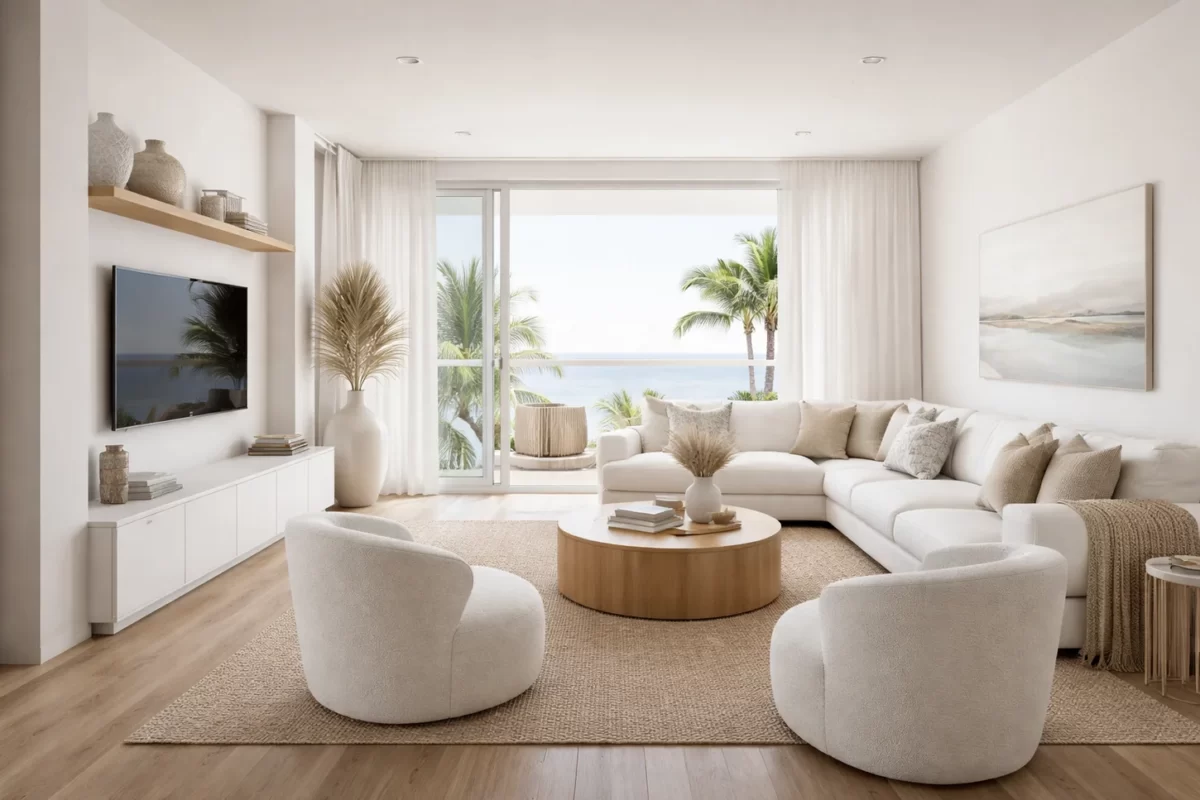
Modern coastal is a sleek, pared-back take on the style. It strips away the rustic charm of traditional coastal design and replaces it with clean lines, minimal clutter, and a restrained palette. Think white walls, concrete or polished timber flooring, and carefully chosen organic accent pieces. It’s sophisticated without being cold.
Hamptons Style

Arguably the most popular coastal sub-style in Australia right now, the Hamptons look is defined by its East Coast American heritage. It combines coastal lightness with a sense of classic elegance — coffered ceilings, shaker-style cabinetry, striped textiles, and a palette of white, navy, and warm timber. If you love the idea of a coastal home that also feels refined and polished, Hamptons style flooring is a great starting point for your design journey.
Boho Coastal
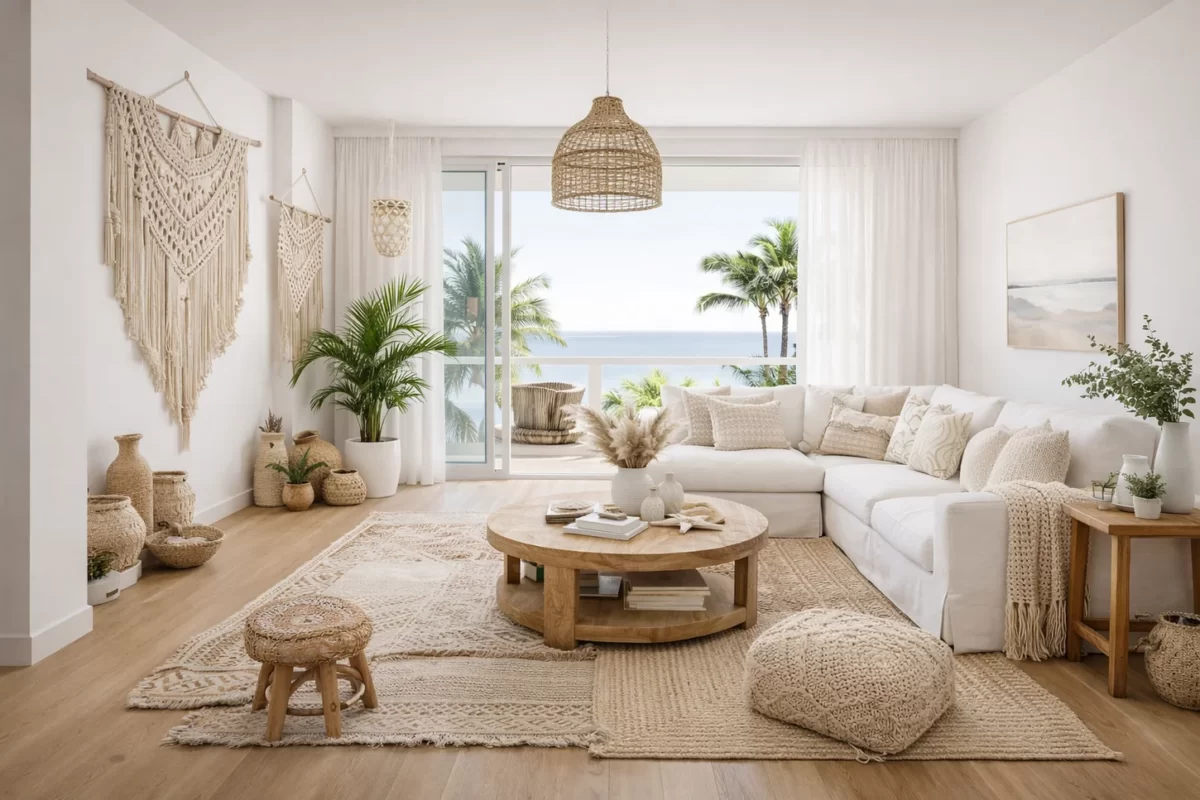
Boho coastal blends the relaxed, eclectic spirit of bohemian design with coastal elements. Layered rugs, macramé wall hangings, mismatched ceramics, and an abundance of greenery sit alongside natural timber and sandy neutrals. It’s the most carefree and maximalist of the coastal sub-styles, and it’s a great choice for those who love a laid-back, creative home.
Tropical Coastal
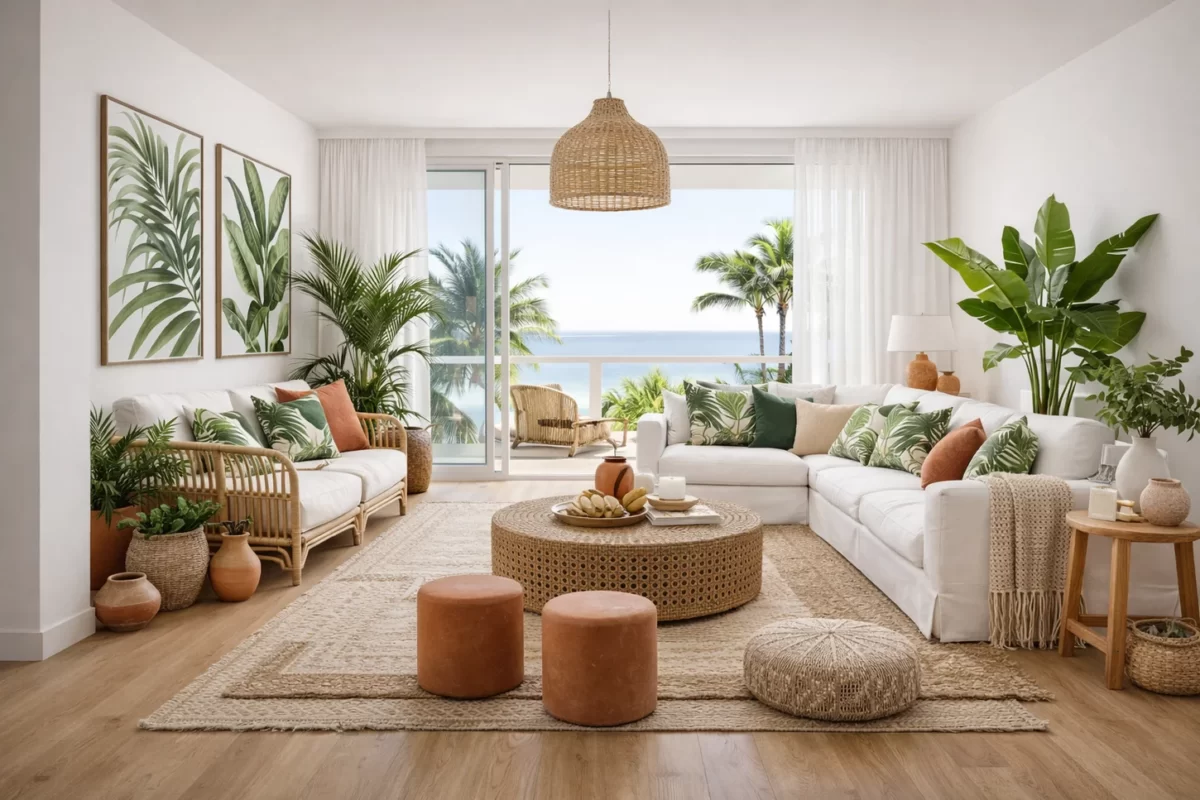
Suited perfectly to Queensland’s subtropical climate, tropical coastal design amplifies the natural elements of coastal style with lush, botanical influences. Deep green foliage, bold palm prints, cane and rattan furniture, and terracotta accents all feature. It’s coastal living with a warm, verdant twist.
Scandinavian Coastal (Scandi-Coastal)
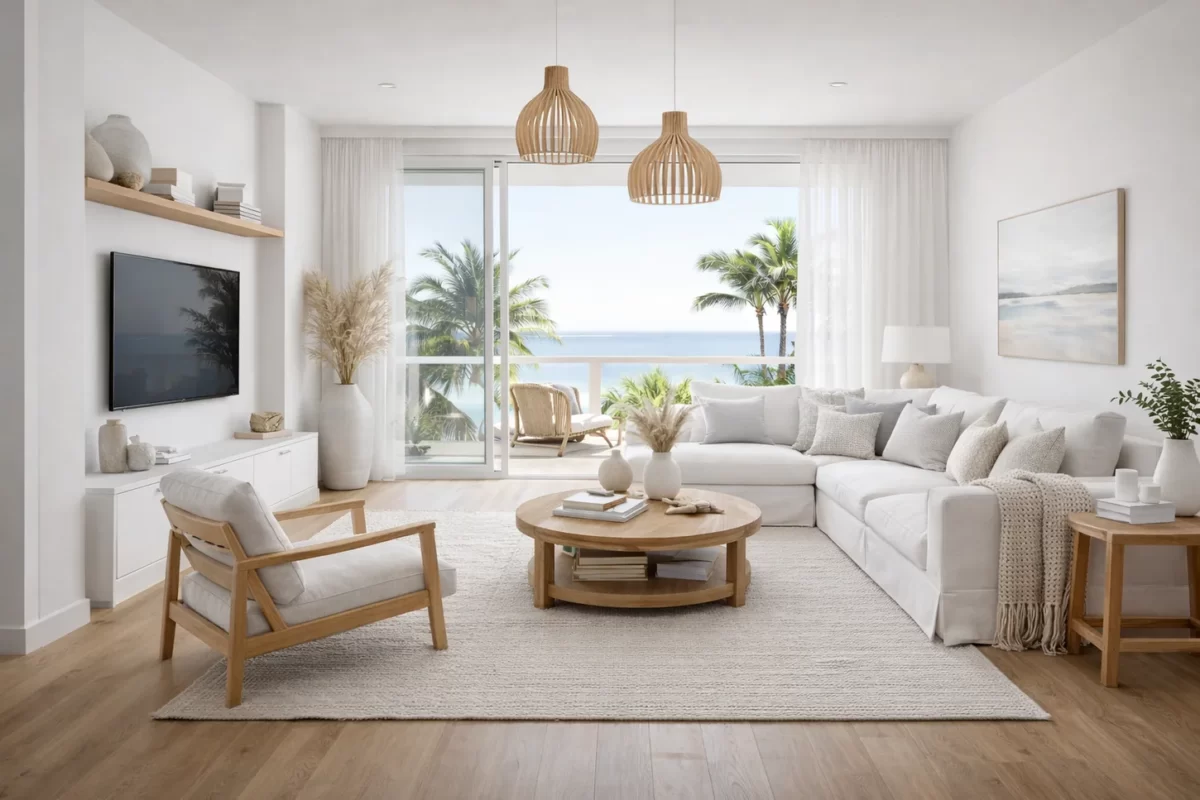
A fusion of the minimalist sensibility of Scandinavian design with coastal warmth, Scandi-coastal homes are clean, calm, and incredibly liveable. The palette tends toward cool whites and greys with warm timber accents. There’s an emphasis on functional furniture, quality materials, and nothing unnecessary. It’s a style that suits the quieter, more contemplative side of coastal living.
Rustic Coastal
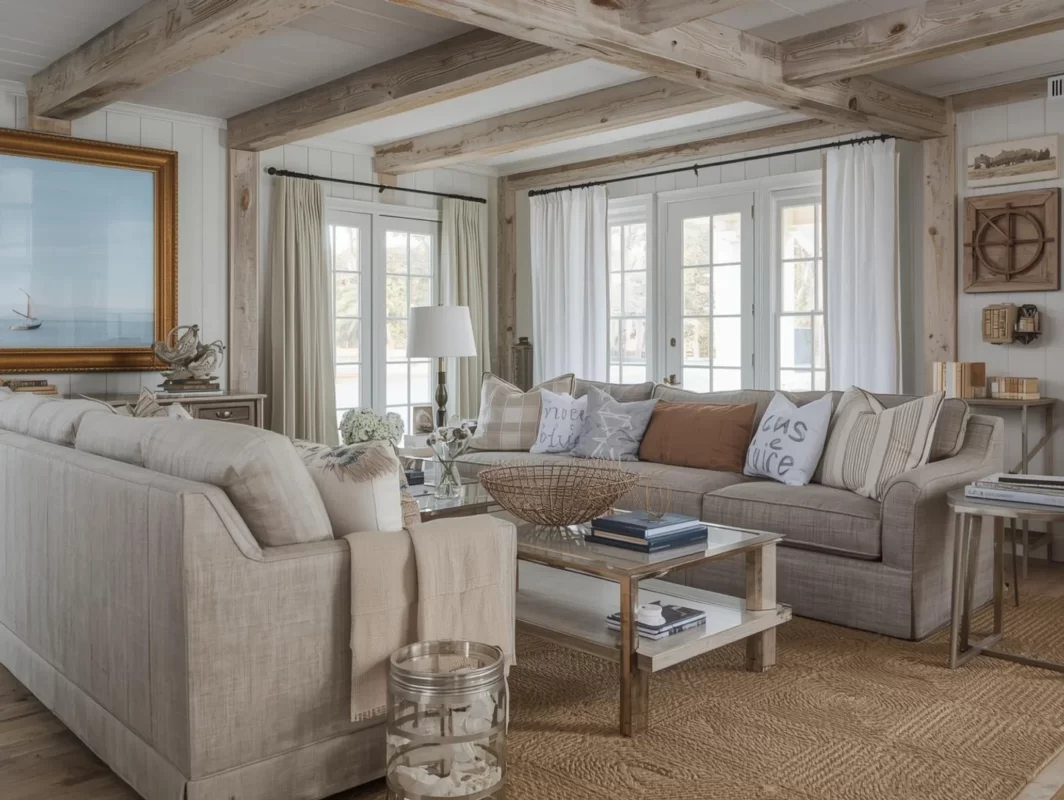
Rustic coastal is the most raw and organic of the coastal styles. Weathered timbers, linen-slipcover furniture, whitewashed brick, and salvaged accessories give this style a lived-in, beachy authenticity. It’s the design equivalent of a beloved holiday shack that’s been lovingly updated over the years.
Choosing the Right Flooring for Coastal Homes
Why Flooring Sets the Foundation of Coastal Design
In any interior, flooring is one of the most impactful decisions you’ll make. It covers more surface area than any other single element, and it sets the entire tone of a space before a single piece of furniture is placed. In a coastal home, the right flooring amplifies everything — the lightness, the texture, the warmth. The wrong flooring can undermine the whole look.
Coastal interiors typically call for flooring that is light in colour, natural in appearance, and durable enough to handle the realities of beach-side living — sand, humidity, moisture, and high foot traffic. Fortunately, there are several excellent options to choose from.
Light-Coloured Carpets for a Fresh, Breezy Feel
Carpet might not be the first thing that comes to mind for a coastal home, but in the right spaces — bedrooms, living rooms, and rumpus rooms — a well-chosen carpet can add incredible warmth and comfort while staying completely true to the coastal aesthetic.
Light-coloured carpets in tones like warm white, soft cream, sand, and pale grey are perfect for coastal interiors. They brighten a room, soften the acoustic environment, and feel beautifully underfoot. Look for styles with a low to medium pile and a natural-look texture for the most authentic coastal result.
At Award Carpets Gold Coast, we stock a wide range of carpet options that are perfectly suited to coastal homes. Our team can help you find a colour and texture that works with your palette and your lifestyle.
Durable Flooring Options for Sandy, High-Traffic Areas
In living areas, hallways, kitchens, and anywhere shoes and sandy feet are common, you’ll want flooring that can handle the demands of coastal living without sacrificing style.
Top flooring options for high-traffic coastal areas:
- Hybrid flooring — one of the most popular choices for coastal homes on the Gold Coast, hybrid flooring combines the authentic look of timber or stone with exceptional waterproof performance and durability. It’s scratch-resistant, easy to clean, and holds up beautifully in humid, high-traffic environments. Hybrid flooring on the Gold Coast is an increasingly common choice for families who want real style without the maintenance stress.
- SPC hybrid flooring — a step up from standard hybrid, SPC (Stone Plastic Composite) flooring features a rigid stone-polymer core that makes it incredibly stable, even in rooms with fluctuating temperature and humidity. It’s ideal for open-plan coastal homes.
- LVP and LVT flooring — Luxury Vinyl Plank and Luxury Vinyl Tile are another excellent option for coastal homes. Available in a huge range of timber and stone looks, they’re fully waterproof, comfortable underfoot, and easy to maintain. Perfect for bathrooms, laundries, and anywhere moisture is a concern.
- Timber flooring — for those who love the authentic beauty of real timber, engineered timber flooring is a stunning choice for coastal interiors. The warm grain and natural tones of timber flooring are deeply complementary to coastal design, and engineered timber offers better moisture resistance than solid hardwood.
Carpet Textures That Complement Coastal Interiors
When choosing carpet for a coastal space, texture matters as much as colour. The right texture adds depth and interest to a room, enhancing the layered, organic quality of coastal design.
Carpet textures that work well in coastal interiors:
- Loop pile (Berber) — a classic choice for coastal homes, loop pile carpets have a natural, woven appearance that echoes the texture of jute and sisal rugs
- Textured cut pile — combines the softness of cut pile with subtle surface variation for a relaxed, casual look
- Sisal-look carpet — designed to mimic the appearance of natural fibre, these are a practical alternative to actual sisal in high-use areas
- Saxony — a more formal cut pile that works well in bedrooms where a touch of luxury is welcome
Avoid very high-pile or shag carpets in coastal interiors, as they tend to feel too heavy and can be difficult to keep clean in sandy environments.
Coastal Carpet and Rug Ideas
Neutral and Textured Carpet Styles
The most versatile approach to coastal carpet is to choose a neutral, textured style that works as a backdrop rather than a focal point. Sandy tones, soft greys, warm whites, and pale blues all work beautifully. A subtly textured surface — whether loop pile, Berber, or a natural-look weave — adds visual interest without competing with the rest of the room.
Consider using carpet in bedrooms and living rooms to create warm, comfortable retreats, while opting for hard flooring in high-traffic areas like hallways and open-plan living and dining.
Layering Rugs for Depth and Comfort
One of the easiest ways to enhance a coastal interior is through layering rugs. A large natural-fibre rug — jute, sisal, or sea grass — can anchor a living space, while a smaller, softer rug layered on top adds comfort and a pop of pattern or colour.
Tips for layering rugs in coastal interiors:
- Start with a large, flat-weave natural fibre rug as the base
- Layer a smaller, softer rug on top in a complementary colour or texture
- Leave a border of hard flooring visible around the edge of the base rug
- Choose rugs with organic patterns — stripes, geometrics, or abstract weaves — for a relaxed coastal feel
- Ensure rugs are secured with a quality rug underlay to prevent slipping
Best Rug Materials for Beach-Inspired Homes
Choosing the right rug material is particularly important in coastal homes, where sand, humidity, and foot traffic are constant considerations.
| Material | Best For | Key Benefits |
| Jute | Living rooms, dining areas | Natural look, affordable, sustainable |
| Sisal | Hallways, high-traffic areas | Extremely durable, great texture |
| Sea grass | Open-plan living areas | Water-resistant, highly durable |
| Wool | Bedrooms, lounges | Soft, luxurious, great natural texture |
| Cotton | Bedrooms, kids rooms | Easy to wash, light and casual |
| Polypropylene | Outdoor areas, high-traffic zones | Fully waterproof, UV resistant, easy to clean |
For most Gold Coast homes, a combination of natural fibre rugs in living areas and cotton or wool rugs in bedrooms will deliver the best balance of style and practicality.
Furniture and Décor for a Coastal Look
Timber, Rattan, and Woven Accents
Natural materials are the soul of coastal furniture. Timber — whether raw, whitewashed, or lightly oiled — is the most versatile and widely used. It grounds a coastal interior and brings genuine warmth that no synthetic material can replicate.
Rattan and wicker add texture and a wonderful handmade quality to a space. Used in chairs, side tables, pendants, and decorative baskets, these woven natural materials are quintessentially coastal. Pair them with linen cushions and a whitewashed timber frame for an effortlessly beachy look.
Key furniture pieces for coastal interiors:
- A slipcovered sofa in natural linen or cotton canvas
- A low-profile coffee table in raw or whitewashed timber
- Rattan armchairs or accent chairs
- Open-shelved timber bookcases or display units
- Woven pendant lights or linen lamp shades
- A weathered timber dining table with mixed seating
Soft Furnishings in Linen and Cotton
In a coastal home, soft furnishings do much of the heavy lifting when it comes to texture and warmth. Linen and cotton are the fabrics of choice — they’re light, breathable, and have a beautiful natural quality that suits the coastal aesthetic perfectly.
Cushions in sandy, ocean, and driftwood tones can transform a plain sofa into a fully realised coastal vignette. Linen curtains in white or cream diffuse the light beautifully while maintaining privacy. Woven cotton throws draped over the back of a chair or the foot of a bed add casual, effortless comfort.
Keep patterns subtle and natural — thin stripes, organic textures, and simple geometric weaves are all on-brand for coastal style. Save bold prints for a single statement piece rather than layering multiple patterns throughout a room.
Statement Pieces Inspired by the Sea
While modern coastal design has moved away from literal sea-themed accessories, there’s still room for statement pieces that draw inspiration from the ocean environment. The key is to keep them organic and considered rather than kitschy.
Ideas for coastal statement pieces:
- A large-scale piece of ocean-inspired wall art — abstract, photographic, or painted
- A driftwood sculpture or feature piece on a shelf or sideboard
- A collection of smooth river stones or shells used as a centrepiece
- A large ceramic or terracotta vase in a sandy or seafoam glaze
- An oversized woven pendant light above a dining table
- A feature mirror with a whitewashed or rope-wrapped frame
The goal is to evoke the feeling of the coast without literally recreating a maritime museum. Less is more — choose a few meaningful pieces rather than filling every surface.
Coastal Interior Design Trends in Queensland
Modern Coastal vs Classic Hamptons Style
Two distinct directions define contemporary coastal design in Queensland right now, and understanding the difference can help you decide which approach is right for your home.
Modern Coastal is clean, minimal, and sophisticated. It’s driven by strong architectural lines, a very restrained palette, and a focus on quality materials over quantity. You’ll see concrete, polished timber, aged brass, and architectural greenery. The mood is calm and curated.
Classic Hamptons Style is warmer and more layered. It leans into the elegance of American coastal living — coffered ceilings, shaker kitchens, built-in bookshelves, striped upholstery, and a palette anchored in navy and white with warm timber accents. If you’re drawn to a coastal home that also feels timeless and refined, Hamptons style flooring is a natural starting point.
Both styles work beautifully on the Gold Coast, and many homeowners choose to blend elements of each.
Sustainable and Eco-Friendly Materials
Sustainability is becoming an increasingly important consideration in coastal interior design — particularly for Gold Coast homeowners who are conscious of the natural environment on their doorstep.
Sustainable trends shaping coastal interiors:
- Reclaimed timber flooring and furniture made from salvaged wood
- Natural fibre rugs and textiles sourced from renewable materials
- Low-VOC paints in light, natural palettes
- Energy-efficient window treatments that reduce reliance on air conditioning
- Locally manufactured and sourced flooring products
- Hybrid and LVT flooring options with recycled content
At Award Carpets Gold Coast, we stock leading Australian brands that prioritise responsible manufacturing and sourcing — so you can create a beautiful coastal home with a clear conscience.
Blending Indoor and Outdoor Living Spaces
Perhaps the most significant trend in Queensland coastal design right now is the blurring of the line between inside and out. As outdoor entertaining areas become increasingly sophisticated, the design language of the interior is extending seamlessly through to patios, decks, and alfresco dining spaces.
This means using consistent materials, colours, and textures across both environments. Outdoor rugs that mirror indoor styles. Covered alfresco areas styled with linen cushions and natural timber. Sliding glass walls that, when open, make the distinction between inside and outside almost invisible.
Flooring plays a key role here — choosing materials that transition well from interior to exterior spaces (or that are consistent in look across both) creates a sense of flow and expansiveness that is deeply coastal in spirit.
Practical Tips for Maintaining a Coastal Interior
Managing Sand and Moisture in Flooring
If you live near the beach on the Gold Coast, sand and moisture are inevitable. The good news is that with the right flooring choices and a few smart habits, keeping your coastal interior looking its best is straightforward.
Managing sand:
- Place high-quality entrance mats at all external doors to trap sand before it enters the home
- Opt for hard flooring in high-traffic areas where sand accumulates most easily
- Use a soft broom or dry mop for daily sweeps rather than vacuum cleaners, which can scratch some surfaces
- Keep a small hand brush near the back door for quick clean-ups after beach trips
Managing moisture and humidity:
- Choose waterproof or moisture-resistant flooring for bathrooms, laundries, and any areas at risk of water exposure — hybrid flooring and LVT are excellent choices here
- Ensure adequate ventilation throughout the home, particularly in areas where humidity can build up
- Use a dehumidifier in rooms prone to moisture if necessary
- Have carpets professionally cleaned at least once per year to remove embedded sand, salt particles, and allergens
Easy-Care Carpet Solutions for Busy Households
Carpet in a coastal home is entirely achievable — it’s all about choosing the right product and establishing a simple maintenance routine.
Tips for easy-care coastal carpets:
- Choose a carpet with a built-in stain protection treatment for peace of mind
- Opt for a mid-tone, natural colour that doesn’t show every mark
- Vacuum regularly — at least twice per week in high-traffic areas
- Address spills immediately by blotting (not rubbing) with a clean, white cloth
- Place entry mats at the thresholds of carpeted rooms to reduce the amount of sand and dirt tracking through
- Schedule an annual professional deep clean to refresh the pile and remove embedded particles
Our team at Award Carpets Gold Coast can recommend specific carpet products that are particularly well-suited to coastal living — including options with enhanced durability and easy-clean properties.
Seasonal Styling Updates for a Fresh Look
One of the joys of a coastal interior is how easy it is to refresh the look with the seasons. Because the base palette is neutral and understated, you can update the feel of a room with relatively small changes.
Seasonal coastal styling ideas:
- Summer — layer in bright whites, aquas, and sunny yellows through cushions and throws; bring in fresh tropical greenery and seasonal flowers
- Autumn — introduce warmer tones — terracotta, burnt orange, deep sage — to add depth and cosiness as the weather cools
- Winter — add more texture through chunky knit throws, sheepskin rugs, and layered cushions; warm up the lighting with amber-toned candles and lamps
- Spring — lighten everything back up with fresh linens, soft pinks, and botanical accessories
Because coastal interiors are built on a foundation of quality flooring and furniture, these seasonal updates are purely about the accessories — which means they’re low-cost and low-effort.
Your Coastal Interior Starts With the Right Flooring — Award Carpets Gold Coast
Every great coastal interior starts from the ground up. The flooring you choose sets the tone for everything else — the colour palette, the materials, the mood. Get it right, and the rest of the room almost designs itself. Get it wrong, and even the most beautiful furniture can feel out of place.
At Award Carpets Gold Coast, we’ve been helping Gold Coast families find the perfect flooring for their homes for over 30 years. As an independent family-run business, we offer the lowest prices possible without cutting corners on quality or service. We stock a wide range of flooring options that are perfectly suited to coastal interiors:
- Hybrid and SPC flooring — the smart choice for open-plan areas, kitchens, and anywhere that needs waterproof performance with the look of natural timber or stone. Explore our Gold Coast hybrid flooring range.
- Timber flooring — for those who love the warmth and authenticity of real wood underfoot. Browse our timber flooring collection.
- LVP and LVT flooring — versatile, waterproof, and available in a huge range of coastal-friendly styles. Read our comprehensive LVP and LVT guide.
- Carpet — for bedrooms and living spaces where comfort and warmth are the priority. Our team can help you find the perfect coastal-style carpet.
We also offer expert flooring installation on the Gold Coast — so whether you want to take on the job yourself or leave it to the professionals, we’ve got you covered.
Come and visit us in-store, shop our range online, or call our team to book your free measure and quote. Creating your dream coastal interior has never been easier.


