
Some blinds get adjusted a dozen times a day. Others haven’t moved since the day they were installed, because they sit high up in a void, stretch across a wide sliding door or cover a window that’s awkward to reach behind the couch. If you’ve ever stood on a chair to get to a blind, or left a living room blind closed all afternoon because adjusting it felt like a chore, you already understand the appeal of motorised blinds.
A motor does add cost, though, and there are a few decisions to make before you ask for a quote. Should you choose battery or mains power? Which windows are actually worth motorising? Will you need an electrician, and how does smartphone control fit in? This motorised blinds guide works through each of those questions for Gold Coast homes, so you can go into your measure and quote knowing what to ask and what to expect.
As a local Gold Coast business of more than 30 years, we’ll be upfront from the start: there’s no single price for motorised blinds. Every blind is made to measure, and every motor is matched to the blind it’s driving. What we can do is explain what pushes the cost up or down, and show you where the investment genuinely pays off.
Key takeaways
- Motorised blinds make the biggest difference on large, high or hard-to-reach windows, and anywhere several blinds need to move together.
- Battery and rechargeable motors avoid wiring altogether. Mains-powered motors never need charging, but in Queensland they must be connected by a licensed electrician.
- The right motor depends on the blind type, its size, the weight of the fabric and how it’s installed.
- Smartphone control is available with selected motors and needs additional control hardware.
- A measure and quote is the only reliable way to price motorised blinds for your home.
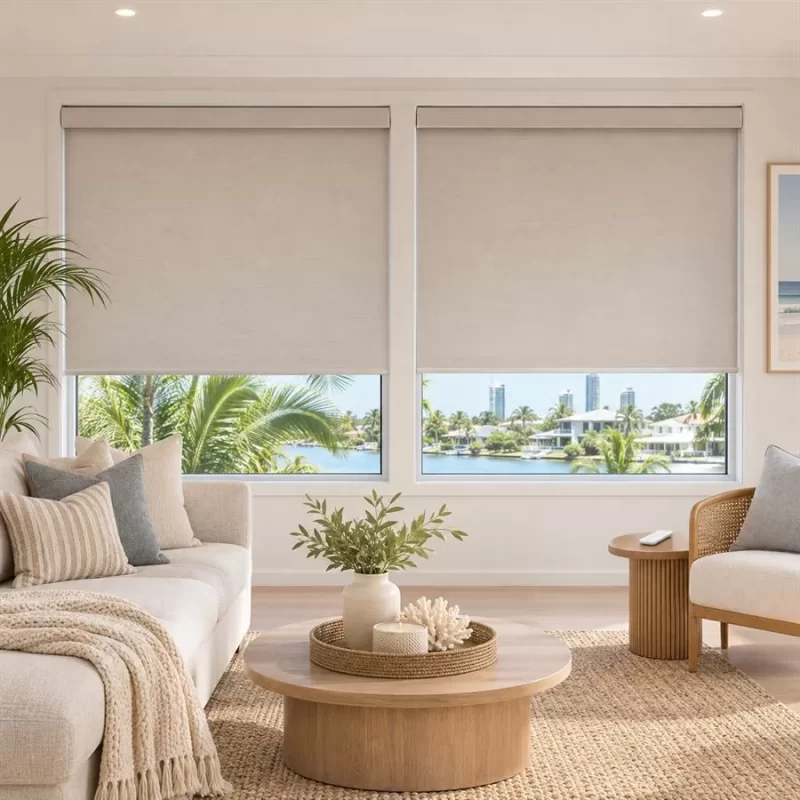
How Motorised Blinds Work
A motorised blind is a blind that’s raised, lowered or opened by a small electric motor rather than a chain, cord or wand. You operate it with a remote control or, with selected motor setups, from your smartphone. You’ll also hear them called electric blinds, remote control blinds or smart blinds, depending on how they’re controlled, but they all work on the same basic idea.
The Motor and the Blind
On roller-style blinds, the motor generally sits inside the roller tube, so it stays out of sight whether the blind is raised or lowered. From across the room, it looks much like a standard blind, without the chain hanging down the side of the window.
What many people don’t realise is that motors aren’t one-size-fits-all. A large blockout blind across a wide living room window weighs a lot more than a small sunscreen blind in a study, and the motor has to be suited to that load. The type of blind, its overall dimensions, the weight of the fabric and the way it’s installed all influence which motor is right. That’s why we select motorised blinds window by window, rather than putting the same motor in every blind regardless of size.
Getting this match right is what keeps a motorised blind running smoothly and consistently.
Remote Control and Smartphone Control
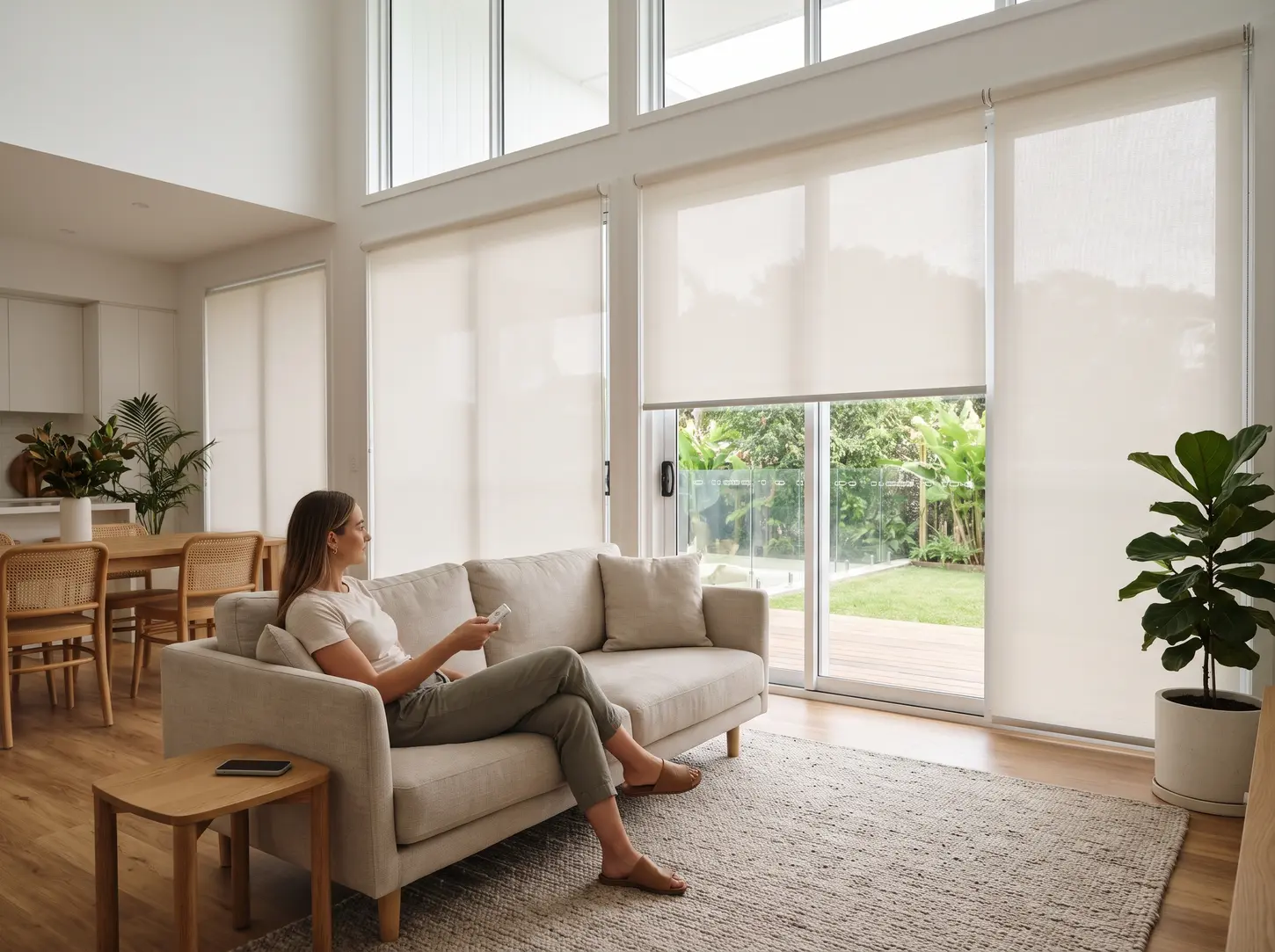
A remote is the standard way to operate motorised blinds day to day. You press a button and the blind moves, whether you’re across the room or sitting on the lounge.
Smartphone control is available with selected configurations, but it isn’t automatic. It needs a compatible motor plus additional control hardware, so it’s something to decide before your blinds are ordered rather than something to bolt on later. If app control matters to you, raise it at your measure and quote so the right motors and hardware can be specified from the outset.
It’s also worth knowing that “smart blinds” can mean different things to different suppliers. Don’t assume every motor will connect to every app or smart home system. Ask what the system you’re considering can do, and what extra equipment it needs to do it.
Operating Several Blinds Together
One of the most practical benefits of motorisation is grouping. Compatible blinds can be set up to operate together, so a single button can lower every blind across the back of the house or open a full run of windows in an open-plan living area.
This is where motorised blinds really earn their keep in larger homes. Instead of walking from window to window as the sun moves across the house, you can adjust a whole room, or a whole side of the home, in one go.
Battery vs Hardwired Motorised Blinds
The power source is the first big decision, because it affects how your blinds are installed, what they cost and whether an electrician needs to be involved. Motorised blinds are generally available with either battery-operated and rechargeable motors or mains-powered motors, and each suits a different kind of home and project.
Battery and Rechargeable Motors
Battery-powered motors run on their own power supply, so there’s no need to run electrical cabling to the window. Rechargeable systems are topped up periodically, while other battery-operated systems need their batteries maintained or replaced from time to time.
How often you’ll need to recharge depends on the size and weight of the blind and how often you use it. A small blind that’s opened once in the morning and closed once at night will need less attention than a large, heavy blind that moves several times a day. It’s better to ask about charging for your specific blinds than to rely on a general figure.
Why choose battery power:
- No electrician or electrical work required
- Minimal disruption during installation
- Well suited to existing homes and apartments where running new cable is difficult or not permitted
- Generally keeps working during a power cut
What to consider:
- Batteries need periodic charging or maintenance, which can be inconvenient on very high windows
- Battery motors may not suit every blind size or weight, so suitability is confirmed at the measure and quote
Rechargeable motorised blinds are often the simplest way to motorise an existing home. If you’re only motorising a handful of key windows, they’re usually the first option to look at.
Mains-Powered (Hardwired) Motors
Mains-powered motors are connected to your home’s electrical supply, which means they never need charging. Our mains-powered options include quiet motors, which suit whole-home installations and blinds that are used often throughout the day.
The trade-off is installation. Hardwiring a motor is electrical work, and in Queensland it must be carried out by a licensed electrician. It’s easiest and most cost-effective during a build or a renovation, while walls and ceilings are still open. Retrofitting mains-powered motors into a finished home is possible, but it can mean cutting into plasterboard and making good afterwards.
Why choose mains power:
- No charging or battery maintenance, ever
- A tidy, low-maintenance setup for blinds that are used often
- Well suited to whole-home installations and larger groups of blinds
What to consider:
- A licensed electrician is required, which adds to the overall cost
- Retrofitting into finished walls and ceilings is more disruptive
- The blinds stop working during a power cut
Battery vs Mains Power at a Glance
| Battery or rechargeable | Mains-powered (hardwired) | |
| Electrician needed? | No | Yes, a licensed electrician in Queensland |
| Ongoing upkeep | Periodic charging or battery maintenance | None |
| Works during a power cut? | Generally yes | No |
| Best suited to | Existing homes, apartments and a few key windows | New builds, renovations, whole-home and frequently used blinds |
| Installation disruption | Minimal | Higher when retrofitting into finished walls or ceilings |
Which Power Option Suits Your Home?
There’s no universally better option. The right choice comes down to your home, your stage of the build and how you’ll use the blinds. Here’s how it usually plays out.
You’re in an existing home and want to motorise a few windows. Battery power is usually the simplest path. There’s no electrical work, no patching of walls and installation is quick.
You live in an apartment. Battery power tends to involve the least change to the building. Many body corporates restrict drilling, cabling and visible alterations, so check your by-laws before ordering anything.
You’re building or doing a major renovation. This is the ideal time for mains power. Your electrician can run cable to each window head before the plasterboard goes on, and you’ll never need to think about charging.
You’re planning a whole-home installation with lots of blinds operating together. Mains power is usually the more practical option, because charging a large number of blinds adds up.
You have very high windows or a void. Weigh up how easy it will be to reach the blind for charging against the cost of wiring it in. If charging means getting a ladder out, mains power can be worth the extra outlay.
Do Motorised Blinds Need an Electrician in Queensland?
The short answer is that you need a licensed electrician whenever a motor is connected to your home’s electrical supply. Battery-powered motorised blinds don’t need an electrician at all.
What Queensland’s Electrical Rules Say
In Queensland, only licensed electricians can carry out electrical work, and that work has to comply with the Australian wiring rules (AS/NZS 3000). The Electrical Safety Office Queensland is clear that you shouldn’t do your own electrical work, and its guidance warns that DIY electrical work is dangerous, illegal and can affect your insurance.
It can be tempting to think of a blind motor as a small appliance, but connecting it to mains power is electrical work, just like installing a new light or power point. If wiring is involved, it’s a job for a licensed professional.
Jobs That Need a Licensed Electrician
- Connecting mains-powered motors to the home’s electrical supply
- Running new cabling to window heads
- Installing new power points
- Installing hardwired wall switches
Jobs That Don’t Need an Electrician
- Installing battery-powered or rechargeable motors
- Charging or replacing motor batteries
- Pairing and setting up remote controls
How to Check Your Electrician Is Licensed
You can confirm an electrician’s licence using the Electrical Licence Search on the Electrical Safety Office Queensland website. Businesses that carry out electrical work for others also need an electrical contractor licence, so it’s worth checking both if you’re engaging a company rather than an individual.
Getting the Timing Right
If you’re going with mains power, the order of work matters. Generally, it looks like this:
- Confirm which windows are being motorised and what blinds and motors are going in, at your measure and quote.
- Your electrician provides power to the correct position at each window.
- The blinds are installed and connected.
Running power to the wrong spot is a frustrating and avoidable mistake, so make sure the blind details are locked in before the electrician starts. If you’re unsure who should organise the electrician for your project, raise it during your quote so everyone is working to the same plan.
Which Blinds Can Be Motorised?
Many blinds can be motorised, but whether a particular blind suits a motor depends on its type, size, fabric weight and how it’s installed. That’s why we look at each window individually rather than working from a fixed list.
Holland Blinds
Holland blinds are one of the most popular blinds to pair with a motor. Their simple roller design hides the motor neatly inside the tube, and the clean, flat fabric suits almost any room, from bedrooms and living areas to home offices.
Holland blinds can be made in different fabrics, so a sunscreen fabric might suit a living room where you want to keep some of the view, while a blockout fabric suits a bedroom you want much darker. Your measure and quote will confirm which fabric and motor combinations suit each window.
Blinds for Wide Openings
Wide windows and sliding doors are where manual blinds tend to become a nuisance. Large blinds are heavier, slower and more awkward to operate by hand, and they’re often the ones that get left in the same position all day.
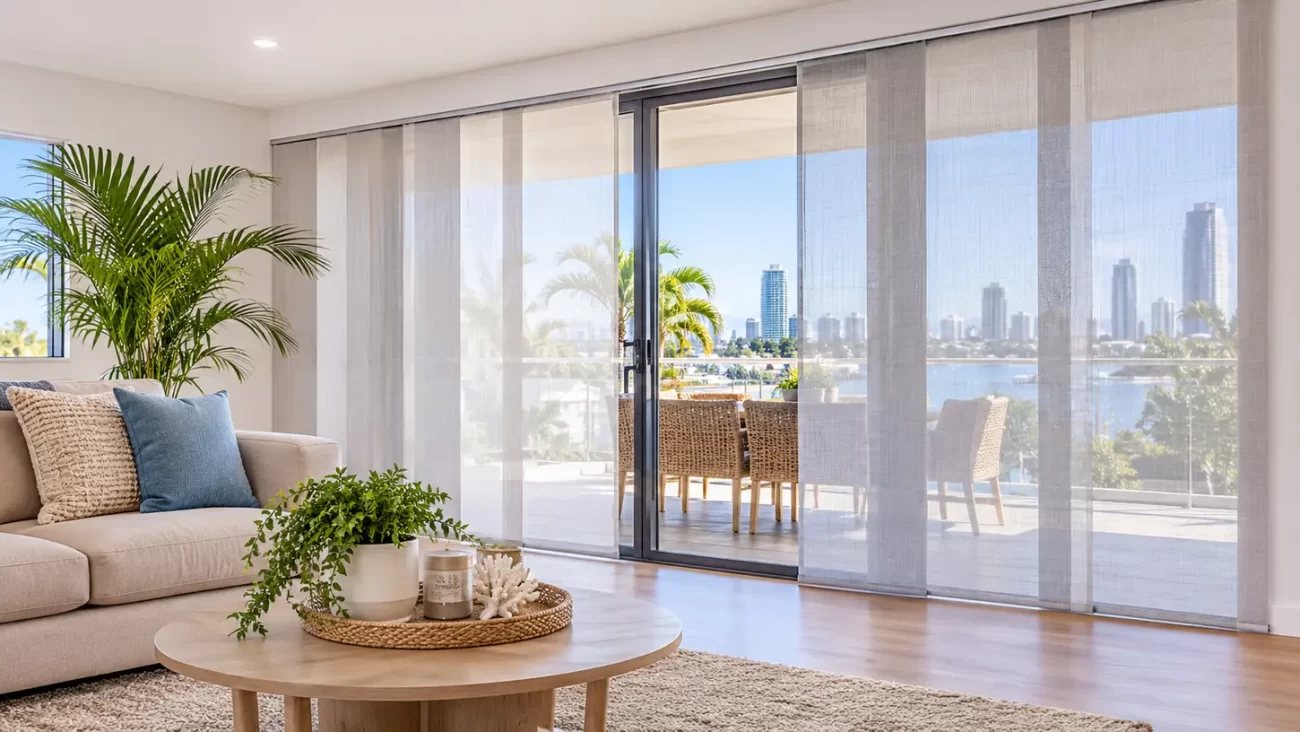
Panel glide blinds are well suited to wide openings, with large fabric panels that slide along a track. If you’re considering motorisation for a wide opening, ask about the options for your particular door or window at your measure and quote.
Other Blinds in Our Range
Our custom blinds range covers a variety of styles, and whether a particular style can be motorised depends on the blind and the window it’s going on. The easiest way to find out is to talk through your windows with our team, who can confirm what’s suitable before you commit.
Choose the Blind First, Then the Motor
It’s easy to get caught up in the motor, but the blind itself is what you’ll look at every day. Start with what each room needs in terms of light, privacy and style, then work out which of those blinds are worth motorising. We cover choosing the right window blinds for different rooms in a separate guide, which is a good place to start if you haven’t settled on a blind style yet.
How Much Do Motorised Blinds Cost? What Affects the Price
There’s no fixed price for motorised blinds. The cost depends on how many blinds you motorise, the type and size of each blind, the fabric, the power option and the controls you choose. Think of a motorised blind as four costs in one: the blind itself, the motor, the power setup and the controls. Understanding each of these makes it much easier to read a quote and see where your money is going.
How Many Blinds You Motorise
Each motorised blind needs its own motor, so the number of windows you motorise is one of the biggest influences on motorised blinds cost. Motorising one large living room window is a very different budget to motorising every blind in a four-bedroom home.
Blind Type, Size and Fabric
Larger and heavier blinds need a motor that suits the load. The blind’s dimensions, the fabric you choose and the style of blind all feed into both the blind price and the motor selection. Fabric choice affects the cost of the blind separately from the motor, so it’s worth comparing a few fabric options at your quote.
Battery or Mains Power
Battery-powered motors avoid electrical work entirely. Mains-powered motors add the cost of a licensed electrician and any cabling. That electrical cost is lowest during a build, when walls and ceilings are open, and highest when retrofitting into a finished home.
Smartphone Control and Extra Hardware
A remote control is the standard way to operate motorised blinds. Smartphone control needs compatible motors and additional control hardware, which adds to the overall cost. If you’re not sure you’ll use app control, it’s worth asking whether the system you’re choosing can be expanded later.
Installation Access and Complexity
High windows, voids, raked ceilings and multi-storey access can all add time to an installation. Larger projects with many blinds operating together also take more planning and setup than a single blind.
Ways to Keep the Cost Down
You don’t have to motorise every blind to get the benefit. Some practical ways to manage your budget:
- Motorise selectively. Focus on the windows that are high, wide or used most often, and keep manual blinds in rooms where they’re rarely adjusted.
- Choose battery where wiring would be disruptive. If running cable means cutting into finished walls, a battery motor can avoid that cost.
- Plan mains power early. If you’re building or renovating, having cabling run at the right stage costs far less than adding it later.
- Plan blinds and flooring together. If you’re renovating, coordinating both at once makes measuring, scheduling and installation easier to manage.
The only way to get an accurate figure is to have each window measured, so we’d recommend you book a free measure and quote once you’ve narrowed down which windows you’re thinking about.
Are Motorised Blinds Worth It? Where They Make the Most Sense
Motorised blinds earn their cost where windows are hard to reach, heavy to operate, adjusted often or exposed to strong sun. Here’s where they tend to make the biggest difference in Gold Coast homes.
High Windows, Voids and Raked Ceilings
Raked ceilings, voids and tall windows feature in plenty of Gold Coast homes, including many newer two-storey builds in growth areas like Coomera and Pimpama. Blinds on those high windows are notoriously difficult to operate by hand, and without a motor they often end up permanently open or permanently closed. Motorisation means you can finally use them the way they were intended, adjusting light and privacy without a ladder or an extra-long wand.
Large Windows and Wide Sliding Doors
Big blinds are heavy and slow to operate manually, and that’s usually why they get left in one position. A motor makes them easy and consistent to use, whether you’re opening up the view in the morning or closing out the glare in the afternoon. We compare the best blinds for sliding doors, including stacking direction and clearance, in a separate guide.
Rooms With Several Windows
Open-plan living areas often have multiple windows facing different directions. Being able to operate a group of blinds together saves walking from window to window several times a day. On a hot afternoon, for example, you could close every west-facing blind in one go as the harsh afternoon sun moves around the house, then open them again once it passes.
Bedrooms and Media Rooms
Being able to adjust the light from bed or from the couch is one of those conveniences that’s hard to give up once you’ve had it. That’s why motorised blockout blinds are a practical choice for bedrooms, nurseries and media rooms.
Homes With Young Children
With a motorised blind, there’s no chain or cord hanging beside the window. That gives a cleaner look and removes loose cords from rooms where small children play. Corded blinds can still be installed safely and must meet Australia’s mandatory safety standards, but for families who’d rather not have cords in the room at all, motorisation is a tidy solution.
Easier Access for Everyone in the Home
For anyone who finds chains, cords or reaching awkward, remote operation makes a real difference. That includes older family members, people with limited mobility or anyone recovering from an injury. Being able to adjust every blind in a room without getting up can make a home more comfortable and easier to live in.
Investment Properties, Offices and New Builds
Motorised blinds aren’t just for the family home. In investment properties, they offer simple, consistent operation for occupants. In offices, multi-blind operation makes it easy to manage light across a workspace. And for new builds, it’s the easiest stage to plan mains power and get the setup exactly right.
When Motorised Blinds Probably Aren’t Worth It
Motorisation isn’t the right call for every window, and we’d rather you spend your budget where it counts. A motor is probably not worth it for:
- Small windows that are rarely adjusted. Laundries, toilets and storerooms often have a blind that stays put year-round.
- Blinds that stay in one position all day. If a sunscreen blind is there for daytime privacy and never moves, a motor adds little.
- Tight budgets. Spend first on the right blind, fabric and fit. You can focus motorisation on the one or two windows where it makes the biggest difference.
- Rental homes you don’t own. If you’re renting, talk to your landlord before making any changes to window furnishings.
If you’re still weighing up which type of window treatment suits your home, we explain the main differences between plantation shutters and blinds in a separate guide.
Gold Coast Conditions to Plan For
Our climate and housing styles bring a few things worth thinking about before you choose motorised blinds.
Summer Storms and Power Outages
Storm season can bring power outages, sometimes for a few hours and sometimes longer. Battery-powered motors generally keep working through a blackout, while mains-powered motors will pause until power returns. If you’re choosing between the two, factor in how much you rely on particular blinds for privacy or light control. Smartphone control may also depend on your control hardware and home internet, which can drop out in a blackout too, so ask how the system you’re considering behaves during an outage. Keep in mind that blinds are a window furnishing, not storm protection, so they won’t protect your glass or home from storm damage.
High-Rise Apartments and Body Corporate Rules
If you live in an apartment in Surfers Paradise, Broadbeach, Main Beach or anywhere else on the coast, your body corporate by-laws may restrict drilling, cabling and anything that changes how the building looks from the outside. Check your by-laws before you order, and seek approval where it’s needed. Battery-powered motors usually involve the least change to the building, which may make approval simpler.
Strong Sun and Afternoon Glare
On the Gold Coast, north-facing rooms get the most sun through the day, while west-facing rooms cop the harsh afternoon sun. Motorisation doesn’t change how a blind handles sunlight, but it makes it much easier to adjust your blinds as the sun moves, rather than leaving them closed all day. The fabric is still the most important choice here. Sunscreen fabrics help cut glare while keeping some of your view, and blockout fabrics give you the most control over light.
Coastal Humidity
Humidity is a fact of life on the coast. Keep motors, charging points and remotes dry, avoid splashing water near motorised blinds in kitchens and bathrooms, and follow the care instructions for your product.
Planning Motorised Blinds for a New Build or Renovation
If you’re building or renovating, you’re in the best position to get motorised blinds right, because you can plan power before the walls close in.
Decide early. Work out which windows you’d like to motorise and whether you want battery or mains power. If you’re going with mains, the electrician will need to run cabling before plasterboard goes on, so this decision needs to be made well before your blinds are installed.
Brief your builder and electrician. Give them the window positions and power requirements so cabling ends up exactly where it’s needed. A quick conversation at the right time saves a lot of patching later.
Missed the window? You still have options. If your build has already reached lock-up or handover, battery-powered motors mean you can still motorise without any electrical work.
Think about flooring at the same time. Floors and blinds take up a lot of the visual space in a room, so choosing them side by side helps you see how tones and finishes work together before anything is installed. Because we supply both window furnishings and carpet, hybrid, laminate, timber and vinyl flooring, you can plan your blinds alongside your flooring installation and keep the whole project coordinated.
Questions to Ask About Smartphone Control
If you’d like to operate your blinds from your phone, ask these questions before you order:
- Is smartphone control available for the blind and motor I’m choosing?
- What additional control hardware will I need?
- Can all of my motorised blinds be operated together, including from my phone?
- Can I add more motorised blinds to the same setup later?
- Is battery or mains power the better fit for how often I’ll use these blinds?
- If I choose mains power, who will organise the electrician?
Having clear answers to these upfront means there are no surprises once your blinds are installed.
Looking After Motorised Blinds
Motorised blinds don’t need much maintenance, but a little care helps them keep running smoothly.
- Keep batteries topped up. For rechargeable and battery systems, charge or maintain the batteries as the product instructions advise, rather than waiting for the blind to stop.
- Clean the fabric gently. Dust regularly and follow the fabric’s care instructions. Keep water away from motors and charging points.
- Keep the path clear. Make sure furniture, pot plants and other objects aren’t sitting where the blind needs to travel.
- Check the remote first. If a blind stops responding, a flat remote battery is often the culprit.
- Leave repairs to the professionals. If a motor isn’t working properly, contact your supplier rather than opening the motor housing yourself.
Frequently Asked Questions About Motorised Blinds
Are motorised blinds worth the money?
For high, wide, heavy or frequently used windows, motorised blinds are usually well worth it. They make blinds you’d otherwise leave in one position easy to use, and they let you adjust several blinds at once. For small windows that rarely move, a manual blind is usually the better value.
What’s the difference between battery and hardwired motorised blinds?
Battery-powered motors run on their own power supply and need periodic charging or battery maintenance, but they don’t need an electrician. Mains-powered motors connect to your home’s electrical supply, never need charging and must be installed by a licensed electrician in Queensland.
Do I need an electrician to install motorised blinds in Queensland?
Only if the motors are connected to mains power. Hardwiring a motor is electrical work, which must be carried out by a licensed electrician. Battery and rechargeable motorised blinds don’t need an electrician.
Do motorised blinds work during a power outage?
Battery-powered motorised blinds generally keep working during a power cut because they carry their own power. Mains-powered blinds will stop until the electricity is restored.
How often do rechargeable motorised blinds need charging?
It depends on the size and weight of the blind and how often you use it. Smaller blinds used once or twice a day need less frequent charging than large, heavy blinds that move several times a day.
Can I control motorised blinds from my phone?
Yes, with selected motor configurations. Smartphone control needs a compatible motor and additional control hardware, so let us know at your measure and quote if it’s something you want.
Can several motorised blinds be operated together?
Yes. Compatible motorised blinds can be grouped so a single button operates multiple blinds, which is ideal for open-plan living areas and whole-home installations.
Which blinds are best for motorisation?
Holland blinds are one of the most popular choices for motorisation, thanks to their simple roller design. Whether other blind styles suit a motor depends on the blind and the window, which we can confirm during your measure and quote.
Are motorised blinds noisy?
Our mains-powered options include quiet motors. Noise varies between motor types, so if quiet operation matters to you, particularly in bedrooms, mention it when you’re discussing options.
Can I mix motorised and manual blinds in the same home?
Absolutely, and it’s often the smartest approach. A common setup is to motorise the high, wide or most-used windows and keep manual blinds everywhere else.
Are motorised blinds a good option for high windows?
They’re one of the best options. Blinds on high windows, voids and raked ceilings are hard to reach by hand, and motorisation means you can actually use them day to day. If charging access would be difficult, consider whether mains power makes more sense for those windows.
Plan Your Motorised Blinds with Award Carpets Gold Coast
Choosing motorised blinds comes down to a few clear steps: pick the windows that will benefit most, decide between battery and mains power, use a licensed electrician for any wiring and have every window measured properly. Get those right and you’ll end up with blinds that are easy to live with for years.
That’s exactly what our free measure and quote is for. When we visit, we measure every window and talk through what each room needs, from privacy and light through to how you’d like your blinds to operate and how they’ll sit with the rest of the space. From there, we can recommend the right blind and motor for each window, rather than a one-size-fits-all package.
To make the most of your appointment, it helps to have a few things in mind:
- Which windows you’re thinking of motorising
- Whether you’re building, renovating or updating an existing home
- Any body corporate rules that apply, if you’re in an apartment
- Whether you’d like smartphone control
- Whether you’re leaning towards battery or mains power
We’ve been part of the Gold Coast community for more than 30 years, and because we offer both window furnishings and flooring, we can help you plan your whole room rather than one piece at a time. Explore our range of motorised blinds to see what’s possible, then arrange a free measure and quote with our local team, whether you’re updating an existing home, renovating or planning a new build.