

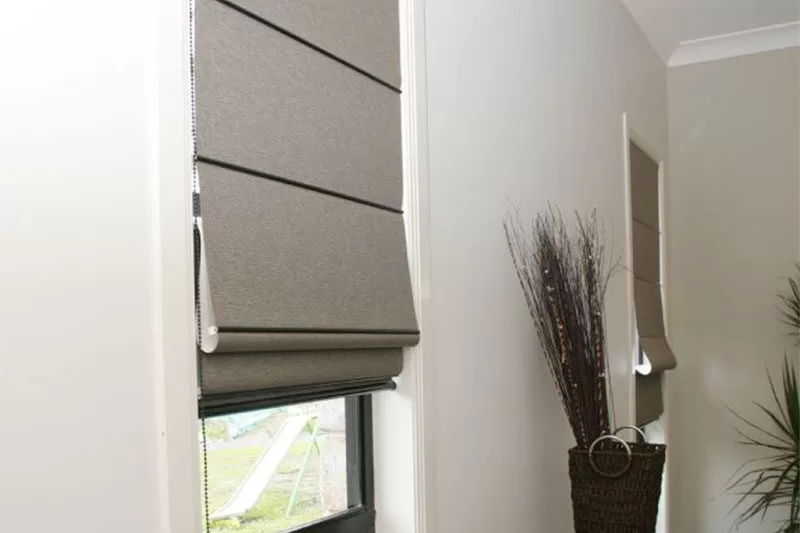

Window blinds shape how a room looks, how comfortable it feels and how well it works from morning to night. The right blind can soften harsh afternoon sun, give you privacy without darkening the whole room and pull together the colours already in your flooring and furniture. The wrong one can leave you squinting at the TV, lying awake at sunrise or replacing it sooner than planned.
Whether you’re renovating a Gold Coast home, finishing a new build or updating a single room, choosing window blinds is easier when you understand how each style works and what each room actually needs. This guide covers the main types of window blinds, how they compare for light control, privacy and maintenance, and what to think about when measuring, budgeting and planning your installation.
Why Choosing the Right Window Blinds Matters
Blinds influence a room’s appearance, comfort and everyday function all at once. When you get the choice right, you can expect benefits such as:
- Privacy from neighbours, footpaths and overlooking windows
- Light management, from soft filtered daylight to a properly dim bedroom
- Glare reduction on TVs, computer screens and glossy surfaces
- Easier upkeep, with fabrics and finishes suited to the room they’re in
On the Gold Coast, where bright sunshine, humidity and indoor-outdoor living are part of daily life, window coverings have a lot to manage. A west-facing living room, a bathroom that fills with steam and a wide sliding door to the patio all ask different things of a blind, which is why different rooms and window configurations often call for different blind styles.
Blinds also sit alongside your flooring, walls and furniture as one of the largest visual surfaces in a room. Coordinating them with carpet, timber, hybrid or vinyl floors helps the whole space feel considered. If your new blinds are part of a renovation that includes professional flooring installation, it’s worth planning both together from the start.
At Award Carpets Gold Coast, our range of custom-made blinds is a useful starting point if you’re comparing options for one window or a whole home.
Understand the Different Types of Window Blinds
Each blind style has its own operating mechanism, look and practical strengths. Here’s a quick overview before we look at each in more detail.
| Blind style | How it operates | Often suits |
| Roller / Holland | Fabric rolls around a tube | Most rooms, modern interiors |
| Motorised | Electric motor replaces manual controls | High, wide or multiple windows |
| Panel glide | Wide fabric panels slide along a track | Sliding doors, wide windows |
| Roman | Fabric folds into horizontal sections | Bedrooms, living rooms, feature windows |
| Venetian | Horizontal slats tilt, raise and lower | Rooms needing adjustable light |
| Veri Shades | Soft fabric vanes rotate and draw aside | Living and dining areas, large openings |
| Vertical | Vertical vanes rotate and draw aside | Sliding doors, wide glass openings |
Roller Blinds
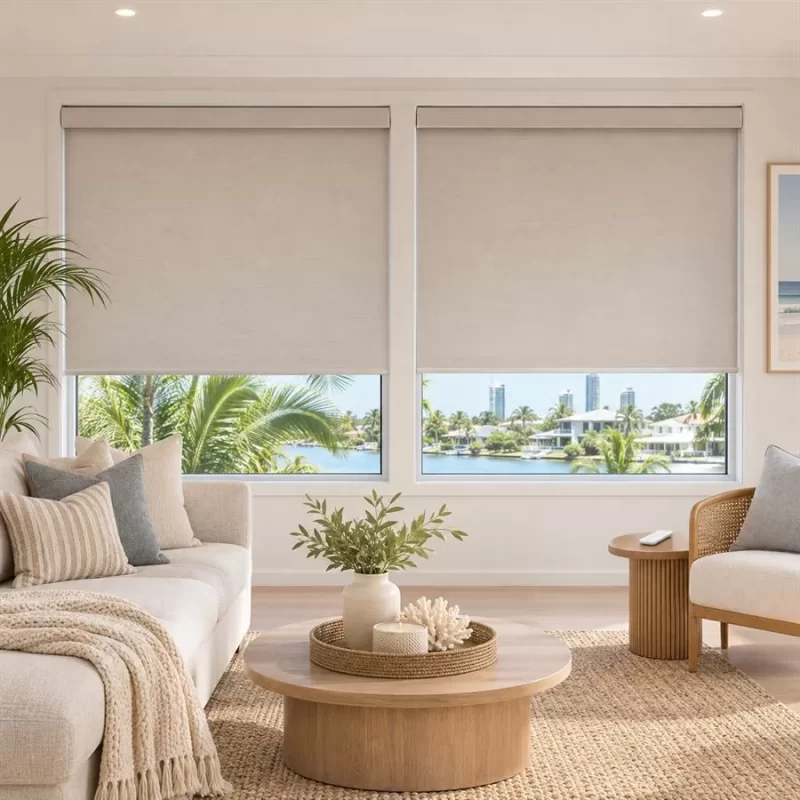
Roller blinds work by rolling a single piece of fabric around a tube mounted at the top of the window. Raised, they tuck neatly out of the way; lowered, they sit flat across the glass. That clean, streamlined look suits contemporary interiors, but the right fabric and colour can make roller blinds feel just as at home in a coastal, classic or relaxed space.
Fabric choice determines most of their performance:
- Sunscreen fabrics filter sunlight and reduce glare while keeping some view outside during the day
- Light-filtering fabrics soften daylight and add privacy without fully darkening the room
- Blockout fabrics are designed to stop most light passing through the material
This flexibility makes roller-style designs one of the most practical choices for bedrooms, living areas, kitchens and home offices. Roller options sit across much of our blinds range, including blockout, sunscreen, double roller and motorised configurations.
Holland Blinds
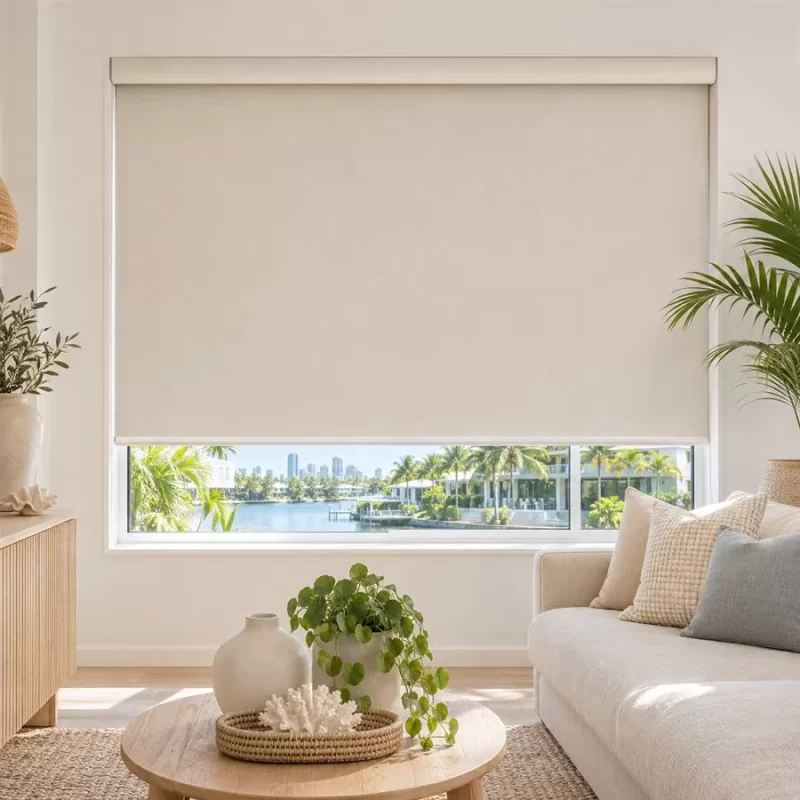
In Australia, Holland blind is a long-standing name for a roller blind, and the two terms are often used interchangeably. A Holland blind uses the same simple mechanism: one panel of fabric rolls away when open and sits flat across the window when closed.
Because the mechanism is straightforward, choosing Holland blinds mostly comes down to the fabric and finishing details. When comparing options, consider:
- Transparency: how much you want to see out, and how much others can see in
- Privacy: whether you need it during the day, at night or both
- Room darkening: whether the room needs to be dim for sleep or screens
- Finishing details: such as the bottom rail style and colour
Fabric samples can look quite different at home compared with in a showroom, so it’s worth viewing them against your own window, walls and flooring before making a final decision.
Motorised Blinds
Motorised blinds use an electric motor rather than a chain or cord, so you can raise and lower them with a remote, a wall control or, in selected configurations, a smartphone. They’re particularly convenient for large, high or hard-to-reach windows, such as glass above a staircase or a window behind a kitchen bench.
When you have several blinds across a home, motorisation also makes it easier to operate them without walking from window to window. Points to consider include:
- Power supply: battery-powered motors need periodic recharging, while hardwired mains-powered motors need to be connected by a licensed electrician
- Controls: remote, wall-mounted or app-based options vary by motor and blind
- Compatibility: motorisation is available for selected blind types and configurations, not every product
For homeowners planning a new build or major renovation, motorisation is often simpler to plan early, when power can be allowed for in the right places.
Panel Glide Blinds
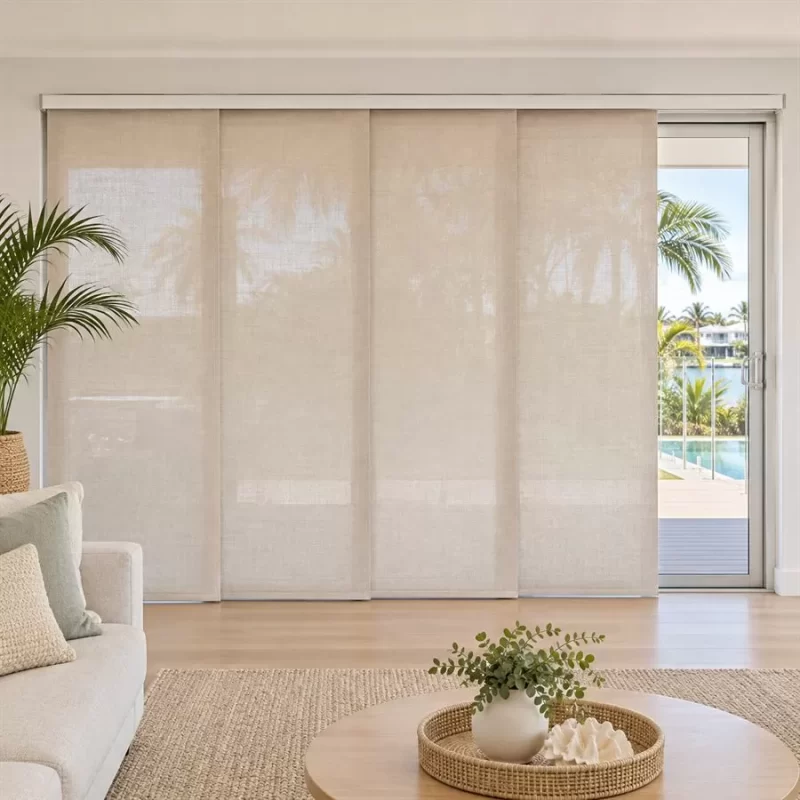
Panel glide blinds use wide fabric panels that slide horizontally along a track and stack together when opened. They’re well suited to sliding glass doors, wide windows and open-plan spaces, where their broad, flat panels create a clean, contemporary look.
The finished result depends on panel width, fabric choice and stacking direction. Panels can be configured to open to the left, the right or from the centre, which affects how much of the opening is clear when they’re pulled back.
Compared with vertical blinds, panel glides have fewer, wider panels and a flatter, more modern appearance. Vertical blinds, on the other hand, have vanes that rotate, giving you more control over the direction of light without drawing the blind open.
Roman Blinds

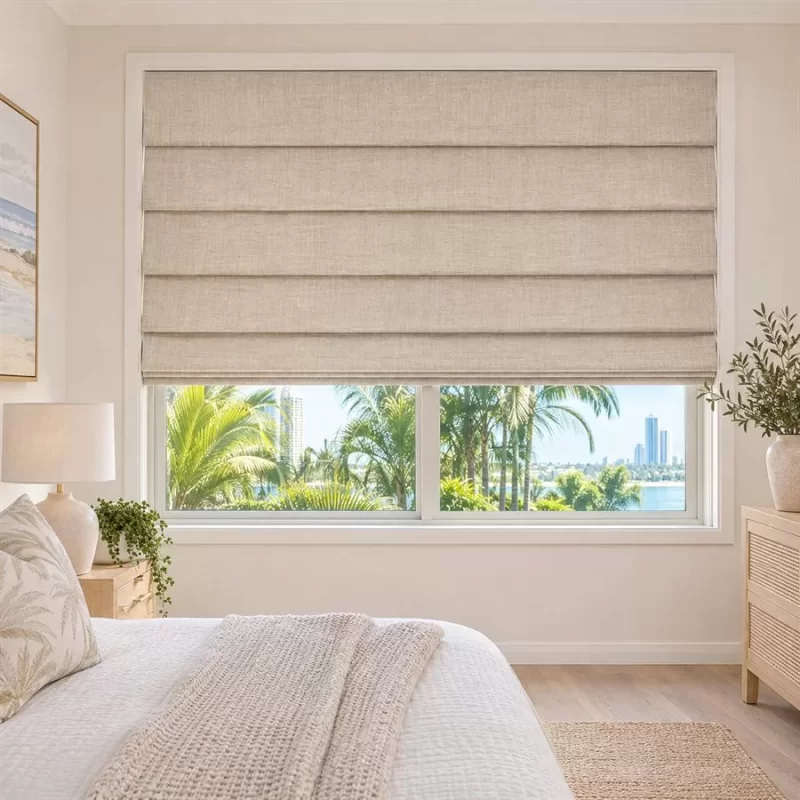
Roman blinds fold into neat horizontal sections as they’re raised, creating a softer, fabric-focused look than more streamlined designs. They’re a popular choice for bedrooms, living rooms and feature windows where the window furnishing should contribute to the room’s style.
Fabric texture, pattern and colour have a big influence here. A textured linen-look fabric can add warmth to a minimalist room, while a subtle pattern can turn a window into a focal point.
A few practical points are worth weighing up:
- The folded fabric stacks at the top of the window when raised, which can cover part of the glass
- Textured fabrics and folds can collect more dust than a flat roller fabric
- Some fabrics need gentler care, so check the cleaning instructions before you choose
Venetian Blinds
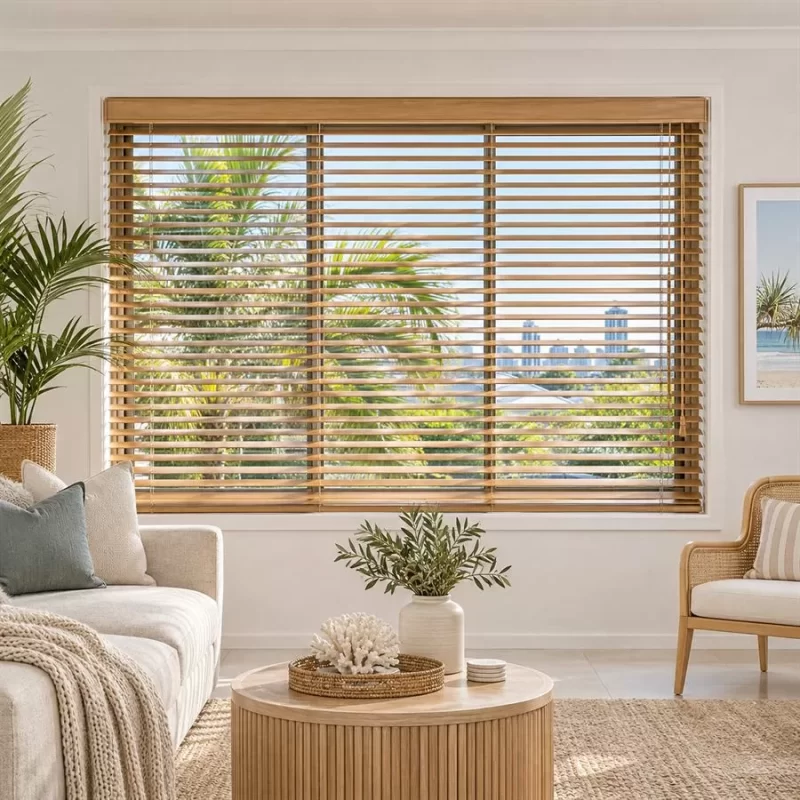
Venetian blinds use horizontal slats that tilt to change the amount and angle of light entering a room. You can angle slats upwards to bounce daylight towards the ceiling while limiting views in from the street, or close them fully for greater privacy.
Venetians are available in timber and aluminium, in a range of slat sizes. Slat size, colour and finish all affect the look: wider slats tend to feel more contemporary and open up the view, while timber adds natural warmth to living areas and bedrooms.
Each slat collects dust, so Venetians need regular cleaning. For moisture-prone rooms such as bathrooms and laundries, aluminium is generally a more practical choice than timber, but confirm the product’s suitability for the location before you order.
Veri Shades
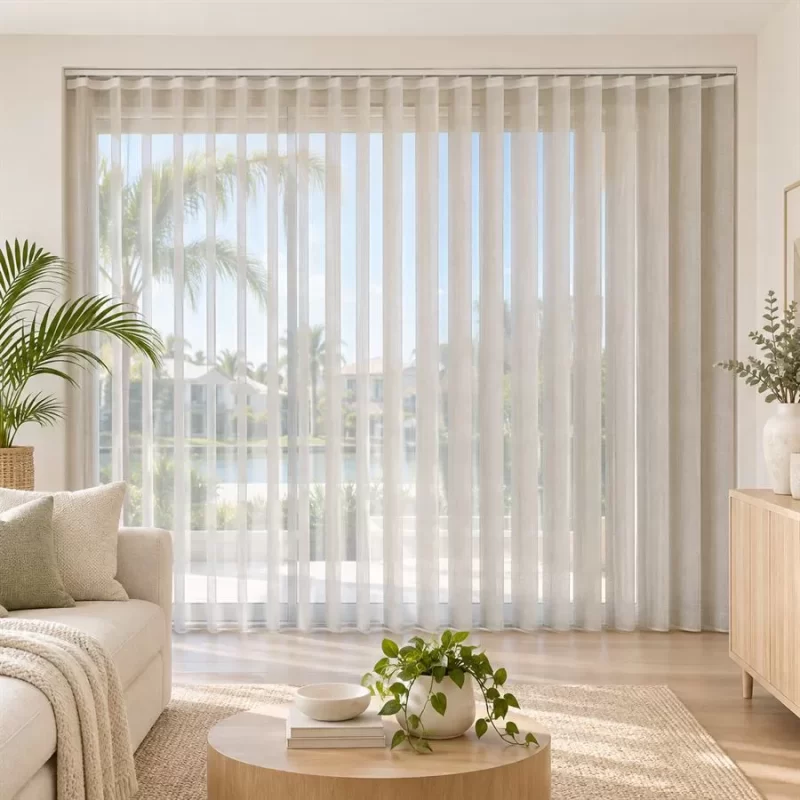
Veri Shades combine the soft, flowing look of a curtain with the adjustable control of a blind. Individual fabric sections rotate to let you see through, filter the light or close off the view for greater privacy.
Unlike conventional vertical blinds, Veri Shades have no bottom weights or connecting chains, so you can walk through the furnishing at any point. Unlike traditional curtains, they can be adjusted for light and privacy without being drawn fully open or closed. Their soft appearance suits living rooms, dining areas and larger windows where looks matter as much as function.
Vertical Blinds
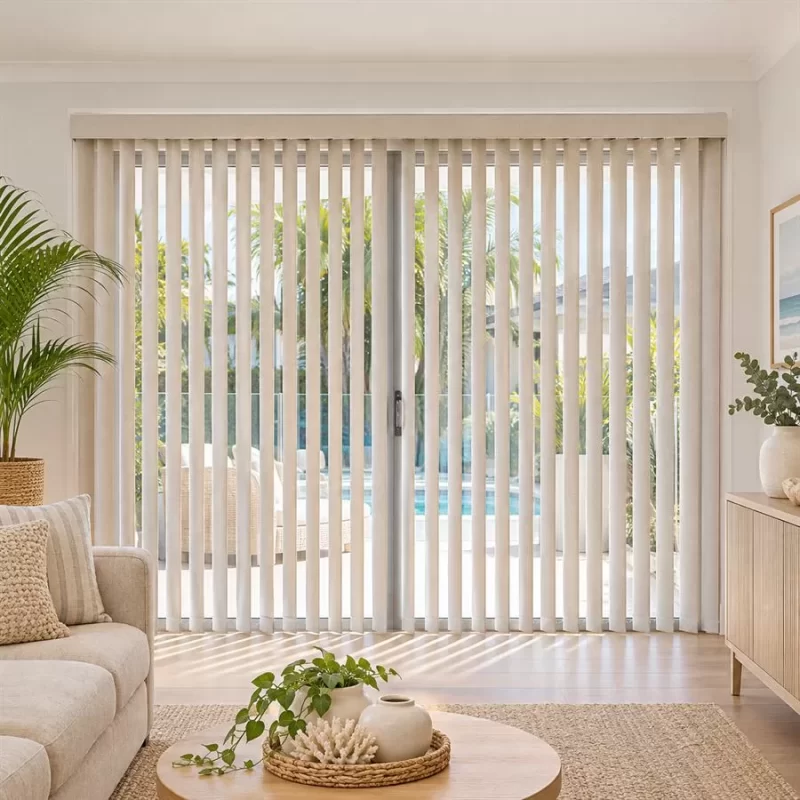
Vertical blinds use vertical vanes that rotate to control light and privacy and draw aside along a track when you need access to a door or a view. Their tall, narrow format makes them a natural fit for sliding doors, large windows and wide glass openings.
Rotating the vanes changes the direction of incoming light, so you can block direct sun while keeping some daylight in the room. Fabric, colour and vane width all shape their appearance, from a simple, neutral look to a more textured finish.
Vertical blinds are a practical choice for homes, rental properties, apartments and selected commercial spaces.
Compare Window Blinds to Find the Best Option for Your Home
The best blinds for homes depend on the window’s size, the room’s purpose, your privacy needs, the look you prefer and your budget. The comparisons below can help you narrow the options.
Which Window Blinds Offer the Best Light Control?
Light control comes down to two things: how much light the fabric lets through, and whether you can change the direction of light.
- Sunscreen fabrics filter sunlight and reduce glare while keeping daylight in the room
- Light-filtering fabrics soften light more noticeably while still brightening the space
- Blockout fabrics stop most light passing through the material itself
- Venetian slats let you redirect light, which a fixed-opacity fabric can’t do
- Double roller blinds pair two fabrics, usually sunscreen and blockout, so you can switch between them
Your window’s orientation, nearby buildings and how much direct sun reaches the glass all affect what will work. Keep in mind that actual performance varies with the fabric, product design and installation.
Which Blinds Provide the Most Privacy?
Privacy blinds need to work at the times you need them, and daytime and night-time privacy behave differently.
During the day, when it’s brighter outside than inside, a sunscreen fabric can make it harder for people to see in while you still see out, depending on the fabric and the light. At night, when your lights are on, that reverses. Silhouettes and movement can become visible through sunscreen and lighter fabrics.
For dependable night-time privacy, consider blockout fabrics, a double roller system or adjustable slats that can close fully. It’s also worth standing outside your home to check sightlines from neighbouring properties, footpaths and overlooking windows.
Which Blinds Are Best for Large Windows and Sliding Doors?
| Option | How it opens | Light adjustment | Worth knowing |
| Panel glide | Panels stack to one side or the centre | Choose fabric opacity | Clean, modern look |
| Vertical | Vanes draw aside | Vanes rotate | Practical and versatile |
| Veri Shades | Fabric sections draw aside | Sections rotate | Walk-through design |
| Roller | Rolls up | Choose fabric opacity | Very wide spans may need multiple blinds |
For doors leading to an outdoor entertaining area, think about how often the door is used and where the blind will sit when it’s open. A blind that stacks on the wrong side can get in the way every time you step outside.
Motorisation can be a genuine convenience for large or frequently used openings. With bigger spans, small measuring errors have a larger impact, so accurate measurements and a professional assessment are especially important.
Which Blinds Suit Modern and Traditional Interiors?
Roller and panel glide blinds suit clean, contemporary spaces, making them popular modern window coverings. Roman blinds and Veri Shades introduce softness and texture that can warm up both modern and traditional rooms. Venetian blinds have a structured look that suits classic or modern interiors, depending on the slat material and colour.
Whatever the style, coordinating fabric, colour and finish with your flooring and furniture will usually serve you better over time than choosing based on trends alone.
How Do Different Blinds Compare for Maintenance?
No blind is maintenance-free. Flat fabric blinds such as roller blinds are generally quick to dust, while Venetian slats and vertical vanes need cleaning one by one. Roman blinds and textured fabrics can hold more dust in their folds and weave.
Kitchen grease, humidity, pets and busy family life all increase cleaning needs. Most fabric blinds call for routine dusting and manufacturer-approved spot cleaning only, so check the care instructions before choosing delicate fabrics or finishes.
How to Choose Window Blinds for Each Room
A whole-home approach keeps your interiors cohesive, but each room still has its own needs, and that’s the key to knowing how to choose blinds well. This quick reference shows how window blinds for different rooms can vary.
| Room | Main priorities | Options to consider |
| Bedrooms | Privacy, darkness, sleep | Blockout roller, double roller, Roman |
| Living rooms | Light, glare, style | Sunscreen roller, panel glide, Veri Shades, Roman |
| Kitchens | Easy cleaning, clearance | Roller with wipeable fabric, aluminium Venetian |
| Bathrooms | Privacy, humidity | Moisture-suitable roller or aluminium Venetian |
| Home offices | Screen glare, privacy | Sunscreen or light-filtering roller, Venetian |
| Children’s rooms | Darkness, cord safety | Blockout roller, cordless or motorised systems |
| Sliding doors | Access, stacking | Panel glide, vertical, Veri Shades |
Best Blinds for Bedrooms
Bedrooms need privacy, light reduction and comfortable sleeping conditions. Blockout roller blinds are a popular choice, and Roman blinds with a blockout lining can offer a softer look.
Room-darkening performance depends on the fabric, the fit and how much light enters around the edges. A blind fitted inside the window recess usually has small gaps at the sides, while a blind mounted outside the recess can overlap the frame. Your options depend on the window, so discuss this during the measure.
East-facing bedrooms catch early morning sun, and street-facing windows may let in streetlight, so both affect your fabric choice. Lighter-coloured blockout fabrics can also show more glow from behind than darker ones. Motorised blinds can add convenience in bedrooms, letting you open or close the blinds without getting out of bed.
Best Blinds for Living Rooms
Living rooms need to balance natural light, privacy, glare control and style. Sunscreen roller blinds manage daytime glare without darkening the room, panel glide blinds and Veri Shades suit wide windows overlooking the garden or patio, and Roman blinds add texture to cosier spaces.
Think about where the sun falls on your TV at different times of day. If the room is used from morning to evening, flexible light control such as a double roller or adjustable vanes can help. Blinds that coordinate with your sofa, rugs, carpet or hard flooring also help the room feel complete.
Best Blinds for Kitchens
Kitchen blinds need to be easy to clean and suited to the room’s conditions. Choose a style that won’t interfere with benchtops, taps or everyday cooking, and think carefully about proximity to the sink, cooktop, steam and cooking grease.
Roller blinds with wipeable fabrics and aluminium Venetians are common choices, but always check the material’s cleaning instructions and suitability for the location. Colour-wise, coordinating with your cabinetry, splashback and flooring helps the kitchen look cohesive.
Best Blinds for Bathrooms and Ensuites
Bathrooms need dependable privacy and products suited to humid conditions. Moisture and ventilation should shape your selection, because a fabric or mechanism that isn’t designed for a wet area may deteriorate, warp or develop mould.
If your window has obscured glazing, it may already provide daytime privacy, but a blind can still be useful at night or where the glass is only partly frosted. Always confirm with the supplier that the chosen blind suits the installation environment.
Best Blinds for Home Offices
Glare on a computer screen or a bright window behind you on a video call can make a home office uncomfortable to work in. Sunscreen or light-filtering fabrics help manage daylight while keeping the room bright.
For street-facing or overlooked offices, consider daytime privacy too. Adjustable options such as Venetian blinds or double rollers help you respond to changing sunlight throughout the day, and motorisation makes quick adjustments easy without leaving your desk.
Best Blinds for Children’s Rooms
Children’s rooms need privacy, comfortable sleeping conditions and practical, easy-to-clean fabrics. Room-darkening fabrics can help with daytime naps and summer sunrises, while simple, easy-to-operate systems become more useful as children get older.
Consider the child’s age and the room’s layout, including where the cot or bed sits in relation to the window. Corded blinds can pose a strangulation risk to young children, so choose cordless or motorised systems, or corded products fitted with appropriate safety devices. Check that any corded product meets the applicable Australian mandatory safety standard and is installed so cords stay secured and out of reach.
Best Blinds for Sliding Doors and Open-Plan Spaces
Panel glide blinds, vertical blinds and Veri Shades are the main options for sliding doors. Consider which way the blind moves and where it stacks, so it doesn’t block the side of the door you use most.
For wide openings connecting indoor and outdoor living areas, using the same fabric or colour across adjoining windows helps create a consistent look. Where spans are large or the door is used constantly, motorisation can make daily operation easier.
Choose Between Blockout, Sunscreen and Light-Filtering Blinds
Blind style determines how a blind operates; fabric determines how it performs. Here’s how the main fabric types compare.
| Fabric | What it does | Night-time privacy | Commonly used in |
| Blockout | Stops most light passing through the fabric | Strong | Bedrooms, nurseries, media rooms |
| Sunscreen | Filters light and glare, keeps some outward view | Limited when lights are on | Living areas, home offices |
| Light-filtering | Softens daylight without full darkness | Varies with fabric | Dining rooms, hallways, living areas |
Blockout Blinds for Privacy and Room Darkening
Blockout fabrics are designed to prevent most light from passing through the material, making them well suited to bedrooms, nurseries and media rooms. Light may still enter around the sides, top or bottom, depending on how the blind is installed. Blockout fabrics come in a wide range of colours, textures and finishes, and performance and appearance can vary between products.
Sunscreen Blinds for Daylight and Glare Reduction
Sunscreen fabrics filter sunlight while keeping some view outside, which makes them useful for reducing glare in living areas and home offices. How much you can see through depends on the fabric’s openness, the lighting on both sides and the view itself. Because sunscreen fabrics don’t provide reliable privacy at night with interior lights on, you may need a separate solution for evenings.
Light-Filtering Blinds for Balanced Interiors
Light-filtering blinds soften incoming daylight and suit rooms where complete darkness isn’t necessary. The fabric’s opacity and colour both influence how bright the room feels. These blinds can strike a comfortable balance between privacy and natural light, though the level of privacy varies with the fabric.
Double Roller Blinds for Flexible Light Control
A double roller fits two blinds at the same window, commonly a sunscreen and a blockout. You can use the sunscreen to filter daylight and switch to the blockout for privacy or darkness at night. A double roller needs more mounting space and extra hardware, and you’ll have two sets of controls to operate, so check that the window recess or wall can accommodate it.
Consider Your Home’s Climate and Sun Exposure
Gold Coast homes enjoy plenty of sunshine, so the way light enters each room is an important part of choosing window blinds.
Choosing Blinds for Hot, Sunny Windows
Direct sunlight through glass can add glare and unwanted heat to a room. Match the blind to the window’s exposure rather than choosing on looks alone, and think about managing sun during the hottest part of the day, especially in summer. How well a blind helps depends on the glazing, orientation, fabric and installation.
Choosing Blinds for East-Facing and West-Facing Windows
East-facing rooms receive morning sun, which can be welcome in winter and bright early on summer mornings. West-facing windows can be more challenging, as low-angle afternoon sun shines deep into the room. Adjustable or layered options, such as Venetians, rotating vanes or double rollers, give you more ways to manage it. Before deciding, spend a few days observing how sunlight moves through your rooms.
Can Window Blinds Help With Energy Efficiency?
Suitable window coverings may help reduce solar heat gain in summer and limit heat loss in cooler months in some circumstances. The fabric, how closely the blind fits and the gap between the blind and the glass all play a part.
Internal blinds are generally less effective at blocking summer heat than external shading such as eaves or awnings, so consider them alongside glazing, insulation, shading and ventilation. We can’t promise any particular reduction in energy bills or indoor temperature, as results depend on your home.
Choose the Right Blind Colours, Fabrics and Finishes
Should You Choose Light or Dark Blinds?
Lighter blinds tend to make a room feel bright and airy, while darker blinds can feel grounded and cosy. In sunscreen fabrics, darker colours generally offer a clearer view outside and reduce glare more effectively, while lighter colours reflect more light. Consider how the colour will sit against your walls, flooring, cabinetry and furniture, and compare samples in the room’s actual lighting at different times of day.
Matching Blinds With Flooring and Interior Finishes
Blinds can help tie together carpet, timber, laminate, hybrid and vinyl flooring. Rather than matching colours exactly, coordinate undertones: warm with warm, cool with cool. A neutral palette creates a calm, consistent look, while a contrasting accent can work well when used with purpose. Texture adds interest, but too many competing textures can make a room feel busy.
Choosing Plain, Textured or Patterned Blinds
Plain fabrics create a subtle backdrop that lets furniture, artwork and flooring take centre stage. Textured fabrics add depth to minimalist interiors without introducing a print. Patterns can suit feature rooms or decorative spaces, but check how a pattern looks at full window size. Think about what you’ll still enjoy in several years, not just what’s popular now.
How to Make Small Rooms Feel More Spacious
Streamlined blinds and consistent finishes help small rooms feel less cluttered. A blind in a colour close to the wall can make the window feel like part of the room rather than a visual break. Avoid bulky arrangements where space is tight, and keep in mind that window dimensions and available mounting space will influence what’s possible.
Custom-Made Blinds vs Ready-Made Blinds
| Custom-made | Ready-made | |
| Sizing | Made for your specific window | Standard sizes only |
| Fabric and colour choice | Broad | Limited |
| Operating options | Wide range, including motorisation | Usually basic manual |
| Best for | Wide, unusual or whole-home projects | Simple, standard-sized windows |
| Measuring and installation | Often professionally measured and installed | Typically DIY |
What Are Custom-Made Blinds?
Custom-made blinds are made to suit the dimensions and requirements of a particular window. You can choose the fabric, colour, operating mechanism and configuration, which is especially helpful for wide windows, unusual sizes and coordinated whole-home projects. Measuring, product selection and installation should be considered together, as each affects the final result.
What Are Ready-Made Blinds?
Ready-made blinds are made in standard sizes and sold off the shelf. They can suit straightforward window sizes and budget-conscious projects, but you’ll need to check the dimensions, mounting requirements and available adjustments carefully. When a standard size doesn’t fit your window, you may end up with visible gaps or a blind that’s too wide for the recess.
Which Option Is Right for Your Home?
Think about convenience, sizing, how much customisation you want and what installation is involved. If you’re fitting several windows and want a consistent look across the home, custom-made blinds make that easier. The lowest upfront price isn’t the only consideration, because a blind that fits and works well is one you won’t need to replace soon.
If you’re after a tailored result, our custom-made blinds are designed around your windows and the way you use each room.
Measuring Windows and Planning Your Blind Installation
Inside-Mount vs Outside-Mount Blinds
Inside-mount blinds sit within the window recess for a neat, built-in look. Outside-mount blinds are fixed to the wall or frame around the window and can overlap the opening.
Inside mounting needs enough frame depth to clear handles, winders and locks. Outside mounting needs a suitable surface to fix to and can help when the recess is shallow or obstructed. The mounting position also affects light gaps and privacy, as an outside-mounted blind can overlap the frame and reduce light around the edges.
What Measurements Do You Need?
For most blinds, you’ll need:
- Width, measured at the top, middle and bottom of the opening
- Height, measured on the left, centre and right
- Recess depth, if you’re considering an inside mount
- Obstructions, such as handles, locks, tiles or architraves
Window frames are rarely perfectly square, which is why several measurements are needed. Each manufacturer has its own measuring instructions, so follow those exactly, or arrange a professional measure.
Why Professional Measuring and Installation Can Help
Accurate measurements reduce the risk of sizing errors, which are costly to fix with custom-made blinds. A professional measure also considers alignment, mounting hardware and operating clearance. Large windows, sliding doors and motorised systems add more complexity, so a measure and quote is a sensible first step when planning custom-made blinds.
How Much Do Window Blinds Cost?
Factors That Affect the Price of Blinds
The price of blinds is influenced by:
- Blind style and operating mechanism
- Window dimensions
- Fabric or material selection
- Manual or motorised operation
- The number of windows
- Special mounting or installation requirements
Because these vary so much from window to window, a tailored quote will give you a far more useful figure than a single price per blind.
Are Motorised Blinds Worth the Extra Cost?
Motorised blinds offer convenience, accessibility and easier control of multiple blinds. They can add real value on high windows, large glass openings and in homes where reaching the controls is difficult. You’ll also need to consider power, controls and any ongoing maintenance, such as recharging batteries. Ask yourself whether motorisation solves a practical problem in your home or is mainly a lifestyle preference. Either is a valid reason, as long as it suits your budget.
How to Budget for Blinds Across an Entire Home
- List each window and its main requirement, such as privacy, glare control or darkness.
- Note which rooms need different solutions, as bedrooms, bathrooms and living spaces usually do.
- Prioritise the windows with the greatest privacy, glare or room-darkening needs.
- Request a detailed measure and quote before committing to a whole-home installation.
Common Mistakes to Avoid When Choosing Window Blinds
Choosing Blinds Based on Appearance Alone
A blind can look great and still fail to provide the privacy, light control or ease of use the room needs. Make sure the blind you love also works for the space.
Ignoring the Difference Between Daytime and Night-Time Privacy
Sunscreen and some light-filtering fabrics offer different levels of privacy depending on indoor and outdoor light. Check how a fabric will perform after dark before choosing it for a street-facing room.
Overlooking the Direction of Sunlight
Orientation affects how much sun a window receives and when. A fabric that’s comfortable in a south-facing room may struggle in a west-facing one.
Selecting the Wrong Size or Mounting Position
Inaccurate measurements or insufficient clearance can affect how a blind looks and operates, and can leave unwanted light gaps.
Using the Same Blind Style in Every Room
A home can look coordinated while using different blind types. Keeping a consistent colour palette and fabric family across rooms lets each blind suit its space without losing cohesion.
Forgetting Cleaning and Child Safety
Be realistic about how much cleaning each blind will need in its location. In homes with young children, choose cordless or appropriately safeguarded systems and check that the product suits the room before installation.
How to Care for and Maintain Your Window Blinds
Routine Cleaning for Fabric Blinds
Dust fabric blinds regularly with a soft brush or a vacuum on a low setting with a brush attachment. For marks, use only manufacturer-approved spot cleaning methods. Harsh chemicals or too much moisture can damage some fabrics, so always check the care instructions for your specific material.
Cleaning Venetian and Vertical Blinds
Dust slats and vanes regularly, working gently so you don’t bend or crease them. Clean individual slats or vanes one at a time, using only the methods recommended for the material. Timber slats in particular shouldn’t be exposed to excess moisture. Blinds in kitchens and high-use areas will need more frequent attention.
Maintaining Motorised Blinds
Follow the manufacturer’s operating and maintenance guidance. Check controls, recharge or replace batteries where applicable, and make sure nothing is obstructing the blind’s path. If a motor or mechanism stops working properly, contact a professional rather than attempting electrical or mechanical repairs yourself.
When Should You Repair or Replace Your Blinds?
Damaged or faded fabric, faulty mechanisms and blinds that no longer operate smoothly are common signs it’s time to act. Minor issues may be repairable, while older or extensively damaged blinds are often more practical to replace. Changing privacy or light-control needs can also justify an upgrade, and replacing flooring or renovating is a good time to reassess your window furnishings too.
Why Choose Award Carpets Gold Coast for Your New Blinds?
Explore a Range of Blind Styles
Our range includes Holland, motorised, panel glide, Roman, Venetian, Veri Shades and vertical blinds, along with blockout, sunscreen and double roller options. The right choice depends on your windows and how you use each room, so we’re happy to talk through what will work for your home. You can compare the full range of custom-made blinds on our website.
Find Blinds That Complement Your Flooring
Flooring and window furnishings are two of the largest visual surfaces in any room, and choosing them together makes it easier to create a cohesive interior. We can help you coordinate colours and finishes across carpet, timber, laminate, hybrid and vinyl flooring, which is particularly handy when you’re renovating or finishing a new build.
Arrange a Measure and Quote for Your Home
Every window is different, so we start by looking at the window dimensions, your privacy and light-control needs, your preferred style and your budget. That way, each room gets a blind suited to how it’s used. Contact Award Carpets Gold Coast for friendly advice and to arrange a free measure and quote.
Frequently Asked Questions About Choosing Window Blinds
What Is the Best Type of Window Blind for a Home?
There’s no single best option. The right blind depends on the room, your privacy needs, how much light control you want, your preferred style and your budget. Many homes use different blinds in different rooms.
Which Blinds Are Best for Bedrooms?
Blockout roller blinds and other room-darkening options are popular for bedrooms. How dark the room gets depends on the fabric and on light entering around the edges, which is influenced by installation. Everyone’s sleeping needs differ, too.
Which Blinds Are Best for Living Rooms?
Roller blinds suit rooms that need clean lines and flexible fabric choices. Roman blinds and Veri Shades add softness, and panel glide blinds suit wide windows and doors. Compare them based on the light, privacy and style you want.
Are Roller Blinds Better Than Venetian Blinds?
Neither is better in every situation. Roller blinds offer a streamlined look, a wide fabric range and simple cleaning. Venetian blinds let you tilt slats to direct light, but each slat needs dusting. The right choice depends on the room and how you want to control light.
What Is the Difference Between Sunscreen and Blockout Blinds?
Sunscreen blinds filter daylight and reduce glare while keeping some view outside. Blockout blinds are designed to stop most light passing through the fabric, making them better for darkening rooms and night-time privacy.
Are Motorised Blinds Worth It?
They can be, especially for large, high or hard-to-reach windows and homes with many blinds. Weigh up the convenience against your budget, the controls you’d like and the power options for your windows.
Which Blinds Are Best for Large Windows and Sliding Doors?
Panel glide blinds, vertical blinds and Veri Shades all suit large openings. Consider how often you’ll walk through the opening and where each option stacks when open.
Can Blinds Help Keep a Room Cooler?
Appropriate window coverings can help manage solar heat gain, particularly on sunny windows. How much difference they make depends on the product, glazing, fit and sun exposure.
Should Blinds Match the Colour of the Flooring?
Not exactly. Coordinating undertones, choosing complementary colours and keeping interior finishes consistent generally matter more than a perfect colour match.
Should I Choose Custom-Made or Ready-Made Blinds?
Ready-made blinds can suit simple, standard-sized windows and tight budgets. Custom-made blinds offer a tailored fit, more fabric and operating options and professional installation, but generally cost more.
How Do I Measure My Windows for Blinds?
Measure width and height at several points, check recess depth and decide whether you’ll mount inside or outside the recess. Because requirements vary between products, follow the specific instructions or arrange a professional measure.


