

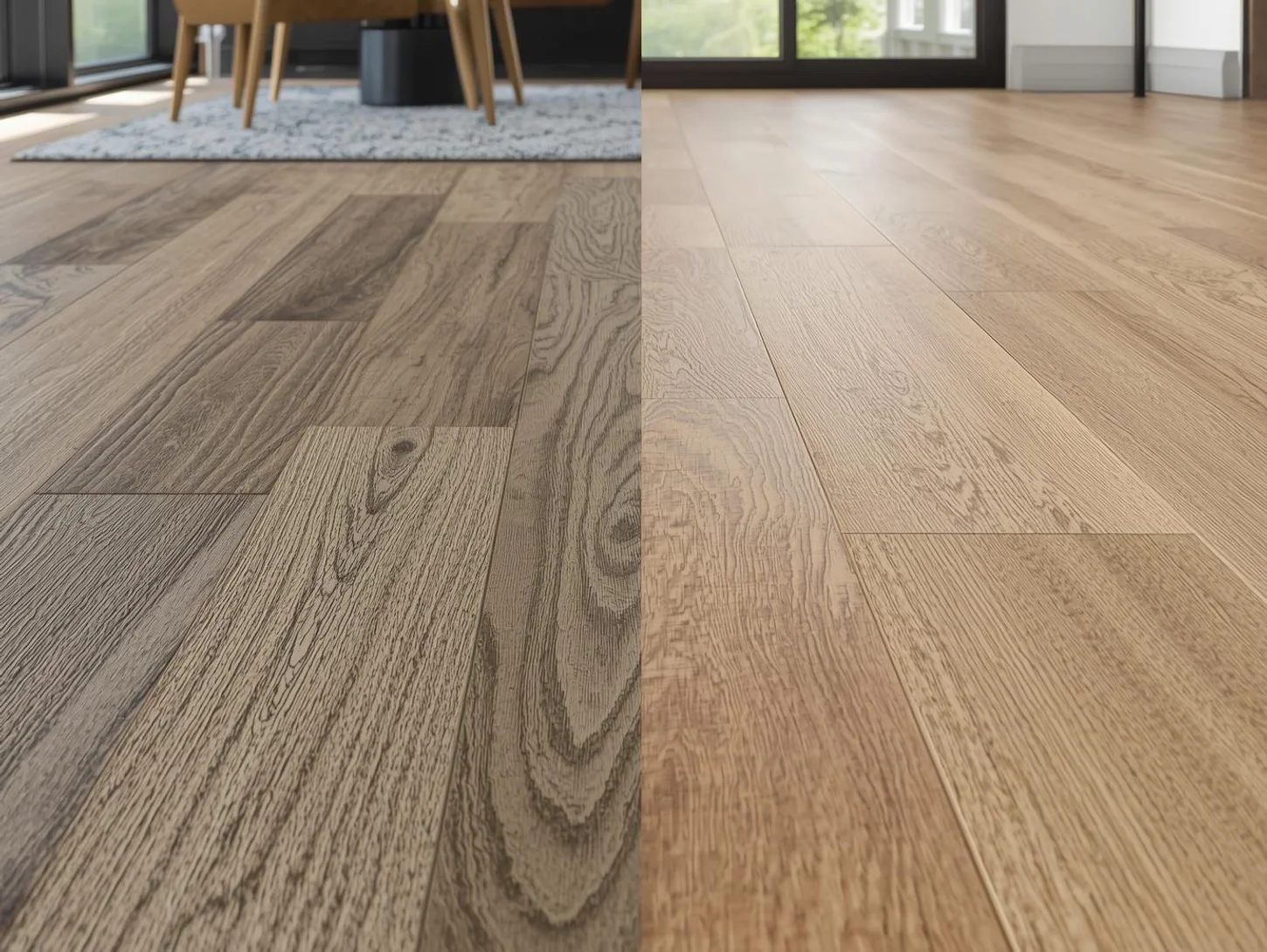
Hybrid Flooring vs Engineered Timber Flooring

When it comes to flooring, Gold Coast homeowners are faced with two of the most popular flooring choices on the market today. Hybrid flooring and engineered timber flooring both deliver the beautiful look of natural timber without the high maintenance, but they differ in construction, performance, and price. If you’re renovating your home or building new, understanding these differences will help you make the right choice for your lifestyle and budget.
At Award Carpets Gold Coast, we’ve been helping local families navigate flooring decisions for over 30 years. Let’s break down everything you need to know about hybrid and engineered timber flooring so you can choose with confidence.
Hybrid Flooring vs Engineered Timber Flooring
Choosing the right flooring is one of the biggest decisions you’ll make during a renovation or new build. It affects not only the look and feel of your home but also your daily comfort, maintenance routine, and long-term investment value.
Hybrid flooring and engineered timber flooring are both premium options that combine the beauty of wood with modern durability. They’re designed to withstand the demands of busy households, humid coastal climates, and active family life—making them particularly well-suited to Gold Coast living.
But which one is the better fit for your home? The answer depends on your priorities, budget, and where you plan to install it.
What is Hybrid Flooring?
Hybrid flooring is a relatively new addition to the flooring world, combining the best features of laminate and vinyl to create a product that’s both rigid and resilient. It’s made up of multiple layers, including a rigid composite core (usually stone plastic composite or SPC), a high-definition printed design layer, and a protective wear layer on top.
The rigid core gives hybrid flooring exceptional stability and makes it 100% waterproof—yes, fully waterproof, not just water-resistant. This means it can be installed in any room of your home, including kitchens, bathrooms, laundries, and even basements.
Hybrid flooring planks typically feature a click-lock installation system, making them easy to lay over most existing floors without the need for glue or nails. The timber-look designs are incredibly realistic, with textures and grain patterns that mimic the look of hardwood, oak, and other popular species.
For Gold Coast homes where humidity, sandy feet, and spills are part of everyday life, hybrid flooring offers peace of mind without sacrificing style.
What is Engineered Timber Flooring?
Engineered timber flooring is real wood—but with a clever twist. Unlike solid hardwood, which is milled from a single piece of timber, engineered timber is constructed in layers. The top layer is a veneer of genuine hardwood (usually 2–6mm thick), while the layers underneath are made from plywood or high-density fibreboard.
This layered construction makes engineered timber more stable than solid wood, reducing the risk of warping, cupping, or shrinking in response to temperature and humidity changes. It’s a smart choice for areas with fluctuating moisture levels, which is why it performs well in coastal environments like the Gold Coast.
Engineered timber delivers the authentic look, feel, and warmth of real wood. Each plank is unique, with natural grain patterns and colour variations that add character to your home. Depending on the thickness of the top veneer, engineered timber can often be sanded and refinished once or twice during its lifespan, extending its longevity.
Installation methods vary—engineered timber can be glued down, nailed, or installed as a floating floor, depending on the product and subfloor conditions.
Key Differences Between Hybrid and Engineered Timber Flooring
Now that you know what each flooring type is made of, let’s compare them side by side across the factors that matter most to homeowners.
Appearance and Aesthetic Appeal
Both hybrid and engineered timber flooring offer stunning timber-look finishes, but there’s a key difference in authenticity.
Engineered timber flooring features a real wood veneer on top, which means every plank has its own unique grain, knots, and natural variation. If you love the organic beauty and warmth of genuine timber, engineered timber delivers that premium, natural aesthetic. It adds a sense of luxury and timelessness to any space.
Hybrid flooring, on the other hand, uses high-definition photographic printing to replicate the look of wood. Modern hybrid products are impressively realistic, with embossed textures that mimic timber grain. However, because it’s printed, the patterns will eventually repeat across planks. For most homeowners, this isn’t noticeable, but purists who want the authenticity of real wood may prefer engineered timber.
In terms of colour and style variety, both options come in a wide range of tones—from light Scandinavian oak to rich walnut and everything in between.
Durability and Resistance
Durability is where hybrid flooring really shines.
Hybrid flooring is 100% waterproof, making it the superior choice for moisture-prone areas like bathrooms, laundries, and kitchens. It’s also highly resistant to scratches, dents, and stains, thanks to its tough wear layer. If you have kids, pets, or a busy household, hybrid flooring can handle the chaos without showing signs of wear.
The rigid core construction also means hybrid floors are dimensionally stable—they won’t expand or contract with humidity changes, making them ideal for the Gold Coast’s coastal climate.
Engineered timber flooring is more resistant to moisture than solid hardwood, but it’s not waterproof. While it can tolerate humidity and minor spills (if wiped up quickly), prolonged exposure to water can cause damage. That makes it less suitable for wet areas like bathrooms or laundries.
Engineered timber is also more susceptible to scratches and dents, especially from pet claws, heavy furniture, or dropped objects. However, the ability to sand and refinish the top veneer (depending on thickness) means you can restore its appearance over time—something you can’t do with hybrid flooring.
For high-traffic areas and homes with pets or children, hybrid flooring offers superior durability and worry-free performance.
Installation and Maintenance
Both flooring types are relatively easy to install, but there are some differences worth noting.
Hybrid flooring is a DIY-friendly option. Most hybrid products feature a click-lock system that allows planks to snap together without glue or nails. They can be installed over most existing floors, including tiles, concrete, and vinyl, as long as the surface is level. This makes hybrid flooring a fast and cost-effective choice for renovations.
Engineered timber flooring installation varies depending on the product. Some engineered timber can be installed as a floating floor (similar to hybrid), while others require gluing or nailing to the subfloor. Professional installation is often recommended to ensure a quality finish, especially for glue-down applications.
When it comes to maintenance, hybrid flooring wins on convenience. It’s incredibly easy to clean—just sweep, vacuum, or mop with a damp cloth. It doesn’t require sealing, polishing, or special treatments.
Engineered timber needs a bit more care. While it doesn’t require the intensive maintenance of solid hardwood, you’ll need to use wood-specific cleaners, avoid excessive water, and be mindful of scratches. Depending on the finish, occasional resealing or polishing may be recommended.
For busy Gold Coast households that want low-maintenance flooring, hybrid is the hassle-free winner.
Cost and Value
Budget is always a consideration, and both options offer good value—but in different ways.
Hybrid flooring is generally more affordable upfront. It’s one of the most cost-effective premium flooring options available, offering the look of timber without the hefty price tag. Installation costs are also lower if you choose a click-lock product suitable for DIY installation.
Engineered timber flooring typically costs more than hybrid, both for the product itself and professional installation (if required). However, it offers long-term value as a genuine wood product. If well-maintained, engineered timber can last for decades and may even add resale value to your home, especially in the eyes of buyers who appreciate real timber.
That said, hybrid flooring’s durability and low maintenance can translate into cost savings over time—no refinishing, no special treatments, and fewer repairs.
For budget-conscious renovators or investment properties, hybrid flooring delivers excellent bang for your buck. For those who view flooring as a long-term investment and value the authenticity of real wood, engineered timber is worth the extra cost.
Comfort and Feel Underfoot
Both flooring types offer comfortable underfoot feel, but with subtle differences.
Hybrid flooring has a firm, solid feel due to its rigid core construction. It’s quieter than tile or laminate and feels warmer than hard surfaces. Some hybrid products include an attached underlay for added cushioning and sound absorption, making them comfortable for standing, walking, and play.
Engineered timber flooring offers the natural warmth and slight give of real wood. It feels softer and more organic underfoot compared to hybrid. If comfort and that “real timber” feel are high on your priority list, engineered timber has a slight edge.
Both options are compatible with underfloor heating, though you’ll want to check product specifications to ensure compatibility before installation.
Pros and Cons at a Glance
To help you weigh your options, here’s a quick breakdown of the key advantages and drawbacks of each flooring type.
Hybrid Flooring
Pros:
- 100% waterproof—suitable for any room, including bathrooms and kitchens
- Highly scratch-resistant and dent-resistant
- Low maintenance and easy to clean
- DIY-friendly click-lock installation
- Budget-friendly with excellent durability
- Dimensionally stable in humid climates
- Wide range of realistic timber-look designs
Cons:
- Printed surface, not real wood
- Cannot be sanded or refinished
- Slightly less authentic in appearance compared to real timber
- May feel firmer underfoot than natural wood
Engineered Timber Flooring
Pros:
- Real wood veneer with authentic grain and natural variation
- Can be sanded and refinished (depending on veneer thickness)
- Adds warmth and premium aesthetic appeal
- More stable than solid hardwood
- Potential to increase home resale value
- Natural, organic feel underfoot
Cons:
- Not waterproof—unsuitable for wet areas like bathrooms
- More prone to scratches and dents than hybrid
- Requires more careful maintenance
- Higher upfront cost
- Professional installation often recommended
Which Flooring Should You Choose?
The right choice depends on your lifestyle, budget, and where you’re planning to install your new floors.
Choose hybrid flooring if:
- You want a waterproof solution for kitchens, bathrooms, or laundries
- You have pets, young children, or a busy household
- Low maintenance and durability are top priorities
- You’re renovating on a budget but don’t want to compromise on style
- You prefer DIY installation to save on costs
- You live in a humid coastal area like the Gold Coast and want flooring that won’t warp or swell
Choose engineered timber flooring if:
- You love the authentic look and feel of real wood
- You’re installing in living rooms, bedrooms, or dining areas (not wet areas)
- You’re willing to invest more upfront for a premium, long-lasting product
- You value the option to sand and refinish your floors in the future
- You want flooring that may add resale value to your home
- Aesthetic authenticity is more important to you than waterproofing
For many Gold Coast families, hybrid flooring offers the best combination of practicality, style, and value. It handles our coastal humidity, sandy feet, and active lifestyles without missing a beat. But if you’re drawn to the natural beauty of real timber and plan to install it in dry areas of your home, engineered timber flooring is a stunning choice that delivers timeless appeal.
Hybrid and Engineered Timber Flooring at Award Carpets Gold Coast
At Award Carpets Gold Coast, we stock an extensive range of both hybrid flooring and engineered timber flooring to suit every style, budget, and lifestyle.
As an independent family-run business with over 30 years of local experience, we pride ourselves on offering the lowest prices possible without cutting corners on quality or service. We stock leading Australian brands alongside unique boutique lines you won’t find anywhere else.
Not sure which option is right for your home? Our friendly team is here to help. We’ll walk you through your choices, show you samples, and provide honest advice based on your specific needs and the realities of Gold Coast living.
Whether you’re renovating your family home, updating an investment property, or building from scratch, we make the flooring selection and installation process simple and stress-free. From picking the perfect colour and texture to expert installation from start to finish, we’ve got you covered.
Visit our showroom on the Gold Coast, browse our range online, or book your free quote today. Let’s find the perfect flooring solution for your home—one that looks great, performs beautifully, and delivers lasting value for years to come.


