

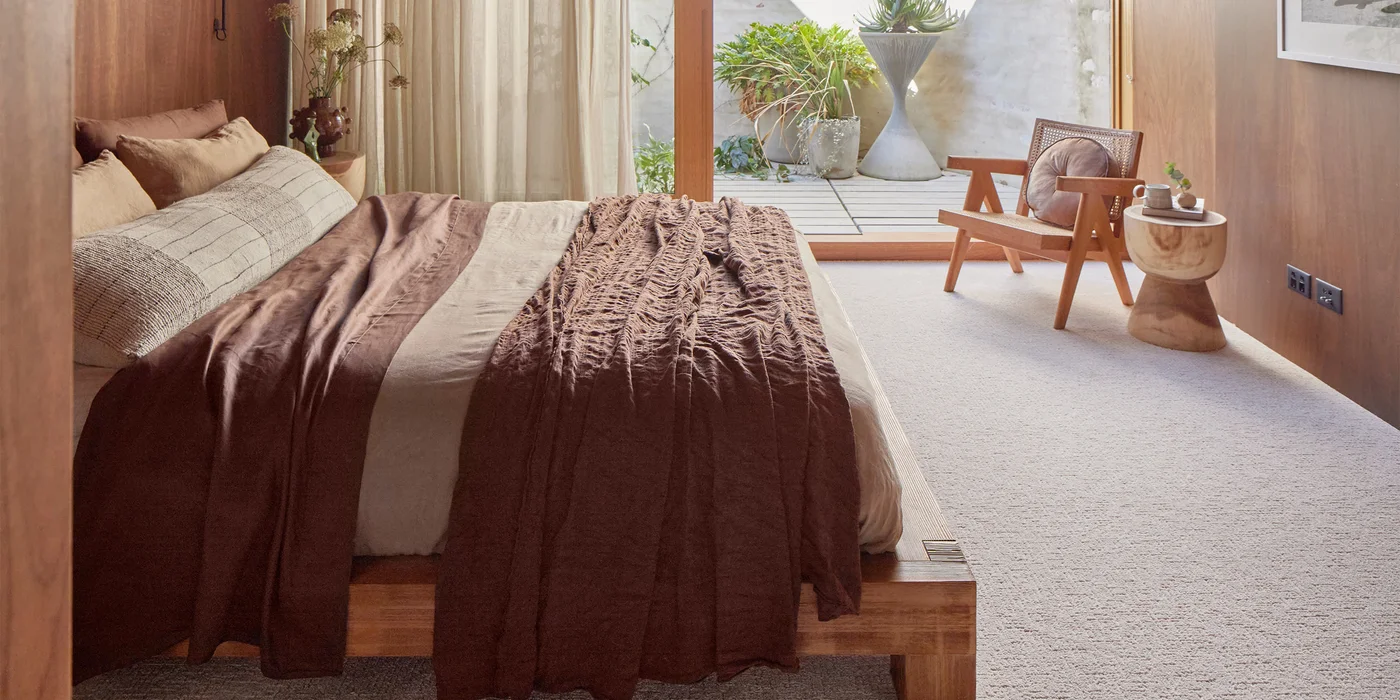

Choosing the right bedroom flooring is about more than just looks – it affects comfort, insulation, and even your health. On the Gold Coast’s warm, coastal climate, floors can get sandy, humid, or cool under bare feet, so you’ll want a material that suits local conditions.
A good bedroom floor should feel soft underfoot, add warmth on cool mornings, and dampen sound for a peaceful night’s sleep. It also needs to stand up to life in a busy household. Each flooring material has its own mix of cost, durability, and maintenance needs.
In this guide, we’ll explore eight top bedroom flooring options for Gold Coast homes, comparing factors like comfort, cost, maintenance, insulation, and noise reduction, so you can pick the perfect floor for your space.
Carpet Flooring
Carpet is the classic choice for bedrooms because it feels luxurious under bare feet. A quality carpet adds instant warmth and softness, making every step feel cushioned. It comes in many materials (wool, nylon, polyester, etc.) and styles (plush, loop, cut pile) and a huge variety of colours and patterns.
On the Gold Coast, carpet can help keep your room cozy during cooler winter mornings and reduces noise from footsteps or chatter, creating a quiet retreat. Modern carpets also often have stain-resistant treatments, which helps against sand or accidental spills. However, carpet does trap dust, pollen, and pet dander in the fibres, so people with allergies or asthma may find it less ideal.
In our humid climate, be aware that carpet can hold moisture if not dried promptly, so it needs regular vacuuming and occasional deep cleaning. Overall, carpet offers unbeatable comfort, warmth, and acoustic benefits for bedrooms, but keep in mind it can stain and may not suit allergy sufferers.
Pros:
- Soft & Warm: Feels cozy and insulating underfoot.
- Excellent Noise Reduction: Carpets absorb sound, making rooms quieter making it ideal for family homes or upstairs bedrooms.
- Variety of Styles: Available in countless colours and textures to match any décor.
- Safety: Cushions falls (better for kids or older adults), and is naturally non-slip.
Cons:
- Maintenance: Requires frequent vacuuming and periodic deep cleaning. Spills and sand must be cleaned quickly to avoid stains or mold.
- Allergens: Traps dust mites and pollen, so it’s less suitable for allergy sufferers.
- Durability: Fibres can wear or flatten over time under heavy traffic. Heavy furniture may leave indentations.
- Moisture Issues: Not waterproof – avoid in damp areas. In Gold Coast humidity, spills or pet accidents can lead to damp patches if not dried.
- Cost: High-quality carpet can be expensive, and it might need replacement sooner than hard flooring.
- VOC Concerns: Some synthetic carpets (and their adhesives) can off-gas volatile compounds, so choose low-VOC products if indoor air quality is a concern.
| Factor | Carpet Flooring |
| Comfort | Very high (thick, plush pile feels soft) |
| Cost | $$ (mid-range; wool is pricey, synthetics cheaper) |
| Durability | Medium (wears over years; can be refreshed) |
| Maintenance | Medium-high (vacuum weekly; professional clean) |
| Insulation | High (excellent thermal and acoustic insulation) |
| Noise reduction | Excellent (absorbs footsteps and sound) |
Ideal for: Nursery or children’s bedrooms (softer falls), master bedrooms (luxury feel), older adults (warmth and cushion underfoot). Carpet suits anyone who loves a plush, cozy feel. It’s generally not recommended for people with dust allergies or homes prone to spills or moisture. For a wide selection of bedroom-ready carpets, check out Award Carpets’ carpet flooring collection.
Timber Flooring
Timber floors bring a timeless, natural elegance to bedrooms. Engineered hardwood is especially popular, offering the rich look of wood with added stability against warping. These floors lend a warm, classic style that can complement modern or coastal décor.
On the Gold Coast, timber floors stay naturally cool in summer and pair nicely with area rugs in winter. They don’t harbor dust or allergens, making them an excellent choice for asthma/allergy sufferers. Solid or engineered wood can last decades when cared for properly, and scratches can often be sanded out in refinishing.
However, wood is hard underfoot and can feel cold first thing in the morning without rugs. It’s also noisy – footsteps and echoes carry more on wood than on carpet. Wood floors are sensitive to moisture: spills, high humidity, or year-round coastal dampness can cause warping or gaps if not properly sealed. They also cost more upfront and need occasional maintenance (re-sealing or refinishing) to stay beautiful.
Pros:
- Natural Beauty: Each plank has unique wood grain, adding warmth and character (great for Gold Coast’s natural aesthetic).
- Durability: Long-lasting; high-quality hardwood can be refinished multiple times. Adds home value.
- Hypoallergenic: Hard surface won’t trap dust or pollen. Good for allergy sufferers.
- Variety: Available in many wood species (oak, maple, acacia, etc.), finishes, and plank widths.
Cons:
- Hard & Cold: Underfoot it’s firm (less cushioning) and can feel cool, especially first thing on Gold Coast mornings.
- Scratches & Dents: Easily marked by sharp heels or heavy furniture; protective pads are recommended.
- Noise: Tends to echo; requires rugs or underlay to dampen sound.
- Moisture Sensitive: Will swell or warp if exposed to water or constant humidity. Needs proper installation and finishes.
- Cost: Expensive material and installation. (Engineered wood is slightly more affordable than solid.)
- Maintenance: Requires occasional re-finishing or oiling to keep sealed and looking new.
| Factor | Hardwood (Timber) Flooring |
| Comfort | Medium (hard surface; feels firm) |
| Cost | $$$ (higher-priced for quality wood) |
| Durability | High (long lifespan with care) |
| Maintenance | Medium (needs refinishing/sealing periodically) |
| Insulation | Low (cooler, unless paired with rugs) |
| Noise reduction | Low (echoes sound; needs rugs/underlay) |
Ideal for: Master bedrooms and adult spaces where style and longevity matter. Hardwood is especially good for allergy sufferers and those who value a premium, classic look. It’s less ideal for busy kids’ rooms or households with lots of humidity. If you love the idea of solid wood, consider engineered timber for extra stability against Gold Coast climate. Award Carpets offers a beautiful range of timber flooring engineered to handle local conditions.
Vinyl Flooring
Vinyl is one of the most practical bedroom floors on the market. Modern vinyl comes in high-quality plank or tile formats (often called luxury vinyl planks) that convincingly mimic wood or stone. It’s hugely popular in family homes because it’s waterproof and super easy to clean.
Vinyl has a smooth, somewhat cushioned underfoot feel (softer than wood or tile), making it comfortable to walk on barefoot. It also tends to absorb sound better than timber or tile, so bedrooms stay quieter.
Vinyl is very budget-friendly and DIY-friendly to install. The downside is that very cheap vinyl can look plasticky, and its surface can wear down over many years (though quality vinyl floors have tough wear layers). It’s also a petroleum-based product, so environmentalists should look for low-VOC and phthalate-free options.
Overall, vinyl is designed to handle the realities of everyday living, offering water-resistance and easy cleaning without breaking the bank.
Pros:
- Water-Resistant: 100% waterproof surface (ideal for humidity and cleaning).
- Durable & Scratch-Resistant: Tops many demand tests (kids and pets rarely dent it).
- Comfort & Warmth: Softer and warmer underfoot than tile or wood. Many vinyls have padded backings.
- Quiet: Quieter than wood or laminate; reduces footstep noise.
- Wide Style Range: Available in thousands of patterns (from realistic timber grains to modern abstracts).
- Low Maintenance: Just sweep and mop; spills wipe right up. Great for allergy-prone families (no dust traps).
- Cost-Friendly: Very affordable, excellent value for high performance.
Cons:
- Can Feel Synthetic: Lacks the natural beauty of real wood/stone. (Premium vinyl mimics it well, though.)
- Chemical Sensitivity: Lower-quality vinyl may off-gas VOCs (choose certified low-VOC products).
- Non-Refinishable: If deeply scratched or stained, you must replace the plank/tile.
- Susceptible to Subfloor Defects: Requires a flat, smooth underfloor – bumps may telegraph through.
- Not “High-End” Look: While good, it’s still plastic; may not add as much value as wood.
| Factor | Vinyl Flooring |
| Comfort | High (soft, cushioned feel) |
| Cost | $ (very affordable) |
| Durability | High (tough wear layer, water-proof) |
| Maintenance | Low (just sweeping/mopping) |
| Insulation | Medium (warmer than tile; use underlay) |
| Noise reduction | Medium-High (damps sound well) |
Ideal for: Busy family bedrooms, teenagers’ rooms or guest rooms where spills happen. Vinyl is great for kids (easy cleanup) and older adults (cushioning and warmth). It’s also a smart pick for Gold Coast flats or rental homes on a budget. For a huge range of colours and wood-look designs, explore Award Carpets’ vinyl flooring collection.
Laminate Flooring
Laminate flooring is a wood-look flooring made of compressed layers with a photographic wood-grain surface. It’s often the most budget-friendly alternative to real hardwood. Laminate gives a decent wood or tile look and is very durable against everyday wear – it has a tough clear wear layer that resists scratches from kids and pets.
Laminate is easy to install (the click-lock planks often float over an underlay) and quick to maintain – just dry-sweep and lightly mop; it never needs waxing or polishing. However, laminate is not waterproof: spills or humidity can cause it to swell and crack beyond repair.
For bedrooms, where moisture is usually low, laminate can work great, but we’d recommend rugs near baths or sinks. Underfoot it’s harder (almost like hardwood), so it won’t feel as soft as carpet or vinyl. It can also be a bit noisy if installed without underlay (footsteps echo). In short, laminate is easy to clean and resists scratches, but take care to keep it dry.
Pros:
- Budget-Friendly: Very low cost compared to hardwood or some vinyl.
- Durable Wear Layer: Hard, clear top layer stands up to kids, pets, and heavy foot traffic.
- Low Maintenance: Stain-resistant surface wipes clean; no special cleaners needed.
- DIY Installation: Click-lock planks make it easy to lay as a floating floor (over approved underlay).
- Attractive Styles: Wide range of wood and stone-look designs, colors, and plank sizes.
Cons:
- Moisture Sensitivity: Water can ruin it. Even damp mopping is not recommended.
- Hard Surface: Unforgiving if you drop things or if someone falls.
- Noise: Without a sound-absorbing underlay, laminate can be echoey. Use foam underlay for quieter feel.
- Cannot Refinish: Worn or damaged boards must be replaced entirely.
- Lower Resale Value: Generally considered a lower-end flooring by buyers (unlike real wood).
| Factor | Laminate Flooring |
| Comfort | Medium (hard surface; feels firm) |
| Cost | $ (cheapest option) |
| Durability | Medium-High (scratch-resistant wear layer) |
| Maintenance | Low (easy to clean; avoid water) |
| Insulation | Low-Medium (needs underlay for warmth) |
| Noise reduction | Low-Medium (improves with underlay) |
Ideal for: Budget bedrooms, guest rooms or children’s rooms where style is desired without the cost of wood. Not ideal for rooms where spills occur (kids’ wet toys or window-condensation). Always use a quality underlay to help with thermal comfort and noise. To see stylish wood-look laminates, check Award Carpets’ laminate flooring range.
Hybrid Flooring
Hybrid flooring (sometimes called rigid core vinyl) combines the best of vinyl and laminate. It’s a multi-layer plank with a tough core (often polymer or stone-composite) that makes it 100% waterproof and extremely stable. A hybrid plank usually has a realistic wood or tile surface that feels more solid than regular vinyl. It’s gaining popularity for bedrooms because it’s scratch-resistant like laminate but completely water-tight like vinyl.
Hybrid floors feel similar underfoot to vinyl (softer than wood), and they often come with acoustic underlay backing for extra quiet. The advantages are huge for Gold Coast homes: you get a high-end wood look without worrying about spills, humidity, or fading. The drawbacks? Hybrid can cost a bit more than standard vinyl. It’s also quite rigid – slightly firmer to stand on than carpet or soft vinyl. Hybrid is 100% waterproof and great for kids and pets, though it’s a bit more expensive and a bit firmer underfoot.
Pros:
- Totally Waterproof: Perfect for any spills or even adjacent bathrooms (no moisture damage).
- Very Durable: Top wear layers are ultra-scratch and stain-resistant; ideal for active families.
- High Quality Look: Realistic timber visuals and textures – often indistinguishable from real wood in the room.
- Stability: Doesn’t expand or contract much; excellent for Queensland’s seasonal humidity swings.
- Easy Care: Simple sweeping and mopping – like vinyl.
Cons:
- Cost: More expensive than entry-level vinyl (though usually still less than real wood).
- Hard Underfoot: Feels firm – not cushioned. (Consider area rugs for extra softness.)
- Synthetic: Still a plastic product; some homeowners prefer natural materials.
- Limited History: It’s a newer category, so true long-term wear is still being proven (though results look good).
| Factor | Hybrid Flooring |
| Comfort | Medium (firmer than vinyl; use rugs) |
| Cost | $$ (mid-range) |
| Durability | Very High (waterproof and tough) |
| Maintenance | Low (easy sweep/mop) |
| Insulation | Medium (comparable to vinyl) |
| Noise reduction | Medium (better with acoustic backing) |
Ideal for: Families with kids or pets, and anyone who wants a worry-free wood-look floor. Hybrid is great in any bedroom – especially if you want real timber aesthetics but need water resistance (for example, a ground-floor bedroom opening to a patio). It’s also a smart pick for rental properties on the Gold Coast. Explore Award Carpets’ hybrid flooring selection to find durable, stylish planks..
Bamboo Flooring
Bamboo flooring looks and feels like light-colored wood. It’s a green, renewable option – bamboo plants grow extremely fast, making this material very eco-friendly. When properly manufactured, bamboo planks can be as hard and durable as traditional hardwood.
Strand-woven bamboo (where the fibers are compressed) is especially tough and has a modern linear look. Many homeowners choose bamboo for its natural warmth and distinctive style. Like wood, bamboo can be refinished (if it’s solid) and lasts a long time.
On the flip side, bamboo scratches more easily than oak and is sensitive to humidity swings. In a humid climate like the Gold Coast, fluctuations in moisture may cause solid bamboo to warp or develop cracks. Also, check the construction quality – some lower-end bamboo floors use formaldehyde-containing adhesives, so look for low-VOC certifications.
Overall, bamboo offers durability comparable to hardwood and adds value to a home, but keep it away from constant moisture and give it some TLC.
Pros:
- Sustainable: Bamboo regenerates quickly, making it very eco-friendly.
- Strong: Properly made bamboo can be very hard and long-wearing (similar to oak).
- Stylish: Light, natural tones brighten rooms; also available in carbonized (darker) finishes.
- Value: Adds a high-end look and can increase resale appeal.
- Refinishable: Many bamboo floors can be sanded and refinished once or twice.
Cons:
- Scratch Prone: Although hard, bamboo can scuff or dent with rough use.
- Moisture Sensitivity: Can warp or crack if exposed to humidity swings.
- Cost: Good-quality bamboo is usually as expensive as premium hardwood.
- Chemical Glues: Some bamboo floors use formaldehyde adhesives, so check for eco-friendly certifications (no off-gassing).
- Limited Colors: Mainly natural blondes or ambers; darker tones require carbonizing (which also makes it softer).
| Factor | Bamboo Flooring |
| Comfort | Medium (similar feel to hardwood) |
| Cost | $$ (mid to high, depending on quality) |
| Durability | High (strand-woven is very tough) |
| Maintenance | Medium (treat as wood; clean and occasionally refinish) |
| Insulation | Medium (offers some warmth) |
| Noise reduction | Medium (hard surface; use rugs or underlay) |
Ideal for: Green-conscious homeowners and those who love the look of wood. Bamboo works well in master bedrooms or guest rooms, especially where a lighter aesthetic is desired. Avoid bamboo flooring in wet areas (like adjacent bathrooms) without proper sealing.
Cork Flooring
Cork comes from the bark of cork oak trees. It’s unique in that its cellular structure (filled with tiny air pockets) makes it very soft and springy underfoot. Cork floor tiles or planks have a warm, natural look (often light brown with speckles) and are almost spongy to walk on. This softness gives excellent comfort for standing or walking, and it cushions falls – a boon for children’s rooms or older adults.
Remarkably, cork is a great natural insulator: it keeps rooms warmer in winter and cool in summer, and it absorbs sound like none other. It’s also anti-microbial and hypoallergenic – resistant to mold, mildew, and pests.
On the downside, cork is not as hardwearing as wood or tile. It can dent or scratch if heavy furniture is placed or if pet nails are untrimmed. It requires sealing with varnish or urethane, and periodic re-sealing (every few years) to protect from moisture. In bright sunlight (common on the Gold Coast), cork may fade or discolor over time.
In summary, cork is a great option throughout the home due to its softness and insulation, but be aware it’s not as durable as other flooring materials and needs some upkeep.
Pros:
- Soft & Warm: Cushiony surface is comfortable and gentle on feet; also slip-resistant. Excellent for kids or anyone prone to falls.
- Sound & Thermal Insulation: Cork’s cellular makeup naturally dampens noise and retains heat. Bedrooms stay cozy and quiet.
- Eco-Friendly: Harvesting cork doesn’t kill the tree (bark regrows), making it a renewable resource.
- Hypoallergenic: Naturally repels insects and prevents mold; does not off-gas, especially if sealed properly.
Cons:
- Susceptible to Damage: Scratches and dents easily under heavy wear. Avoid dragging furniture or allow pet claws to scratch it.
- Sealing Required: Must be sealed after install and re-sealed periodically to protect against moisture and staining.
- Sunlight Sensitivity: Can fade or change color with direct sunlight. Consider UV-resistant finishes or area rugs in sunny rooms.
- Cost: Generally more expensive than carpet or basic vinyl/laminate.
- Limited Style: Mostly comes in natural warm tones; design options are more limited than with tile or vinyl.
| Factor | Cork Flooring |
| Comfort | High (soft, cushioned surface) |
| Cost | $$$ (premium natural material) |
| Durability | Medium (vulnerable to dents/scratches) |
| Maintenance | Medium (requires sealing; easy cleaning) |
| Insulation | Very High (excellent thermal & acoustic) |
| Noise reduction | Very High (absorbs footsteps and noise) |
Ideal for: Quiet, cozy bedrooms – especially nurseries, kids’ rooms, or adult retreats. Cork’s soft surface is forgiving for falls, and its anti-microbial nature is great for people with allergies or asthma. It’s an excellent choice in climates where you want a warm floor year-round. Avoid cork in high-moisture areas; use area rugs in spots that get a lot of sun.
Tile Flooring (Stone/Ceramic)
Tile and natural stone (like porcelain, ceramic, or slate) are the heavy-duty contrast to all the above. Tile floors are extremely durable – they handle decades of wear without scratching or staining. They are completely waterproof and non-porous (especially glazed ceramic), making them immune to spills and easy to mop. Tiles also never trap dust or allergens: whatever lands on the surface (sand, pet hair, pollen) stays there to be wiped away.
For these reasons, tile is a hygienic choice in bedrooms. On the Gold Coast, tile has the bonus of keeping a room cool in summer (though it can feel chilly on bare feet, especially on a winter morning). The big trade-offs are comfort and warmth: tiles are very hard and cold underfoot, and they echo sound (hardly any cushioning). Slipping on wet tiles is also a concern. Installation is labor-intensive and pricey, and tiles that crack require replacement of the section. Essentially, ceramic tile works in any room and is low-maintenance, but its only drawback is that it can be hard and cold.
Pros:
- Ultra-Durable: Will last for generations if installed correctly. Resistant to scratches, stains, and heat.
- Waterproof & Hygienic: Impervious to moisture and very easy to clean. Ideal for allergy sufferers (no dust buildup).
- Fireproof: Will never scorch or release toxic fumes in case of fire.
- Variety of Designs: Tiles come in countless colors, shapes, and textures – even wood-look porcelains.
- Cool in Summer: Pleasant underfoot during hot days, which can be a benefit in our climate.
Cons:
- Hard/Cold: Unforgiving surface; needs rugs for warmth and comfort. (Gold Coast winters can be mild, but barefoot feet will notice cold tile.)
- Noise: Reflects sound – footsteps can echo unless rugs are used.
- Slippery: When wet, tiles can be slick. (Textured or matte finishes are safer.)
- Grout Maintenance: Grout lines can stain or need re-sealing over time.
- Installation Cost: Heavy labor and materials make it one of the most expensive floorings to install.
| Factor | Tile (Ceramic/Stone) Flooring |
| Comfort | Low (very hard and cold) |
| Cost | $$$ (moderate tile to high-end stone) |
| Durability | Very High (extremely long-lasting) |
| Maintenance | Low (sweep/mop; seal grout occasionally) |
| Insulation | Low (cold surface; poor thermal insulation) |
| Noise reduction | Low (echoes sound; needs rugs) |
Ideal for: Those wanting an ultra-clean, sleek bedroom floor. Stone or tile is great for Mediterranean or coastal styles, and for anyone who wants minimal upkeep. Because it’s so hard and cool, tile is often used in bathrooms or hallways; in a bedroom it’s best with soft area rugs. Tile can be good for allergy sufferers and is excellent in any room where you want a very durable floor. Just be mindful with young children or seniors, as falls on tile can be more severe.
Whether you choose soft carpet, warm timber, or cool tile, each bedroom flooring type has its own vibe and practical considerations. The right choice can make daily life easier, add warmth and style. Think about your household’s needs – children or guests, pets, how often you enter from outdoors, and your sensitivity to allergens. Then match those needs to the pros and cons above.
No matter your decision, Award Carpets Gold Coast has the materials and expertise to help.
Visit our showroom or browse online to find the perfect floor that will keep your Gold Coast bedroom comfortable, beautiful, and well-suited to your lifestyle.


